
Key takeaways
- Contactless payments operate through near-field communication (NFC), a wireless technology that enables data transfer between devices placed within a few centimeters of each other.
- Digital wallets employ multiple overlapping security mechanisms that work in concert to protect consumer data throughout the payment process.
- The payment industry’s transition to digital wallets represents a fundamental shift away from magnetic stripe technology, which dominated physical credit cards since the 1960s.
- Can someone steal payment information from my digital wallet if they are near my phone?
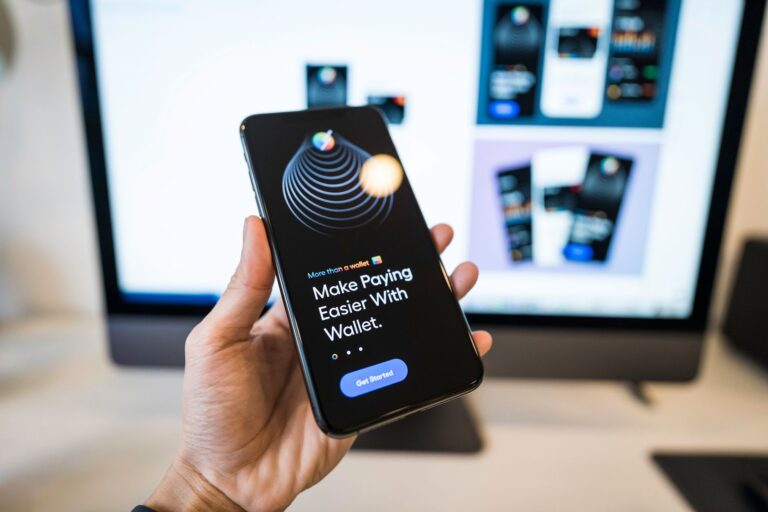
Digital wallets and contactless payment systems have fundamentally transformed how consumers exchange money, replacing physical cash and cards with encrypted data transmitted through smartphones and wearable devices. Understanding the mechanics behind these technologies is essential for investors evaluating fintech companies, payment processors, and the broader digital economy. These systems rely on sophisticated cryptography, wireless communication protocols, and tokenization methods that have evolved significantly over the past two decades.
The Foundation: What Digital Wallets Actually Are
A digital wallet is a software application that stores payment credentials, including credit card numbers, bank account information, and loyalty program data, in an encrypted format on a device such as a smartphone or smartwatch. Rather than transmitting actual card details during a transaction, the wallet uses tokenization—a process that replaces sensitive financial information with a unique, encrypted code that cannot be reverse-engineered by hackers. When a user initiates a payment, the wallet generates a one-time token valid only for that specific transaction, making it virtually impossible for criminals to Intercept and reuse the data.
Apple launched its digital wallet service, Apple Pay, in 2014, which accelerated mainstream adoption of this technology across the United States and internationally. By 2023, digital wallet transactions accounted for approximately 14 percent of all card-not-present e-commerce payments globally, with adoption rates varying significantly by region and demographic group.
Contactless Technology: The Wireless Communication Layer
Contactless payments operate through near-field communication (NFC), a wireless technology that enables data transfer between devices placed within a few centimeters of each other. NFC operates on the 13.56-megahertz frequency and uses electromagnetic induction to establish communication without requiring a physical connection or line-of-sight transmission. When a consumer holds their NFC-enabled device near a contactless payment terminal, the two devices exchange encrypted payment information in milliseconds, completing the transaction without the consumer needing to enter a PIN or signature in most cases.
Visa introduced its contactless payment standard in 2007, and by 2010, contactless card transactions began appearing at major retailers across Europe and Asia. In Brazil specifically, contactless adoption accelerated dramatically after 2015, with major banks including Itaú Unibanco and Bradesco implementing NFC terminals at thousands of locations, particularly in São Paulo and Rio de Janeiro.
Security Architecture: Multi-Layer Protection Against Fraud
Digital wallets employ multiple overlapping security mechanisms that work in concert to protect consumer data throughout the payment process. The first layer involves device-level security, where the smartphone’s processor contains a secure element—a tamper-resistant chip that stores encrypted payment credentials separately from the device’s main operating system. This architectural separation ensures that even if malware compromises the main system, the payment data remains protected within the isolated secure element.
The second layer involves transaction-level verification, where the wallet authenticates the user through biometric methods (fingerprint or facial recognition) or a PIN before allowing any payment to proceed. Google Pay, launched in 2015, pioneered the use of biometric authentication for digital wallets, requiring users to verify their identity before transactions could be completed. Additionally, payment networks implement transaction monitoring systems that flag unusual spending patterns and geographic anomalies, using machine learning algorithms to distinguish between legitimate and fraudulent transactions in real time.
The Evolution from Magnetic Stripe to Tokenization
The payment industry’s transition to digital wallets represents a fundamental shift away from magnetic stripe technology, which dominated physical credit cards since the 1960s. Magnetic stripes store static card data that remains unchanged across transactions, meaning a single data breach could expose the same credentials to multiple merchants and potential fraudsters. Chip technology, introduced in the 1990s, improved security by adding encryption, but digital wallets and contactless payments represent the next evolutionary step by eliminating the need to expose any actual card data to merchants.
The EMVCo consortium, established in 1999 by Europay, Mastercard, and Visa, developed the standardized specifications for chip technology and later for contactless payments, ensuring interoperability across different card networks and payment processors. In 2015, the United States completed its transition from magnetic stripe to chip-based cards, a shift that had already occurred in Europe and many other regions years earlier, demonstrating how adoption timelines vary significantly across geographies.
Frequently Asked Questions
Can someone steal payment information from my digital wallet if they are near my phone?
No, digital wallets use multiple security layers that prevent unauthorized access through proximity alone. NFC communication requires explicit user authorization through biometric authentication or PIN entry before any payment can be processed, and the encrypted tokens transmitted during transactions cannot be reused by attackers.
What happens if I lose my smartphone with a digital wallet loaded on it?
Most digital wallet providers allow users to remotely disable or delete payment credentials from their device through online account management portals or customer service channels. Additionally, the biometric and PIN protections on the device itself prevent unauthorized payments even if someone gains physical access to the phone.
Do all merchants accept contactless payments?
Contactless payment acceptance has expanded dramatically but remains incomplete globally. Developed markets including the United States, United Kingdom, and Australia have achieved high merchant adoption rates exceeding 70 percent, while adoption in developing markets varies widely depending on infrastructure investment and regulatory support.
Digital wallets and contactless payments represent a mature, security-hardened technology that continues to expand its market presence through incremental improvements in speed, merchant acceptance, and user experience. The underlying mechanisms—tokenization, NFC communication, and biometric authentication—have proven effective at reducing fraud while maintaining consumer convenience, making these systems the dominant payment method for many demographics worldwide.
