
Key takeaways
- Discovered Materials closed a $9 million seed round to use AI agents and physics models to find semiconductor materials that reduce chip heat generation and cooling needs.
- The startup can evaluate thousands of material candidates daily, versus 20 per day during manual research, by running AI agents continuously on cloud infrastructure.
- The core trade-off challenge in semiconductor materials: candidates that reduce heat might be impossible to manufacture or electrically insufficient, requiring expensive laboratory validation.
Data centers running artificial intelligence models generate enormous heat—a core reason why these facilities consume vast amounts of electricity and demand expensive cooling infrastructure. Now a startup is flipping the problem on its head, deploying AI itself to identify new materials that could make chips dissipate heat more effectively.
New Funding for Material Discovery
Discovered Materials, a recently launched startup, announced it has raised $9 million in seed funding from Lightspeed India Partners, Peak XV Partners, and several prominent angel investors including Paul Graham, Gokul Rajaram, and Thariq Shihipar. The company emerged from Y Combinator’s accelerator program with plans to use what it describes as swarms of AI agents to discover new materials suitable for building more efficient integrated circuits.
The Founders and Their Expertise
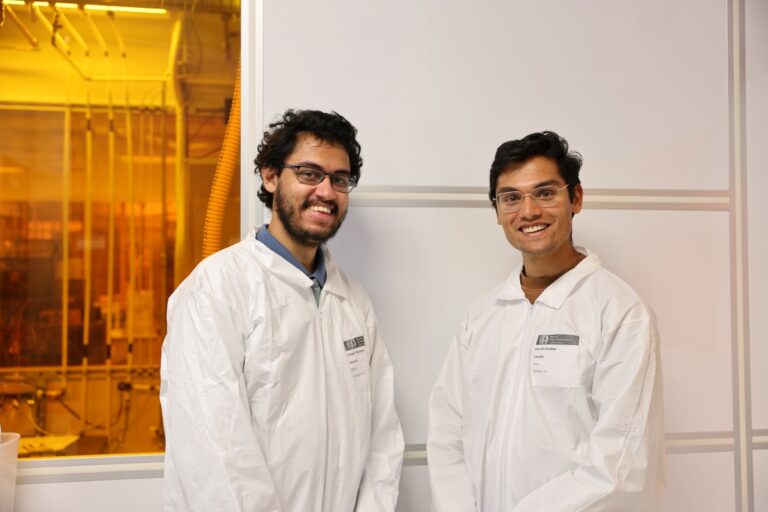
The company was founded by Advaith Sridhar and Akash Ramdas, who bring complementary technical backgrounds to the challenge. Ramdas completed a doctorate in materials science at Stanford, giving him deep knowledge of material properties and synthesis. Sridhar contributed experience developing AI agents at two previous companies—Persona AI and Luma Labs—providing expertise in the software systems that would orchestrate the discovery process.
How the Technology Works
Generating Candidate Materials
The company has developed a software pipeline that leverages Anthropic’s AI models within a custom framework to generate initial material candidates. Rather than relying on human intuition alone, the system produces thousands of material proposals automatically.
Validating Candidates at Scale
Each proposed material is then evaluated using physics simulation models that the founders trained themselves. These simulations determine whether candidates possess the properties necessary for semiconductor applications. This two-stage approach—generation followed by physics-based filtering—allows the system to move far faster than traditional methods.
The Speed Improvement
Sridhar described the scale advantage to TechCrunch: “During his PhD, Ramdas was doing maybe 20 guesses a day. We’re able to do thousands of guesses a day now by having these agents run 24/7 on the cloud, exploring research directions that he gives them.” This multiplication reflects both the computational power available and the systematic nature of the AI-driven search process.
What They’ve Released and the Competitive Landscape
Discovered Materials released hundreds of examples of newly discovered materials and introduced what it calls the “Material Discovery Bench,” a public resource designed to measure how leading AI models perform on the task of finding useful semiconductor materials.
The company is not alone in pursuing this direction. MatNex, SandboxAQ, and CuspAI have all launched programs focused on AI-driven materials discovery. However, Discovered Materials is differentiating itself through a specific focus on thermal efficiency—addressing the exact heat problem that prompted the search in the first place. The startup claims it has already identified several materials that match the performance characteristics of materials currently used by major chipmakers, though it has not released details on these candidates.
The Challenge: Trading Off Properties
The Atomic Structures Problem
One core obstacle facing the company is what materials engineers call the “trade-space.” If the team discovers a material that reduces heat generation or enhances heat dissipation, it may be impossible to actually manufacture chips from it. Alternatively, its electrical properties might be insufficient for semiconductor applications. These constraints create a multi-dimensional optimization problem.
When Multiple Requirements Converge
Hemant Mohapatra, the Lightspeed partner who led the funding round, described the difficulty colorfully to TechCrunch: “It’s a bit of playing whack-a-mole with atomic structures. A material is only useful in the real world if all of them converge at once, which is what makes this a really interesting search problem.” In other words, finding thermal benefits alone is insufficient; the material must simultaneously satisfy electrical, mechanical, and manufacturability requirements.
Business Model and Patent Strategy
Sridhar outlined the company’s commercialization approach. When it identifies valuable candidate materials, Discovered Materials plans to file patents on either the use of those materials in GPUs or the processes required to manufacture chips from them. The company intends to license these patents to major chipmakers rather than manufacture chips itself. Sridhar said the team expects to have materials ready for patent filing within the next year.
Mohapatra predicted that as AI models improve, the market for predicting novel materials will eventually become commoditized. The advantage Discovered Materials believes it holds is twofold: Ramdas’ deep expertise in materials science combined with the team’s ability to run physical experiments validating whether candidates actually perform as the simulations predict. Sridhar noted that the founders have already conducted such validation work on several materials they’ve discovered.
The Broader Context of AI-Discovered Materials
Despite the excitement surrounding AI-driven discovery, no substance or material discovered primarily by AI has yet achieved large-scale commercial deployment. The closest precedent is Insilico Medicine’s Renterosib, a drug identified with generative AI that advanced to Phase II clinical trials. On the materials side, MatNex produced rare-earth-free permanent magnets, and a collaboration between Panasonic and Citrine Informatics yielded promising new semiconductor materials—but neither has been commercialized at production scale.
The bottleneck, according to Mohapatra, is not the generation of candidates. “Filtering them correctly and synthesizing them is the bottleneck,” he told TechCrunch. Sridhar acknowledged the same limitation candidly, recognizing that “a lot of this will involve actually going into wet labs and like making things as well. And this is the process that cannot be sped up.”
Frequently Asked Questions
How much funding did Discovered Materials raise?
The startup closed a $9 million seed round from Lightspeed India Partners, Peak XV Partners, and angel investors including Paul Graham, Gokul Rajaram, and Thariq Shihipar.
What is the main innovation in Discovered Materials' approach?
The company uses Anthropic AI models in a custom pipeline to generate thousands of candidate materials daily, then validates them using trained physics simulation models, improving upon the 20 manual guesses per day achieved during traditional research.
When does Discovered Materials expect to have patentable materials?
Founder Advaith Sridhar said the team expects to have new materials ready for patent filing within the next year, with plans to license patents on material use in GPUs or manufacturing processes to chipmakers.
