

Key takeaways
- At least 10 cities and police departments have terminated or restricted Flock contracts since summer, citing privacy and data-sharing concerns.
- The backlash includes cases of officers misusing Flock to stalk ex-partners and allegations that immigration enforcement accessed the database without proper authorization.
- Federal legislation introduced in September and October aims to restrict or ban Flock-style surveillance, though the company modified its practices in response to pressure.
- Some cities like Cleveland are implementing restrictions rather than terminating Flock contracts entirely, reflecting ongoing disagreement about surveillance technology benefits versus civil liberties concerns.
At least 10 local governments and police departments have begun removing Flock Safety cameras and ending contracts since this summer, driven by mounting concerns over civil liberties and data misuse. The movement reflects widening skepticism about surveillance technology deployment, accelerating a conversation that began with scattered complaints and has now reached state and federal policy levels.
The removals span multiple states. Monroe, Ohio; Newburgh, New York; Richmond, Virginia; Hopkinton and New Bedford, Massachusetts; and Lansing, Michigan all terminated their contracts. Police departments in East Bridgewater and Grafton, Massachusetts announced plans to discontinue use. Voters in League City, Texas rejected their police department’s continued use this week, and the cameras are scheduled for removal. Asheville, North Carolina ended its contract in August, and El Paso County, Colorado announced discontinuation in September.
How Flock Cameras Work and Why Police Adopted Them
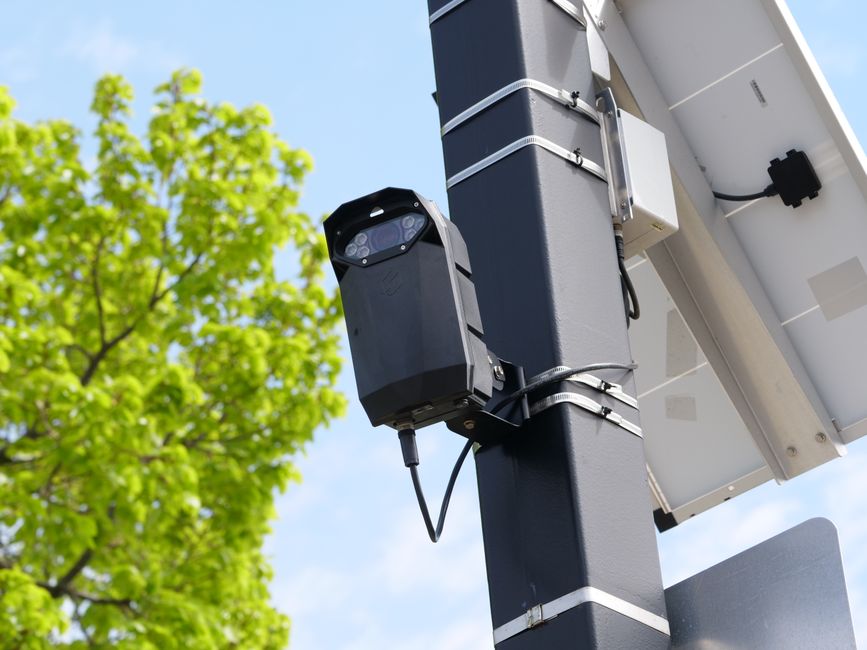
Flock Safety, founded in 2017, operates a surveillance platform built on automated hardware deployed across jurisdictions. The company’s product line includes license plate readers, drone technology, and microphone-based devices capable of detecting gunshots and other sounds. These sensors feed into a searchable database that law enforcement uses to identify suspects, locate missing persons, and recover stolen vehicles. More than 100,000 Flock cameras are currently deployed nationwide.
The public safety argument remains straightforward. Police departments credited the technology with solving serious crimes and protecting communities. When El Paso County Sheriff Joseph Roybal announced the decision to discontinue, he stated in a press release: “We have the tools, training, and experience to locate and apprehend criminals without relying on Flock cameras.”
The Misuse Problem
Officers Exploiting the Database
Specific misuse cases have fueled removal campaigns. In August, a police officer in Brentwood, Missouri was accused of using Flock cameras to surveil his ex-wife during their divorce. In September, an officer from East Texas received a prison sentence for using the platform to track his ex-girlfriend and her family. The surveillance tools designed to prevent crime were turned against private citizens.
Federal Access Without Oversight
A parallel concern involves how federal agencies access local data. Ithaca, New York terminated its Flock contract in March, citing what it called “proven instances of Flock Safety infrastructure being used by federal agents for information purposes even without specific authorizations from the contracting locality.” The city’s review identified reports that U.S. Immigration and Customs Enforcement (ICE) and the Bureau of Alcohol, Tobacco, Firearms and Explosives (ATF) had accessed Flock’s database to persecute immigrants, which Ithaca characterized as occurring “either intentionally or through its negligence.”
Visibility Drives Concern
Tatiana Rice, a senior director for U.S. legislation at The Future of Privacy Forum, told TechCrunch that the Flock backlash reflected “growing public skepticism toward technology” broadly. She highlighted a critical distinction: “A camera at the end of your street is tangible in a way that everyday sharing and selling of personal data online is not.” The physical presence of visible surveillance devices made abstract privacy concerns concrete. In South Windsor, Connecticut, Flock cameras operated for months without public warning or city council approval before residents voted to remove them in October.
State and Federal Policy Responses
Political momentum accelerated across jurisdictions. Florida barred license plate readers from state highways this summer, while Texas paused state funding for Flock deployments. These moves reflected concerns spanning privacy, misuse potential, and procurement transparency.
At the federal level, legislative action gained traction. In September, Rep. Thomas Massie, a Republican from Kentucky, introduced the Flock-Off Act, designed to bar federal funding for “Flock-style surveillance” and establish additional safeguards. That same month, a Reuters poll found more Americans opposed Flock’s technology than supported it, even as President Donald Trump expressed approval, saying he backed it “because of law enforcement.”
In October, legislation accelerated further. Senators Bernie Sanders (I-Vt.) and Jeff Merkley (D-Ore.), along with Representative Alexandria Ocasio-Cortez (D-N.Y.), introduced the Ban Flock Act to restrict “the rise of AI-powered surveillance cameras.”
Flock’s Response and Modifications
Facing pressure, Flock announced adjustments in August. The company reduced default data retention for new customers from 30 days to seven days, and introduced a requirement that agencies provide a case code before searching the database. These changes addressed some concerns without eliminating the core platform.
In a statement to TechCrunch, Flock said: “Every day, police departments across the country are using Flock technology to solve serious crimes, locate suspects, find missing people, and make a measurable impact on public safety. While we respect every community’s decision, removing a tool that is actively helping solve violent crimes and protect communities moves public safety backward. Every Flock customer owns its data and controls who it is shared with and how it can be used. Flock does not sell data and does not have a contract with ICE.”
The company’s response focused on contractual protections and data ownership rather than directly addressing how federal agencies had accessed the platform operationally.
Cities Seeking Middle Ground
Not all jurisdictions moved to sever their relationship with Flock. Cleveland, Ohio voted this summer to extend its contract while implementing new restrictions. The city began limiting database searches related to immigration and restricted access to Cleveland Police alone, cutting off the Northeast Ohio Regional Fusion Center, which functions as a federal intelligence agency and had been initially granted database access. A city spokesperson told TechCrunch that the technology remained necessary “for investigative purposes” while Cleveland evaluated alternative vendors through a request for proposals.
The Broader Surveillance Technology Debate
The Flock controversy parallels growing resistance to data center expansion and other advanced technology deployments. Adam Schwartz of the Electronic Frontier Foundation, which has investigated Flock previously, noted that police departments frequently adopted the technology with minimal city council oversight. Many communities discovered cameras had been installed months after deployment began.
Schwartz stated that “grassroots activists across the country have been demanding that city councils exercise their procurement power to refuse to pay for ALPRs,” referring to automatic license plate readers. He added that activists had pursued this agenda for years, and “many city councils are listening.” The pattern suggests communities are reasserting control over technology purchases rather than allowing departments to operate independently.
Tatiana Rice concluded that “these tools can offer real public safety benefits, but communities are clearly interested in ensuring that those benefits are not at the cost of their civil liberties.” With Democrats holding Congress and public opinion leaning against Flock, surveillance technology will likely remain contested across all levels of governance.
Source: TechCrunch
Frequently Asked Questions
What is Flock Safety and what technology does it deploy?
Founded in 2017, Flock Safety operates a surveillance platform with more than 100,000 cameras deployed nationwide. Its technology includes license plate readers, drones, and microphone-based devices that detect gunshots and other sounds to help police locate suspects, find missing persons, and recover stolen vehicles.
Why are local governments removing Flock cameras?
Cities cite multiple concerns including privacy violations, misuse by officers stalking ex-partners, federal agencies like ICE and ATF accessing data without authorization, and lack of community oversight during deployment. Some jurisdictions also question whether surveillance capabilities are necessary given existing police resources.
What changes has Flock made in response to criticism?
In August, Flock reduced default data retention from 30 days to seven days for new customers and required agencies to provide a case code before searching the database. The company has emphasized that customers control data sharing and that Flock does not have a contract with ICE, though critics argue operational access remains a concern.
