
Key takeaways
- Airbnb will launch a custom AI travel agent in the first half of 2027 that differs fundamentally from generic AI chatbots by using generative UI with hundreds of travel-specific interface components.
- The agent is designed around the insight that 80% of travelers enjoy the research and discovery phase, rather than wanting AI to automate decision-making away.
- Beyond booking, the agent will help travelers modify reservations, resolve payment issues, request refunds, and access 24-hour safety support—capabilities external AI tools cannot easily provide.
- Airbnb's strong Q3 earnings of $4.87 billion in revenue, up 19% year-over-year, provide the financial runway to invest in the agent while expanding its future capabilities into experiences and services.
Airbnb announced on Thursday that its custom-built AI travel agent will arrive in the first half of 2027. The company disclosed the timeline in its third-quarter shareholder letter, alongside earnings that exceeded Wall Street expectations and prompted a significant upward revision to the company’s full-year revenue forecast.
Chief Executive Brian Chesky framed the agent during Thursday’s earnings call as a response to how travelers actually plan trips. Rather than applying generic AI assistants to travel, Airbnb is building a specialized tool that combines years of platform insights with interface design tailored to travel discovery and booking.
The announcement represents a deliberate bet that a travel-specific AI agent, designed and controlled by the platform itself, will outperform general-purpose AI tools applied to travel. It also signals Airbnb’s confidence in its ability to integrate advanced AI into its platform while maintaining the user experience that has made the service dominant in its market.
Why General-Purpose Agents Fall Short for Travel
Chesky has been consistent for months in his criticism of applying broad-brush AI chatbots to travel planning. In a prior conversation with TechCrunch, he emphasized that the anticipation and research phases of trip planning are intrinsic to why people travel. An AI that automated those away would work against traveler psychology, not with it.
He extended that reasoning to analysts on Thursday: “Travel is aspirational. Discovering where to go and where to stay is part of the experience. In fact, 80 percent of travelers say they enjoy spending time researching trips. People want to look at photos. They want to compare homes. They want to make decisions with people they’re traveling with. And I don’t think the general-purpose agents are the best to do that.”
Limitations of today’s AI agents
Chesky specifically named Muse and Instinct as examples of current AI agents that perform well at bounded, transactional tasks. They can book a restaurant reservation or schedule a medical appointment. But travel planning involves aspirational elements, research discovery, and collaborative decision-making among travel companions. Existing general-purpose agents lack the context and interface design to handle that complexity effectively.
What travelers actually want from planning
According to Chesky, the 80 percent figure on travelers enjoying research time is central to Airbnb’s design philosophy. Travelers don’t want AI to make decisions for them; they want tools that support their exploration and comparison. Photos, property side-by-side reviews, the ability to see amenities and guest feedback, and the opportunity to discuss options with companions are core to the experience, not obstacles to optimize away.
This insight shapes how Airbnb’s agent is being built from the ground up. Unlike a chatbot that responds to queries with text, Airbnb’s agent is designed to present visual and interactive information that facilitates deliberation and discussion, not rush toward a booking.
Generative UI: Composing Interfaces in Real Time
Rather than defaulting to text-based conversation, Airbnb’s agent is built on what Chesky called “generative UI,” a system that composes the right interface elements at the right moment based on what the traveler is looking for. The agent draws from what Airbnb describes as “hundreds of travel-specific interface components”: maps, photographs, property comparison displays, calendars, itineraries, and other visual and interactive elements.
Building a custom component library
These elements are not static templates. The agent constructs them in real-time based on what a traveler is asking for. If a traveler wants to compare two beachfront villas in Costa Rica available in March, the agent surfaces a map showing both properties, photos from each, availability calendars side-by-side, price breakdowns, guest reviews, and amenities in a composed layout, rather than forcing the traveler to extract that information from conversational text responses. The composition changes based on context: a solo traveler planning a weekend sees different prioritization than a family booking a two-week vacation.
Leveraging decades of platform history
Airbnb says its nearly two decades of facilitating millions of host-guest interactions inform how the agent is built. The company has observed patterns in how people actually book, what information drives decisions, what comparisons matter, and what makes the booking experience satisfying. That institutional knowledge, Airbnb argues, gives it an advantage over external AI developers building travel tools without that historical context or operational integration.
This principle extends to the types of properties and experiences travelers are likely to want to compare, the common questions they ask, the concerns they have about payment and safety, and the support issues that arise most frequently. All of this data shapes the agent’s interface and responses.
Support and Assistance Beyond the Booking
The agent’s role extends significantly past the transaction itself. Airbnb outlined support capabilities that typical standalone AI tools cannot easily provide because they lack integration with the platform’s operational and support systems. The agent will handle reservation modifications, payment issue resolution, refund requests, rebooking when plans change, and 24-hour safety support—functions that require access to account data, booking history, payment records, and support workflows.
By embedding these capabilities into the AI agent, Airbnb transforms it from primarily a discovery and booking tool into a full-journey companion. A traveler who books through the agent and later needs to extend their stay, change dates, or request a refund will interact with the same agent they used to plan the trip, rather than switching to a different support channel or navigating a FAQ and form-based interface.
This integration is where the custom agent offers a material advantage over external AI tools. A third-party AI service, no matter how capable at natural language understanding, cannot easily access Airbnb’s database of bookings, payment systems, or support infrastructure to resolve issues. Building the agent in-house ensures those capabilities are wired in from the start.
Expansion Into Experiences and Services
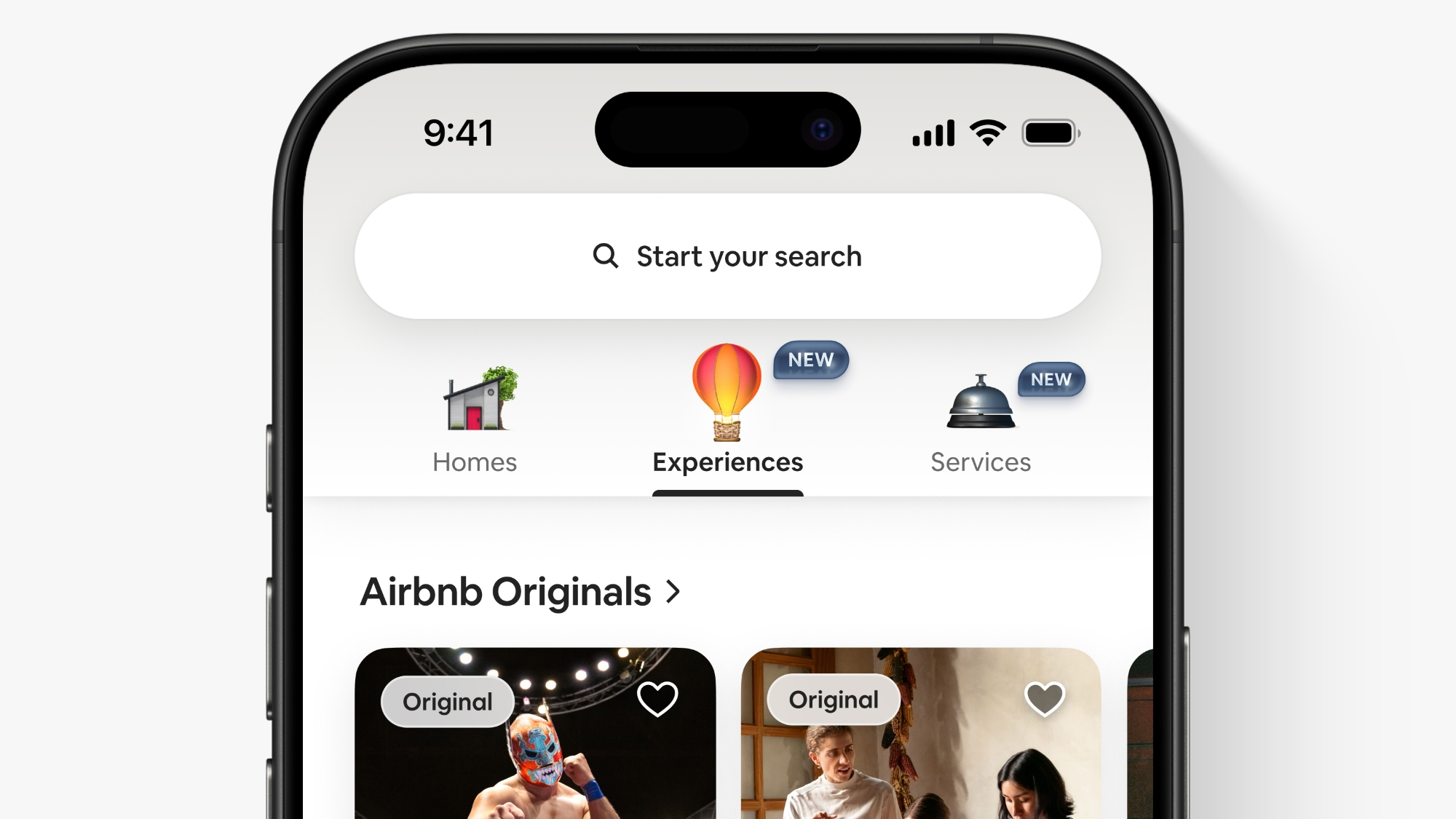
Airbnb has increasingly emphasized services and experiences alongside accommodation bookings, a strategic shift formalized in last year’s platform redesign. The company signaled in its shareholder letter that the agent will eventually help travelers beyond homes and hotels, extending into activities, dining, transportation, and other travel services.
This expansion positions the agent as the central hub for entire trip planning, not just lodging. As the agent’s capabilities broaden into experiences and services, it becomes increasingly difficult for travelers to plan trips anywhere but Airbnb, deepening the platform’s role in the travel lifecycle and increasing switching costs for users.
Strong Earnings and Accelerating Growth
The agent announcement arrived alongside Q3 results that exceeded expectations and prompted Airbnb to raise its full-year revenue guidance. Revenue for the quarter reached $4.87 billion, up 19 percent year-over-year and above Wall Street consensus. The company revised its 2026 revenue growth outlook from the mid-teens to the high teens, signaling confidence in maintaining momentum.
Chesky told analysts that Q3 marked “our fastest revenue growth in more than three years,” underscoring a return to acceleration after earlier periods of slower expansion. “Airbnb is back in growth mode,” he said, and noted that reaccelerating growth at Airbnb’s marketplace scale is uncommon in the industry.
The financial momentum provides both runway and confidence for the company to invest heavily in AI development and platform integration. The agent launch in H1 2027 represents a major competitive advantage bet: that a travel-specialized AI, designed by and for a travel platform, will outperform generic assistants in converting browsers into bookers and in driving retention and repeat bookings.
Source: TechCrunch
Frequently Asked Questions
When will Airbnb's AI travel agent launch?
Airbnb announced the agent will launch in the first half of 2027, with full capabilities available to consumers within that timeframe.
How is Airbnb's AI agent different from existing chatbots like Muse or Instinct?
Airbnb's agent is designed specifically for travel planning rather than general tasks. Instead of text-based chat, it uses generative UI to compose visual and interactive components like maps, photos, comparisons, and calendars that appear in real-time based on what a traveler is searching for.
What support functions will the AI agent provide beyond booking?
The agent will help travelers modify reservations, resolve payment issues, request refunds, rebook accommodations, and access 24-hour safety support—capabilities that require integration with Airbnb's operational systems, unlike standalone AI tools.
