
Key takeaways
- Blackstone is financing AI infrastructure through innovative debt structures backed by GPU collateral, positioning itself as the dominant capital provider outside hyperscalers.
- CoreWeave's debt reached $50 billion while Firmus cancelled a $30 billion IPO, reflecting market repricing amid rising interest rates and wider credit spreads.
- Khaira argues systemic financial risk is minimal because most AI data centers serve creditworthy giants like Microsoft and Meta that guarantee the debt.
- Portfolio returns from AI adoption remain uneven, suggesting infrastructure buildout may be outpacing near-term demand.
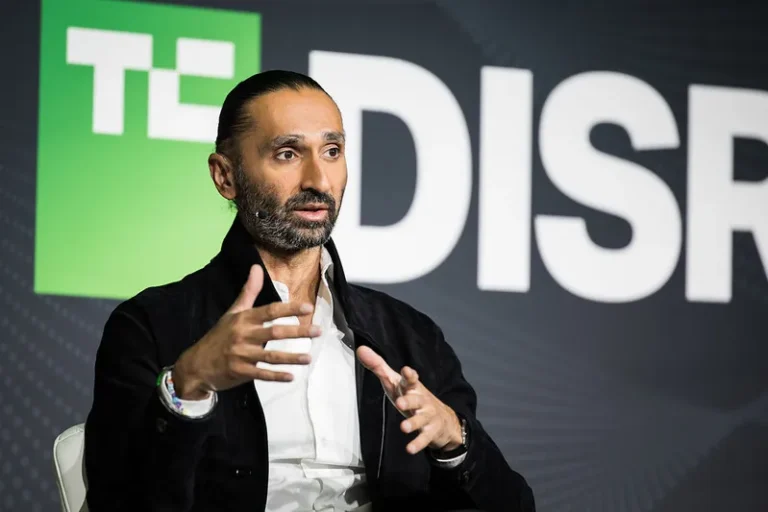
Private equity powerhouse Blackstone is positioning itself as a crucial financial backbone for artificial intelligence infrastructure, according to remarks from executive Jas Khaira at TechCrunch Disrupt last week. The firm, which manages $1.3 trillion in assets, has deployed capital across a spectrum of AI-related opportunities: direct loans to data center operators, equity stakes in chip manufacturers, and partnerships with leading AI research labs.
Blackstone’s Multi-Strategy Approach to AI Capital
Unlike earlier technology cycles such as mobile and software-as-a-service, where meaningful scale was achievable with moderate capital outlays, the artificial intelligence infrastructure transition demands unprecedented investment. Blackstone has built BXN1, a San Francisco-based unit dedicated to AI initiatives, to manage these opportunities. The group is headed by Khaira, who relocated from New York to oversee operations at the center of the industry’s capital flows.
Compute as a Core Asset
Blackstone describes itself as the largest owner of compute infrastructure outside the major cloud providers, a position built through investments in neoclouds and data centers. The firm treats computational resources not merely as assets to hold but as strategic tools to support the companies it backs. This focus distinguishes Blackstone from traditional venture capitalists who typically concentrate on minority equity stakes rather than infrastructure ownership.
Financing Innovation in an Era of Scale
The firm has pioneered flexible capital structures to meet the needs of infrastructure companies. These arrangements blend traditional debt financing with equity participation, allowing Blackstone to tailor its involvement to each opportunity. This adaptability becomes especially valuable when companies lack conventional financial metrics but possess valuable assets, specifically expensive and in-demand GPUs, that can serve as collateral.
Major Deals and Commitments
Blackstone’s infrastructure bets span both venture-scale companies and established technology giants. The firm recently committed $5 billion to Crux AI, a neocloud established in partnership with Google to commercialize custom TPUs. It also invested in Etched, a chip design startup founded four years ago that has drawn attention for its rapid technical progress.
CoreWeave’s Loan and the Birth of a Financing Model
Blackstone’s first major test of its compute-backed lending model came in 2023 with CoreWeave. The neocloud approached Blackstone seeking a $2.3 billion loan despite having only $30 million in annual revenue and minimal profitability at the time. Khaira explained that Blackstone’s comfort with the loan stemmed from two factors: CoreWeave held an enormous GPU inventory pledged as collateral, and the company had signed contracts with creditworthy customers including Microsoft. The transaction succeeded and became a template. Other lenders followed Blackstone’s lead, advancing billions more to CoreWeave and rival neoclouds using similar logic.
Recent Infrastructure Investments
Building on the CoreWeave model, Blackstone co-led a $10 billion credit facility for Firmus, an Australian GPU provider, alongside investment firm Coatue earlier this year. These commitments reflect confidence that the collateral value of GPUs combined with blue-chip customer relationships justifies large debt financing.
Rising Debt Concerns in the Market
The scale of debt now accumulated by neocloud operators has triggered warnings from industry observers. CoreWeave’s own borrowings have ballooned to approximately $50 billion. Altimeter Capital founder Brad Gerstner noted in a recent CNBC appearance that “the collateral that CoreWeave is putting up which is really only GPUs is not good enough anymore. They used that in the past to get cheap debt.”
Interest Rate Pressure and Credit Costs
Market conditions have shifted against borrowers in recent weeks. Interest rates rose in September, and inflation signals suggest borrowing costs will climb further. Simultaneously, lenders are charging wider credit spreads, additional premiums layered on top of higher base rates to compensate for perceived risk. This dynamic affects even the most creditworthy technology companies. Khaira noted that firms like Meta and Microsoft, despite their strong balance sheets and earnings, now face meaningfully higher costs to issue debt.
Market Repricing of Infrastructure Companies
Public markets have begun to reflect these financing headwinds. CoreWeave’s stock price dropped more than 20 percent in recent days. Firmus abandoned its planned listing on the Australian Securities Exchange, where it had targeted a valuation around $30 billion. Khaira attributed the IPO cancellation to fundamental repricing rather than a binary approval or rejection: “The market wasn’t there at that valuation, and so I think as a result, that deal didn’t get done.” He framed the broader dynamic as a market revaluation of appropriate pricing for neocloud infrastructure companies in an environment of rising interest rates.
Downplaying Systemic Risk
Despite the signs of stress, Khaira rejected comparisons to financial crises or warnings that AI infrastructure debt could destabilize the broader economy. He dismissed such scenarios as overblown: “This doesn’t feel like something where you’ve got 2008 banks that are shaky credits.” His reasoning centers on who ultimately bears the risk. The vast majority of AI data centers are built to serve the major cloud providers, Amazon, Google, Microsoft, and Meta, companies with the strongest credit ratings in existence. Therefore, the debt financing these projects is effectively backed by the most creditworthy borrowers available.
Adoption and Returns Through Ode
Beyond infrastructure financing, Blackstone is addressing a different bottleneck: helping companies actually integrate AI into their operations. The firm formed Ode, a $1.5 billion joint venture with AI research lab Anthropic and investment firm Hellman & Friedman, earlier this year. Ode supplies forward-deployed engineers who work directly with companies to implement AI systems and integrate them into existing workflows. Blackstone’s portfolio currently includes 280 companies, and Ode’s engineers are being deployed to assist these businesses.
The Question of Uneven Returns
When pressed on whether Blackstone’s portfolio companies are capturing tangible value from AI investments, Khaira acknowledged mixed results. He conceded that “there is definitely ROI, but it is uneven.” He described the adoption pattern as resembling a sawtooth wave, periods of progress interspersed with apparent pauses that can resemble oversupply of computational capacity waiting for application demand to catch up. For observers skeptical of the current pace of AI investment, this pattern suggests that buildout may be running ahead of genuine use cases.
Source: TechCrunch
Frequently Asked Questions
What innovative financing structure does Blackstone use for neoclouds?
Blackstone lends to neocloud operators by analyzing their customer contracts and using their GPU inventory as collateral. The model became standard after CoreWeave borrowed $2.3 billion from Blackstone in 2023 despite having only $30 million in revenue.
How much debt has accumulated in the neocloud sector?
CoreWeave's borrowings alone have reached approximately $50 billion. The rising debt burden, combined with higher interest rates and wider credit spreads charged by lenders, has pressured infrastructure companies' profitability and valuation.
Does Blackstone believe AI infrastructure debt poses systemic economic risk?
No. Khaira argues the risk is contained because the vast majority of AI data centers are built for hyperscalers with the strongest credit ratings. He compared the situation unfavorably to 2008 banking crises, saying it does not resemble that scenario.
