
Key takeaways
- Friend 2.0 adds a built-in speaker to Schiffmann's AI wearable, increasing the price from $99 to $249 as the company attempts a major product refresh.
- Schiffmann positions Friend as a philosophical new category—neither assistant nor lover, but a deity-like confidant designed to address loneliness.
- The AI wearables market remains unproven after Humane's AI Pin shut down in less than a year, raising questions about whether consumers want new hardware for AI interaction.
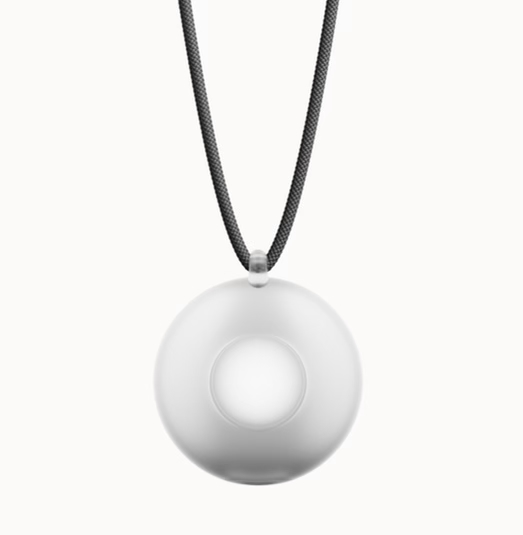
Friend, the AI necklace designed to combat loneliness through conversational artificial intelligence, is resurfacing with substantial hardware and pricing changes. Founder Avi Schiffmann unveiled Friend 2.0 this week, introducing a speaker system that allows the wearable to communicate audibly with users rather than solely through text messages.
The original Friend launched two years ago as an attempt to use artificial intelligence to provide emotional support and companionship. The device would send users text messages reflecting on their daily experiences and interactions. Now, the refreshed version represents a significant evolution in both capability and cost.
The most tangible upgrade is the addition of a built-in speaker that projects what Schiffmann describes as a distinct and consistent personality. Marketing materials showcase the device engaging in conversations about personal matters. In one promotional scenario, a woman discusses her relationship experiences, and the device offers supportive commentary. Another depicts a filmmaker receiving encouragement about creative ambitions. These interactions illustrate Friend’s positioning as something beyond a standard voice assistant.
The price escalation marks a notable shift in market positioning. Friend originally retailed for $99 when it first arrived. The new version commands $249—a 151 percent increase that reflects the additional hardware and presumably more advanced AI capabilities built into the device.
Redefining What an AI Companion Should Be
Schiffmann’s philosophical framing
The founder has been deliberate in describing what Friend is meant to be, and equally important, what it is not. In a recent social media post, Schiffmann explained his vision with unusual candor. He stated that he envisions Friend as offering something he struggles to categorize—”some kind of confidant, friend, God, not really sure what it is.” He explicitly rejected two common categories: it is neither an assistant nor a lover.
This positioning reveals an ambition extending beyond practical utility. Rather than designing a productivity tool or a romantic substitute, Schiffmann is attempting to create an entirely new category of AI relationship. The spiritual dimension he invoked—comparing it to a deity-like presence—suggests a product designed to fill psychological and emotional voids rather than accomplish discrete tasks.
Marketing strategy and public resistance
Friend’s marketing approach has been unconventional and occasionally provocative. The company ran a billboard campaign in New York City’s subway system that generated significant attention, though not necessarily positive. The advertisements were repeatedly vandalized and defaced, indicating public resistance to the concept of algorithmic entities replacing human connection. The repeated alterations to these billboards became a form of viral marketing in itself, ensuring visibility despite—or perhaps because of—the defacement.
The new promotional video for Friend 2.0 illustrates this continued strategy of positioning emotional vulnerability and AI support as interconnected. The scenarios presented feature people in moments of personal reflection or identity exploration, with Friend serving as a sounding board that offers validation and encouragement. One advertisement shows the necklace telling a woman, “It’s not bad to be gay,” while another depicts it praising a filmmaker’s work.
The Broader AI Wearables Market Faces Significant Headwinds
Friend is not alone in attempting to establish an AI wearable category, but the track record of competitors suggests fundamental market challenges. Humane Inc. created the AI Pin, positioning it as a smartphone replacement with artificial intelligence as its central feature. Despite considerable investment and visibility, the device failed to achieve meaningful market adoption. The company ceased operations in less than a year after launch, representing a dramatic collapse of what had been promoted as a transformative device.
This failure in the broader market for AI wearables raises critical questions about whether consumers are genuinely interested in new hardware categories for AI interaction. The general public has primarily adopted artificial intelligence through existing devices—smartphones, computers, and web browsers—rather than embracing purpose-built wearable hardware. Humane’s inability to convert interest into sustained sales suggests that novelty alone cannot sustain a hardware product, regardless of the underlying technology’s capabilities.
Friend’s position differs from Humane’s in key respects. Rather than replacing an existing device category, Friend proposes to augment human experience with a new form of relationship. Whether this approach will prove more successful than the failed AI Pin remains an open question.
Functionality Remains Largely Undefined
The companion versus assistant distinction
Beyond its claimed ability to listen and respond with personality, the practical capabilities of Friend remain opaque. Marketing materials suggest conversational interaction and emotional support, but the breadth of what the device can actually accomplish is unclear. Schiffmann’s explicit rejection of the “assistant” label is telling—it suggests Friend is not designed to schedule meetings, answer factual questions, or perform typical functions associated with Siri, Alexa, or Google Assistant.
This lack of functional clarity creates a significant marketing challenge. Consumer electronics typically succeed by solving concrete problems or providing measurable utility. Friend’s value proposition appears to rest almost entirely on the emotional or psychological dimension of having a non-judgmental entity to talk to, without obvious practical applications.
Addressing loneliness at premium price
The original concept for Friend directly addressed loneliness, a documented public health concern. However, the conceptual path from identifying a problem to solving it through an algorithmic necklace remains thin. The product assumes that artificial intelligence-generated responses and support can meaningfully address what is fundamentally a human social need. Whether consumers will find this satisfying at a $249 price point represents an open question.
The device’s utility would presumably expand with additional features and capabilities, but none have been announced or clearly described. Without transparency about future functionality or roadmap, customers are essentially purchasing the current conversational capability and the hope that the company will develop more substantial use cases.
The Premium Pricing Strategy
The $249 retail price situates Friend in the premium wearable market segment. Devices at this price point typically offer substantial functionality, brand prestige, or both. Friend’s primary selling point—emotional support and companionship through artificial intelligence—does not obviously justify the significant price increase from its original $99 positioning unless the speaker hardware and improved AI capabilities significantly enhance the user experience in ways not yet communicated to potential customers.
The pricing strategy may indicate that Schiffmann believes he has achieved genuine product-market fit and can attract customers willing to pay for an AI companion. Alternatively, the higher price might reflect increased manufacturing costs while the company attempts to establish profitability in what remains a niche market with unproven demand.
Uncertain Path Forward
Friend 2.0 represents a bet that the AI wearables category can succeed where competitors have failed. The addition of voice capability is a logical enhancement, as hearing a synthesized voice creates a more natural form of interaction than reading text messages. Whether consumers view this as a compelling innovation justifying $249 for a necklace that functions primarily as an emotional companion will determine whether Friend becomes a cultural footnote or the foundation for a new product category. The coming months will reveal whether market appetite for this form of AI companion extends beyond early adopters and technology enthusiasts exploring the boundaries of human-machine relationships.
Frequently Asked Questions
What is Friend 2.0 and how does it differ from the original?
Friend 2.0 is the updated version of Avi Schiffmann's AI wearable, now featuring a built-in speaker that allows the device to communicate audibly with users. The original Friend, launched two years ago, could only send text messages. The new version retails for $249, up from the original $99 price.
How does Schiffmann describe Friend's purpose?
Schiffmann describes Friend as a "confidant, friend, God"—something purposefully undefined. He explicitly states it is not an assistant and not a lover, positioning it as a new category of AI relationship designed to fill emotional and psychological voids rather than accomplish practical tasks.
Why is the AI wearables market uncertain?
Humane Inc.'s AI Pin, which aimed to replace smartphones, failed to achieve market adoption and shut down in less than a year. This demonstrates that consumers have not widely embraced purpose-built AI hardware, raising questions about whether Friend can succeed where established competitors have failed.
