
Key takeaways
- Jersey Mike’s represents the first restaurant IPO since Black Rock Coffee Bar’s September 2025 listing, arriving at a moment when capital markets are reassessing which businesses deserve premium valuations.
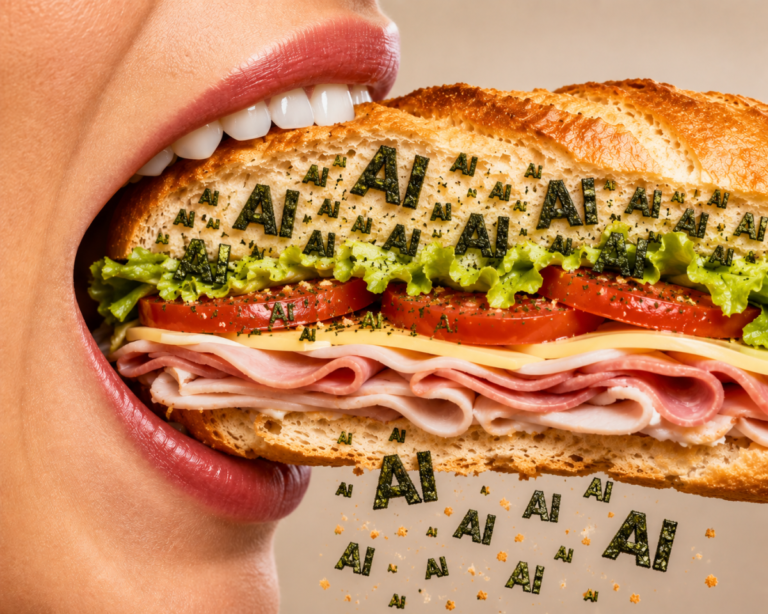
- The Jersey Mike’s IPO timing exposes a fundamental disconnect between capital deployment and actual business impact in the artificial intelligence space.
- Jersey Mike’s IPO signals that institutional investors and underwriters are gravitating toward businesses with demonstrable revenue, operational scale, and manageable risk profiles.
- Jersey Mike’s arrival as the second restaurant IPO in less than a year marks a potential shift in capital allocation away from venture-backed technology plays and back toward traditional consumer businesses.
Jersey Mike’s confidentially filed for an IPO on April 20, 2026, targeting a $12 billion valuation—a 50% jump from the $8 billion price tag Blackstone paid just four months earlier—exposing a stark contrast between traditional businesses built on tangible revenue and the speculative valuations fueling the artificial intelligence boom. The sandwich chain aims to raise more than $1 billion through the offering, led by Morgan Stanley, JPMorgan, and Jefferies, with the public debut expected in the third quarter of 2026. The timing underscores a critical market reality: while Venture Capital poured 65% of all 2025 funding into AI companies, a traditional restaurant operator with $309.8 million in annual revenue and 3,000 U.S. locations commands a nine-figure IPO—a far more defensible valuation than most AI Startups claiming transformative potential.
A Sandwich Chain Achieves What AI Hype Cannot: Real Revenue
Jersey Mike’s represents the first restaurant IPO since Black Rock Coffee Bar’s September 2025 listing, arriving at a moment when capital markets are reassessing which businesses deserve premium valuations. The company, founded by Robert Reeves who bought a single sandwich shop for $125,000 at age 17, now operates a franchise-heavy model generating over $300 million in annual revenue. This operational foundation—thousands of physical locations, auditable cash flows, and a proven business model spanning decades—stands in sharp contrast to AI companies that go public with massive valuations despite minimal revenue or profitability.
Charlie Morrison, former CEO of Wingstop, was appointed to lead Jersey Mike’s following Blackstone’s majority acquisition in January 2025. The involvement of top-tier investment banks and a seasoned restaurant executive signals confidence in traditional operational fundamentals rather than speculative growth narratives. Jersey Mike’s 2025 revenue climbed 10.6% year-over-year, though net income declined to $183.3 million from $238.8 million, yet the company’s financials remain transparent and grounded in actual customer transactions across thousands of locations.
The AI Sector’s Valuation Problem Laid Bare
The Jersey Mike’s IPO timing exposes a fundamental disconnect between capital deployment and actual business impact in the artificial intelligence space. In 2025, AI companies represented 40% of all venture deals while capturing 65% of total invested capital—a concentration that has inflated valuations far beyond what operational results can justify. This capital concentration drives the “hype” cycle, where companies with unproven technology command billion-dollar valuations based purely on growth projections and narrative appeal rather than revenue or profitability.
The restaurant industry itself reveals the gap between AI investment and real-world utility. Despite 73% of restaurant brands investing in artificial intelligence initiatives, only 9% report that these investments are making a meaningful operational difference. The AI in food and beverage is projected to grow from $9.68 billion today to $48.99 billion by 2029 at a 38% compound annual growth rate, yet current AI tools primarily offer predictive capabilities—essentially educated guessing—rather than prescriptive intelligence that drives measurable efficiency gains. Industry experts increasingly acknowledge that traditional, non-generative AI remains the most effective tool for labor and inventory optimization, suggesting the market is over-valuing generative AI hype while under-utilizing proven technologies.
Market Reassessment Accelerates as Fundamentals Return to Focus
Jersey Mike’s IPO signals that institutional investors and underwriters are gravitating toward businesses with demonstrable revenue, operational scale, and manageable risk profiles. The 50% valuation increase from Blackstone’s January acquisition to the April IPO filing reflects market confidence in restaurant fundamentals and franchise economics, not speculative growth potential. This stands as a direct counterweight to the AI sector’s tendency to command premium valuations on unproven technology and future scenarios.
The shift also reflects evolving expectations within the hospitality technology space. Industry leaders now emphasize “prescriptive intelligence”—actionable, workflow-specific improvements—over generic AI applications. This move away from hype-driven AI solutions toward practical, measurable tools suggests that the market’s previous enthusiasm for broad artificial intelligence plays may have peaked. Companies like Jersey Mike’s, which compete through operational excellence and franchise execution rather than technological disruption, increasingly appear as safer bets to public market investors weary of AI valuations disconnected from earnings.
Restaurant IPOs Return as Market Recalibrates
Jersey Mike’s arrival as the second restaurant IPO in less than a year marks a potential shift in capital allocation away from venture-backed technology plays and back toward traditional consumer businesses. The first restaurant public offering since Black Rock Coffee Bar in September 2025 suggests that the market recognizes stable, cash-generative food service operations as worthy of public investment. This recalibration reflects broader skepticism about whether AI companies justify their stratospheric valuations or whether capital has been misallocated toward hype rather than fundamentals.
Robert Reeves’ journey—building a $125,000 sandwich shop into an $8 billion enterprise—demonstrates the power of patient, operational capital over speculative venture money. The founder’s 64,000-fold return on his initial investment came through decades of consistent business building, franchise expansion, and customer service, not through venture rounds and growth-at-all-costs narratives. This narrative directly challenges the AI sector’s assumption that technology and disruption automatically justify massive valuations.
What Comes Next for Capital Markets and AI Valuations
Jersey Mike’s Q3 2026 IPO debut will provide a crucial market test: whether public investors will pay premium multiples for traditional restaurant operators with proven cash flows or whether AI companies will continue commanding valuations despite minimal profitability. The sandwich chain’s performance in the public markets could influence how underwriters price subsequent technology IPOs and whether venture capitalists reassess their concentration in artificial intelligence deals. If Jersey Mike’s achieves strong institutional demand, it signals a broader appetite for businesses with tangible assets and auditable revenue over speculative technology plays.
The confluence of Jersey Mike’s IPO filing, continued AI market concentration, and the restaurant industry’s lukewarm results with artificial intelligence investments suggests a potential inflection point in how capital markets price growth versus fundamentals. As institutional investors increasingly scrutinize the gap between AI hype and actual operational impact, traditional businesses generating hundreds of millions in annual revenue may command renewed respect in public markets. The next twelve months will reveal whether this represents a lasting shift in capital allocation or a temporary pause in the AI boom.
