
Key takeaways
- Tyler Shultz, a Theranos whistleblower, warns that the current AI boom creates similar opacity and conditions that enabled Elizabeth Holmes's $10 billion fraud.
- AI systems are harder to verify than traditional technologies, making it difficult for investors to distinguish genuine breakthroughs from ChatGPT wrappers or exaggerated claims.
- Elizabeth Holmes is now launching Haemanthus, branded as "Theranos 2.0," having raised approximately $20 million while serving a federal prison sentence exceeding eleven years.
- Shultz emphasizes that investors must prioritize rigorous due diligence over narrative, as the scale of AI valuations amplifies both the incentives and potential harms of fraud.
As artificial intelligence companies raise capital at astronomical valuations without proven business models or profitability, a prominent voice from one of tech’s most notorious fraud cases is sounding an alarm: the current investment climate bears a dangerous resemblance to the environment that enabled Theranos.
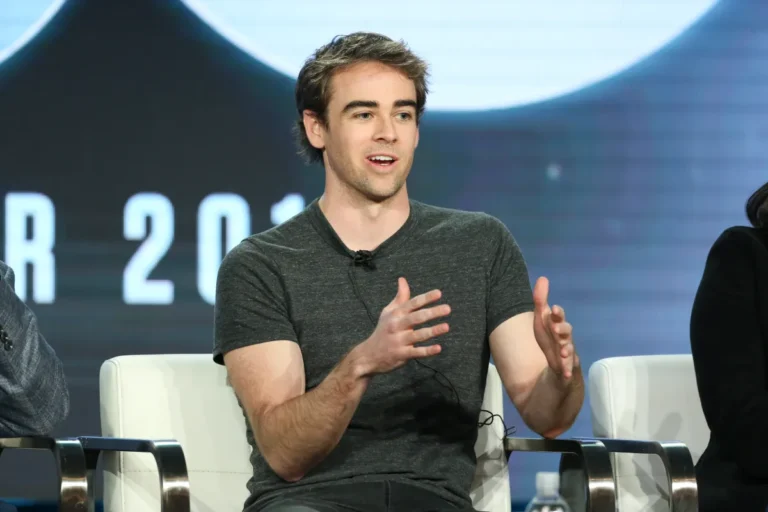
Tyler Shultz, who blew the whistle on Theranos while still an employee, has watched with growing concern as investors pour billions into AI startups with minimal scrutiny. In remarks to The San Francisco Standard, he warned that the opacity surrounding AI technology creates what he calls “a great opportunity to go deceive people.”
Shultz’s warnings carry particular weight given his front-row seat to one of Silicon Valley’s greatest deceptions. As a recent college graduate working at Theranos, he discovered that the company’s blood-testing machines—the cornerstone of its $10 billion valuation—did not actually work as marketed. The company used its own devices for only a fraction of its tests, routing the majority to third-party equipment while misleading investors and patients alike.
The Theranos Playbook
Theranos operated on a funding model that relied on personal persuasion over rigorous verification. Elizabeth Holmes raised capital primarily from individual investors including members of the DeVos and Walton families, largely bypassing the venture capital ecosystem that might have demanded greater technical scrutiny.
The company withheld scientific data from potential investors, claiming that revealing technical details would compromise trade secrets. This opacity successfully deterred many Silicon Valley venture firms from investing, but it proved no barrier to wealthy individuals moved by Holmes’ vision and personality. The model transformed a coffee-table pitch into a $100 million funding juggernaut—what Shultz characterizes as the largest “angel round” in history.
Holmes herself was not a technical founder who built something that worked and then pitched it. Instead, the entire foundation rested on her ability to convince others that the technology existed and functioned properly. When the fraud unraveled, Shultz was among those who paid the price, both professionally and personally.
The Documentary and Second Act
The recent documentary “You Can See Everything,” directed by Nathan Fielding and Lance Oppenheim, has reignited interest in the Theranos saga as one of the highest-grossing documentaries ever made. According to TechCrunch, the film notably refuses to portray Holmes as either a calculating villain or a sympathetic figure, instead focusing on her capacity to evoke pity from audiences—even viewers fully aware of her crimes.
The documentary captures Holmes in her final weeks before incarceration, serving a federal prison sentence exceeding eleven years. It also documents her current venture: Haemanthus, positioned as “Theranos 2.0,” which she is developing with Billy Evans, a hotel heir. The new diagnostics company has reportedly secured approximately $20 million in funding. TechCrunch noted that the film does not adequately address the gravity of Theranos’s harms, including the dissemination of dangerously inaccurate test results to real patients and the harassment directed at Shultz as he attempted to expose the company’s practices.
Why AI Repeats the Risk
The Theranos Precedent
The Theranos collapse appeared, in 2015 and 2016, to be a watershed moment that would reshape investor behavior. The assumed lesson was straightforward: conduct rigorous technical due diligence before writing large checks. Verify claims. Demand evidence. Yet Shultz observes that the AI boom poses a risk of revisiting those same mistakes at a grander scale.
The fundamental dynamic remains similar: companies with no revenue history, no working products, and no clear path to profitability attract valuations in the tens or hundreds of billions of dollars based largely on narrative and perceived market potential.
The Verification Problem
Unlike pharmaceutical devices, which are tested against measurable, reproducible standards, AI systems resist easy verification. A trained model’s behavior emerges from complex neural network patterns that even its creators struggle to fully explain. For an outside investor with limited technical expertise, distinguishing between a genuine breakthrough and a conventional system repackaged as something revolutionary becomes extraordinarily difficult.
“A huge danger with AI is that I think it is really hard to do due diligence on it,” Shultz told The San Francisco Standard. “It’s really hard to tell the difference between what is something truly unique and new versus like, a ChatGPT wrapper.”
The challenge that worried Shultz most is endemic to AI: the difficulty of verifying claims independent of the company making them. A charismatic founder can describe their system’s capabilities in language that sounds transformative while remaining technically vague enough to resist falsification by investors sitting across a conference table.
The Incentive Structure
Shultz emphasized the direct link between access to capital and the power it confers. “If you want to deceive people, I think this is a great opportunity to go deceive people,” he said, underscoring the financial incentives that make deception attractive when large sums can be obtained through persuasion rather than proof. When large sums are transferred based on narrative alone, the asymmetry of information and power creates conditions under which exaggeration at minimum and fraud at maximum become rational decisions.
Learning from History
Shultz’s perspective is informed not only by his experience at Theranos but by his family history. His grandfather, George Shultz, served as both Secretary of State and Secretary of the Treasury and was himself a notable investor in and board member of Theranos, an arrangement that neither prevented nor adequately constrained the fraud.
The lesson Shultz now emphasizes is not that fraud is always detectable but that the burden of verification must rest with the investor, not the founder. The Theranos case seemed to crystallize a straightforward principle for capital allocators: demand transparency, require evidence, and scrutinize underlying claims before deploying billions. Yet Shultz worries that the urgency of the AI moment—the sense that missing this wave means missing the future—may overwhelm the harder-won wisdom of recent fraud cases.
What Comes Next
Holmes has begun laying groundwork for what she describes as her “second act,” though Shultz expressed uncertainty about its final form. The existence of Haemanthus—a company that explicitly brands itself as a successor to Theranos—suggests that the playbook remains recognizable: secure funding, maintain opacity about technical specifics, and cultivate a compelling narrative around transformative potential.
Shultz expressed what he called “unease about what might come next,” acknowledging that Holmes is “certainly preparing and beginning her second act.” The cautionary framework Shultz offers is not that fraud will necessarily recur in the AI sector, but that the structural conditions enabling it remain firmly in place. When companies raise hundreds of millions on forward-looking claims that cannot be easily verified, and when the market reward for appearing revolutionary exceeds the penalty for overstating capabilities, the incentive structure tilts toward exaggeration and deception.
Source: TechCrunch
Frequently Asked Questions
Why does Tyler Shultz compare the AI boom to the Theranos fraud?
Shultz observes that both involve companies raising massive capital based on narrative and unverified claims rather than demonstrated technology. Theranos reached a $10 billion valuation despite its blood-testing machines not actually working, and Shultz worries that AI's technical complexity makes it harder for investors to verify claims and distinguish genuine innovation from repackaged existing technology.
What is Haemanthus and what does it have to do with Elizabeth Holmes?
Haemanthus is a diagnostics company co-founded by Elizabeth Holmes and Billy Evans, explicitly branded as "Theranos 2.0." The company has raised approximately $20 million in funding while Holmes serves her federal prison sentence for Theranos-related fraud, now exceeding eleven years.
How did Theranos raise $10 billion if its technology didn't work?
Theranos avoided venture capital investors by raising primarily from individual wealthy investors including the DeVos and Walton families. The company withheld scientific evidence from investors, citing trade secret concerns, while founder Elizabeth Holmes relied on personal persuasion to secure funding. Theranos used its own machines for only a fraction of tests; most tests were outsourced to third-party equipment without disclosure to investors or patients.
