
Key takeaways
- Uber’s decision to scale back its aggressive European food delivery rollout marks a significant departure from its February 2026 expansion announcement, which targeted seven new markets across the continent.
- Uber’s expansion challenges extend beyond strategic choices, as the company confronts an increasingly hostile regulatory environment across Europe.
- Uber’s ride-hailing service has faced bans or suspensions in France, Germany, Belgium, and Spain due to legal challenges and regulatory enforcement actions.
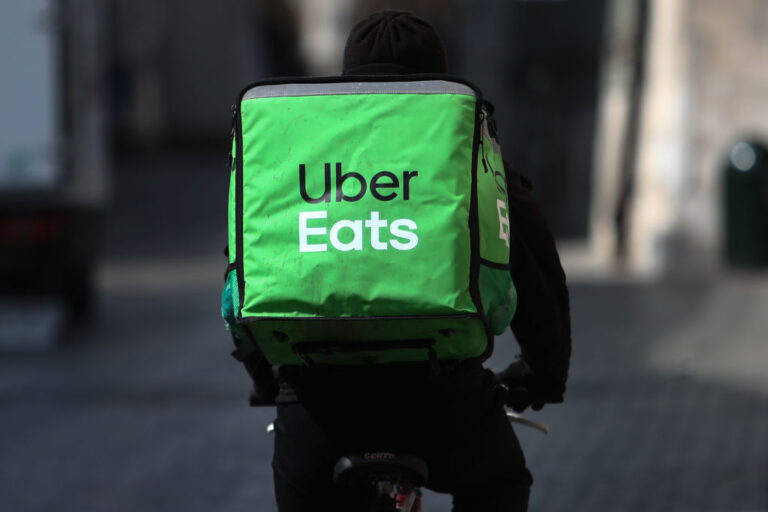
Uber has paused its Uber Eats expansion in five of seven targeted European markets, shelving rollout plans for Austria, Norway, Greece, and two unnamed countries as the ride-hailing giant prioritizes its pursuit of a takeover of Germany’s Delivery Hero. The strategic pivot, announced on July 5, 2026, directly threatens the company’s original projection of $1 billion in gross bookings over three years from the expansion initiative.
Expansion Pause Signals Strategic Recalibration
Uber’s decision to scale back its aggressive European food delivery rollout marks a significant departure from its February 2026 expansion announcement, which targeted seven new markets across the continent. The company confirmed to the Financial Times that the pause followed the “huge success” of launches in Finland and Denmark, adding that it now plans to focus on building momentum in markets where Uber Eats is already operating rather than pursuing simultaneous growth across multiple new territories.
The original expansion strategy projected an additional $1 billion in gross bookings over the subsequent three years across Austria, Denmark, Finland, Norway, Czech Republic, Greece, and Romania. By pausing five of these seven markets, Uber has effectively halved its geographic ambitions for 2026, though the company maintains it will still enter new markets as part of a “renewed push into the multibillion-euro food delivery sector.” The timing of the announcement coincides directly with Uber’s active pursuit of acquiring Delivery Hero, one of Europe’s largest food delivery companies, suggesting that capital allocation and management focus have shifted toward consolidation rather than organic expansion.
Delivery Hero Acquisition Drives Strategic Priorities
The Delivery Hero takeover pursuit represents Uber’s primary strategic objective in Europe’s competitive delivery landscape, and the pause in five markets reflects a deliberate choice to concentrate resources on this acquisition effort. By scaling back simultaneous expansion plans, Uber reduces operational complexity and capital expenditure requirements, freeing resources for the acquisition negotiations. This consolidation-focused approach contrasts sharply with Uber’s historical strategy of rapid geographic expansion to establish market dominance before competitors solidify positions.
Delivery Hero operates across multiple European markets and represents a shortcut to established infrastructure, merchant relationships, and customer bases that would otherwise require years of organic development. The acquisition strategy also offers Uber a mechanism to bypass some of the regulatory hurdles that have complicated its independent expansion efforts across the continent. Rather than building Uber Eats from scratch in new markets, acquiring Delivery Hero would allow Uber to inherit an already-operational network and rebrand or integrate it into its existing platform.
Regulatory Headwinds Complicate European Operations
Uber’s expansion challenges extend beyond strategic choices, as the company confronts an increasingly hostile regulatory environment across Europe. The EU’s top court ruled in 2016 that Uber should be regulated as a transport company, not as a technology platform, determining that Uber exercises decisive influence over drivers’ service conditions, pricing, and assignments. This precedent continues to complicate the company’s expansion plans and operational model across member states.
More recently, EU ministers agreed on regulations under the Platform Work Directive that would classify gig-economy workers on platforms like Uber as employees if the platform supervises performance electronically and controls pay and hours. The directive, which sets minimum protection standards for over 28 million gig workers across the EU, could significantly increase Uber’s operational costs through licensing fees and mandate company benefits for drivers. Though still pending European Parliament approval, the directive is widely considered likely to pass, forcing Uber to fundamentally restructure its labor model across the continent.
Service Suspensions Across Major Markets
Uber’s ride-hailing service has faced bans or suspensions in France, Germany, Belgium, and Spain due to legal challenges and regulatory enforcement actions. In response, Uber filed complaints with the European Commission alleging violations of EU treaty articles governing freedom of establishment and freedom to provide services. In Germany specifically, Uber B.V., the company’s European subsidiary headquartered in the Netherlands, currently operates only licensed transport services including UberX, UberBLACK, and UberTaxi, having abandoned its non-professional driver model known as UberPOP.
These restrictions demonstrate the fragmented nature of European regulation, where Uber must navigate distinct legal frameworks and political environments in each country. The company’s inability to deploy its preferred business model in major European markets limits its ability to achieve the scale and unit economics that characterize its operations in North America and Asia. This regulatory complexity directly informed Uber’s decision to pause expansion in additional markets while simultaneously pursuing the Delivery Hero acquisition as an alternative growth pathway.
Historischer Kontext: Ubers Europäischer Kampf
Uber’s European expansion has faced consistent headwinds since the company’s initial market entry, with regulatory authorities across the continent viewing the platform business model as fundamentally misaligned with existing labor and transportation frameworks. The 2016 European Court of Justice ruling established a legal precedent that has shaped regulatory approaches across member states, effectively requiring Uber to operate as a traditional transport company rather than as a technology Intermediary.
The company’s current strategic pivot represents a departure from its historical playbook of aggressive geographic expansion, instead embracing consolidation through acquisition. This shift reflects both the maturation of European markets and the hardening of regulatory positions against the platform economy model that Uber pioneered globally.
Nächste Entwicklungen im Fokus
Investors and market observers should monitor the status of Uber’s Delivery Hero acquisition negotiations closely, as the outcome will determine whether the company successfully consolidates its European food delivery presence or faces continued fragmentation across national markets. The European Parliament’s vote on the Platform Work Directive represents another critical milestone, as passage would materially increase Uber’s labor costs and operational complexity across the continent.
Uber’s ability to execute its revised European strategy—focusing on momentum in Finland and Denmark while pursuing the Delivery Hero acquisition—will significantly impact the company’s long-term profitability and competitive positioning on the continent. The pause in five markets demonstrates that even Uber, with its global scale and capital resources, must adapt its growth strategy when confronting Europe’s increasingly stringent regulatory environment and fragmented market structure.
