
Key takeaways
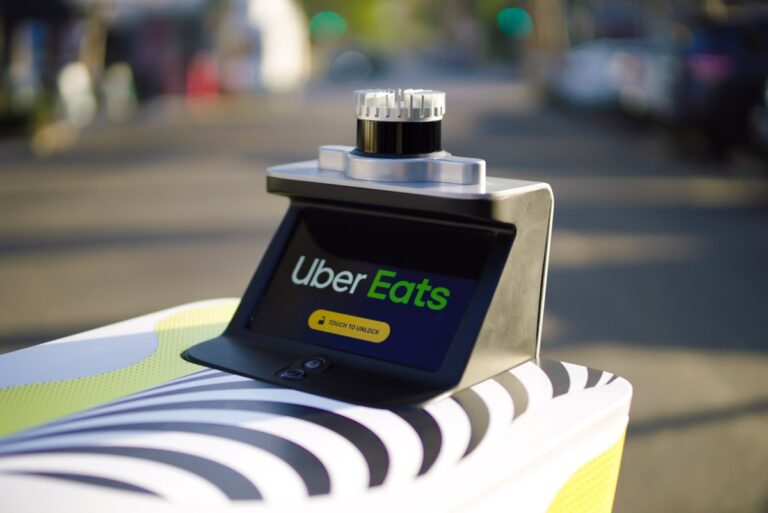
- Uber has completely divested its stake in Serve Robotics without advance notice, ending their partnership that once promised to deploy 2,000 autonomous delivery robots across U.S. markets.
- Delivery volume through Uber declined for the first time in 17 consecutive quarters while Serve's growth with other partners surged nearly 50 percent, exposing fundamental operational misalignment.
- Uber maintains 30-plus autonomous vehicle technology partnerships, suggesting the company views robotics as a diversified portfolio strategy rather than a focused long-term commitment.
Uber has completed a full divestiture of its stake in Serve Robotics, the autonomous sidewalk delivery robot company that originated from its 2020 Postmates acquisition. The exit, disclosed in regulatory filings and first reported by Bloomberg, came as a shock to Serve’s leadership. According to sources familiar with the situation, Serve Robotics learned about the complete stake sale only after it became publicly disclosed, with no advance notice from Uber. The timing underscores how far the two companies’ relationship has deteriorated since they expanded their partnership just two years earlier.
Uber said it could not be reached for immediate comment on the divestiture. The company has been reducing its stake in Serve gradually throughout 2025, according to regulatory filings, but the final complete exit was not telegraphed to its former partner.
From Postmates X to Independent Robotics Operator
The Acquisition and Spinoff
Serve Robotics did not originate as an independent startup. The company began as Postmates X, the robotics research division of Postmates, an on-demand delivery platform. When Uber acquired Postmates in December 2020 for $2.65 billion, it inherited Postmates X along with the broader delivery service. That acquisition brought Postmates’ autonomous delivery robot research and development capabilities directly under Uber’s corporate structure.
The relationship between Uber and the robotics division shifted in 2021 when Uber spun out Postmates X as a separate company called Serve Robotics. The new independent company took its name from the sidewalk delivery robot that had been developed and tested under the Postmates X umbrella. While Serve became legally distinct, Uber remained its primary investor and partner, maintaining financial stakes and operational involvement.
Building the Partnership Structure
In 2022, Uber and Serve formalized a deeper partnership agreement that went beyond simple ownership. The two companies committed to collaborating on deployment and operation of Serve’s autonomous robots, not merely as a venture investor and portfolio company, but as active business partners. This partnership expanded substantially in May 2023 when the companies announced they would deploy up to 2,000 of Serve’s sidewalk delivery robots across multiple U.S. markets integrated directly into Uber’s consumer app.
The May 2023 expansion appeared to signal confidence from both sides. Serve’s robots would deliver food and other items in urban areas, complementing Uber’s human-driven delivery network. From Uber’s perspective, the investment seemed to be paying off—the company was moving from theoretical partnership to large-scale field operations, potentially gaining competitive advantage in autonomous delivery.
Performance Cracks in the Foundation
The End of Growth Momentum
During Serve’s second-quarter 2025 earnings call held on August 6, CEO and co-founder Ali Kashani revealed that the partnership’s performance had deteriorated significantly. He disclosed data spanning from the first quarter of 2022 through the first quarter of 2025—17 consecutive quarters during which delivery volume through Uber had grown continuously. This sustained expansion trajectory suggested the partnership was delivering on its promise.
In the second quarter of 2025, this streak ended. Delivery volume through Uber declined for the first time, according to Kashani. He attributed the reversal specifically to “lower-than-expected robot utilization,” meaning Serve’s robots were not being deployed at the frequency that either company had anticipated when they announced the 2023 expansion to 2,000 units. The robots themselves were functioning, but they were not being used with sufficient frequency to maintain growth.
Other Platforms Tell a Different Story
Kashani’s disclosure became more damaging when he provided comparative performance data. During that same quarter in which Uber volume declined, Serve’s deliveries with another food delivery partner grew nearly 50 percent in a single quarter. This stark contrast suggested that the shortfall was not due to fundamental problems with Serve’s technology or operational execution, but rather something specific about the Uber partnership or how it was structured.
The implication was clear: Serve’s robots were capable of strong growth. The problem was Uber-specific. Whether due to market selection, operational requirements, integration challenges, or dispatch algorithms, something about the Uber arrangement was producing inferior results compared to Serve’s other partnerships.
Operational Misalignment Surfaces
Kashani identified the underlying issue as strategic disagreement rather than temporary performance pressure. He stated that Uber and Serve held “differing views” about how to operate and scale their shared autonomous fleet going forward. These disagreements covered specific operational ground including fleet coordination—how robots were dispatched and maintained—and merchant integration, the process of connecting robots to restaurants and retail partners for pickup.
This operational misalignment suggested that despite years of partnership, the companies had never fully resolved how their business models would work together in practice. What appeared outwardly as a successful collaboration in May 2023 apparently concealed unresolved fundamental disagreements about execution.
The Non-Renewal Decision
During that same August 6 earnings call, before Uber’s divestiture announcement became public, Kashani stated that Serve Robotics did not expect to renew its partnership agreement with Uber when the contract expires in early 2027. This statement signaled that management had already concluded the relationship was not salvageable, even with roughly 18 months remaining on the current agreement.
The fact that Kashani made this declaration public before Uber’s complete stake sale became disclosed suggests Serve’s leadership was aware the partnership was ending, though apparently not aware of Uber’s plan to exit its ownership stake entirely at that precise moment. Uber had been reducing its position incrementally throughout 2025 according to regulatory filings, but did not provide Serve with advance notice of the final complete exit.
Uber’s Diversified Robotics Portfolio
Serve represents just one component of Uber’s much broader set of autonomous vehicle technology interests. The company has partnered with or invested in more than 30 autonomous vehicle technology companies over the past several years, according to available information. This approach suggests Uber views robotics and autonomous delivery not as a focused bet requiring singular long-term commitment, but as a space where multiple parallel technologies warrant exploration simultaneously.
From this portfolio perspective, exiting the Serve investment while maintaining 29 other robotics-related positions creates minimal strategic impact for Uber. The company can afford to walk away from one partner because it has numerous alternative bets across the autonomous vehicle ecosystem. For Serve, conversely, the loss of Uber as a partner represents loss of access to one of the largest potential deployment platforms.
What Comes Next
For Serve Robotics, the immediate challenge is rebuilding its growth strategy without Uber’s app integration and distribution channel. However, the company’s demonstrated 50-percent quarterly growth with other delivery platforms suggests viable alternative paths exist. Serve will have until early 2027 to transition away from Uber operations before the partnership formally ends, though the unexpected nature of the divestiture announcement suggests cooperation may be limited.
For Uber, the exit allows the company to focus its robotics strategy on other partners and technologies that may align better with its operational model and geographic priorities. The company’s portfolio approach to autonomous vehicles ensures that progress in robotics and autonomous delivery will continue across its 30-plus partnerships, even if Serve proves not to be a central piece of that strategy.
Frequently Asked Questions
When did Uber and Serve expand their partnership?
In May 2023, the companies announced they would deploy up to 2,000 of Serve's sidewalk delivery robots across multiple U.S. markets integrated into Uber's app.
Why did the Uber-Serve partnership fail?
Delivery volume through Uber declined in Q2 2025 due to lower-than-expected robot utilization. CEO Ali Kashani cited differing views on operating model, fleet coordination, and merchant integration.
What is Serve Robotics doing after Uber's exit?
Serve will operate independently and has demonstrated strong growth with other delivery partners, growing nearly 50 percent in a single recent quarter with another platform.
