
Key takeaways
- Rauch frames the separation of models from agents as essential to building what he calls the “Generative Web”—an Inter net where AI agents operate as first-class users alongside humans.
- Rauch’s vision carries profound implications for how work gets organized in an AI-driven world.
- Yet Rauch simultaneously warned of emerging security vulnerabilities tied to unsupervised agent deployment.
- Rauch has publicly signaled Vercel’s readiness for an initial public offering, citing the company’s transformation from a $100 million revenue business to a $340 million run-rate operation.
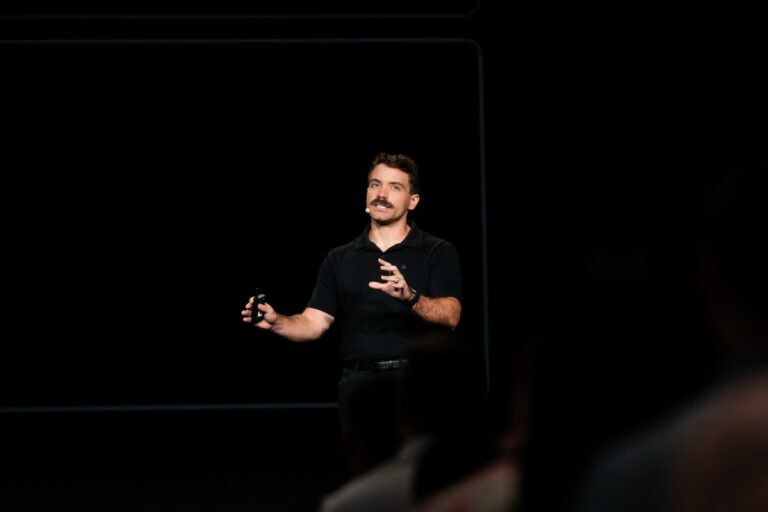
Vercel CEO Guillermo Rauch is drawing a critical distinction between AI models and AI agents—arguing that the future of software infrastructure depends on treating them as fundamentally different layers. The platform, now valued at $9.3 billion following a $300 million funding round in September 2025 co-led by Accel and Singapore’s sovereign wealth fund GIC, is positioning itself at the center of this architectural shift as AI agents increasingly become primary users of software systems.
The Model-Agent Separation: A Core Infrastructure Argument
Rauch frames the separation of models from agents as essential to building what he calls the “Generative Web”—an Internet where AI agents operate as first-class users alongside humans. Rather than treating agents as thin wrappers around language models, Rauch contends that APIs, runtimes, and frameworks must be fundamentally redesigned to support agent-native workflows, both synchronous and asynchronous. This distinction moves beyond semantic debate into practical infrastructure design.
Vercel’s September 2025 launch of its AI Gateway exemplifies this philosophy. The gateway enables multi-model integration through a single endpoint with bring-your-own-key support, allowing developers to route inference requests across multiple LLM providers including Claude and DeepSeek. By decoupling the agent layer from specific models, Vercel reduces integration complexity and insulates applications from single-vendor dependencies. The platform’s V0 text-to-app service has already generated over 100 million application instances, demonstrating the scale at which this abstraction operates.
Why This Matters: The Shift From Execution to Management
Rauch’s vision carries profound implications for how work gets organized in an AI-driven world. In a recent interview, he argued that “AI agents are now doing the work of individual contributors, making everyone a manager. We should all become ‘mini CEOs.’” This reframing suggests that as agents handle execution, human roles shift toward orchestration, decision-making, and management—a structural change to enterprise operations that requires new software patterns.
The timing aligns with explosive growth at Vercel itself. The platform’s run-rate GAAP revenue surged 86 percent year-over-year, reaching $340 million by February 2026—a period Rauch flagged as a record growth month driven by AI coding agents like Claude Code. This revenue acceleration underscores investor confidence in the model-agent separation thesis and validates the market’s appetite for agent-ready infrastructure.
Architectural Risks and Enterprise Governance Challenges
Yet Rauch simultaneously warned of emerging security vulnerabilities tied to unsupervised agent deployment. AI coding agents generating deployable code without human review create what he termed a “Shadow IT” risk—code proliferating through enterprise systems outside governance frameworks. This tension between agent autonomy and enterprise control has become central to infrastructure conversations across the industry.
The April 2026 breach of Vercel’s internal systems illustrated the stakes. Hackers exploited an “architectural gap” rather than a software flaw, gaining access through a third-party AI tool granted full permissions via a corporate Google account. The stolen database was listed for $2 million on hacker forums, signaling that AI-integrated infrastructure introduces novel attack vectors. The incident underscores Rauch’s broader argument: systems designed without agent-first security assumptions face unexpected vulnerabilities.
Malte Ubl and the Application Layer Thesis
Vercel CTO Malte Ubl has extended Rauch’s framework with a provocative claim: “AI engineering is the legitimate successor to web development and the mainstream discipline that will define the next decade.” Ubl argues that as AI labs commoditize models, competitive advantage shifts to developers building the application layer—the space where agents and models interact. This positioning reflects a broader industry recognition that model differentiation alone no longer drives value creation.
This layering strategy matters because it allows Vercel to remain relevant regardless of which models dominate. By building abstraction layers that treat models as interchangeable components, Vercel hedges against the risk that any single model provider captures the market. The AI Gateway’s multi-model support embodies this hedge in product form.
The Infrastructure Race and IPO Signals
Rauch has publicly signaled Vercel’s readiness for an initial public offering, citing the company’s transformation from a $100 million revenue business to a $340 million run-rate operation. This acceleration positions Vercel as a public market candidate in the infrastructure layer of the AI economy—competing with platforms that enable developers to build agent-ready applications at scale. The $9.3 billion valuation reflects investor conviction that agent infrastructure will command significant capital over the next decade.
The funding round itself matters strategically. GIC’s participation signals that sovereign wealth funds view agent-ready developer platforms as essential infrastructure, not niche tooling. Accel’s continued backing reflects confidence in Rauch’s architectural vision during a period when many infrastructure investments face scrutiny.
Synchronous Versus Asynchronous: The Long-Term Evolution
Rauch has classified AI agents into generational categories based on their operational patterns. Synchronous agents—chatbots and immediate-response systems—represent the current deployed base. Asynchronous agents, which can solve complex problems over extended durations and collaborate across human and machine participants, represent the “more potentially interesting long-term” evolution. This taxonomy suggests that current agent deployments may represent only the first wave of a much larger transformation.
The distinction carries architectural implications. Asynchronous agents require different runtime assumptions, persistence models, and failure-recovery patterns than synchronous systems. Vercel’s infrastructure investments increasingly target this longer-term vision, positioning the platform to capture value as agent complexity increases.
What Comes Next for Agent Infrastructure
The model-agent separation thesis will face its first major test as enterprise deployments scale beyond proof-of-concept stage. Shadow IT risks, security vulnerabilities, and governance challenges will force infrastructure providers and enterprises to codify new standards for agent deployment. Vercel’s positioning as a neutral platform supporting multiple models and agent patterns gives it structural advantages in this consolidation phase.
The IPO signal from Rauch indicates that public markets may soon price in the agent infrastructure thesis. As AI coding agents drive record growth and Vercel’s valuation approaches $10 billion, the company’s path to public markets will test whether investors believe agent-ready developer platforms merit valuations comparable to enterprise software incumbents. The separation of models from agents—Rauch’s core architectural claim—will either validate or challenge the infrastructure investments flowing into this sector.
