
Key takeaways
- Wispr raised $280M at a $2B valuation in Series B funding to expand from dictation into meeting notes, hardware partnerships, and new interfaces.
- The company introduced Canto, a new speech model reducing transcription errors from 30% to under 10%, addressing recent user complaints.
- Wispr established Interface Labs under Ariya Rastrow, formerly of Amazon Alexa, signaling long-term ambitions in voice interface research.
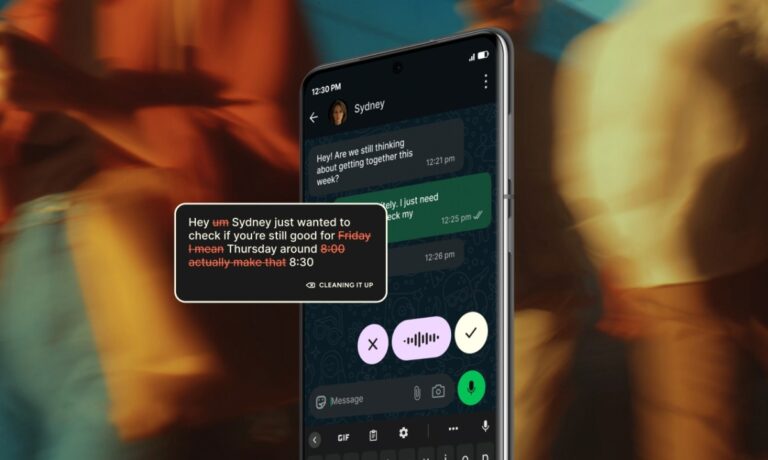
Wispr, the AI dictation startup, announced a $280 million Series B funding round led by Menlo Ventures, valuing the company at $2 billion. The capital injection brings total funding raised to $361 million, coming less than 10 months after the company’s previous round. The startup plans to deploy the new funds to expand into adjacent markets beyond its core dictation offering, including meeting note-taking and experimental interfaces for human-computer interaction.
Backing from existing and new investors
The Series B attracted participation from Wispr’s existing investor base, with Notable Capital, NEA, Neo Ventures, 8VC, and MVP Ventures each doubling their commitment. New investors joining the round include Acrew, Forerunner, Goodwater, Peak XV, Together Fund, and PLUS Capital. The strong investor appetite reflects confidence in the company’s ability to move beyond dictation into broader productivity categories.
Addressing quality concerns with Canto
The funding announcement coincided with Wispr’s introduction of Canto, a new speech recognition model designed to address a recent performance decline that users reported over the past few weeks. The new model claims to reduce transcription error rates from 30 percent to below 10 percent, a significant improvement that the company hopes will restore user confidence in its Wispr Flow dictation service.
Model performance and competitive pressure
The error rate reduction represents a substantial technical advancement, but it arrives as Wispr faces intensifying competition in the dictation space. Alternatives including Willow, Monolouge, Aqua, and Superwhisper have emerged, while independent developers continue releasing free and lower-cost dictation tools targeting prosumers and cost-conscious users. Canto’s rollout directly targets these competitive threats by emphasizing accuracy as a core differentiator.
Broader implications of the new model
Improving transcription quality is not merely a technical refinement but a strategic necessity for maintaining Wispr’s position as dictation becomes increasingly commoditized. The performance jump from 30 percent errors to under 10 percent affects user experience across all Wispr products—whether users are dictating on smartphones, desktops, or wearable devices. This foundation allows the company to pursue expansion into adjacent categories with greater confidence.
Expanding beyond dictation into meetings
Wispr recently launched a meeting note-taker tool, positioning itself to compete with established players like Granola, Fireflies, and Read AI. The new product captures meeting audio, generates summaries, and extracts action items. The company has acknowledged that the current version lacks integration capabilities with productivity tools, suggesting a roadmap that includes the ability to create documents, draft emails, and update external systems based on meeting content.
Feature gaps and future development
While the meeting notetaker represents Wispr’s entry into a growing market—alongside the core dictation business—its current feature set remains less comprehensive than some competitors. The ability to automatically create follow-up emails or update project management systems would extend the value proposition significantly. The Series B funding provides runway for these integrations, which could compound the utility of the meeting product.
Hardware partnerships and accessibility
Wispr is pursuing partnerships with hardware makers to embed dictation capabilities across devices. The company announced a partnership with Oasis, a smart ring manufacturer, allowing users to dictate without raising their voices—a feature that increases the utility of dictation in quiet or social environments where audible speech may be impractical. These hardware integrations represent a path to reach users beyond traditional app ecosystems.
Geographic expansion and market development
Since November of last year, Wispr released its dictation app on Android, extending its presence beyond iOS users. The company has simultaneously scaled its go-to-market operations in India and the United Kingdom, targeting regions with growing demand for productivity tools and lower smartphone penetration of competing dictation services. These geographic plays suggest Wispr is pursuing both platform breadth and international market development as core growth levers.
Exploring new interfaces through Interface Labs
Last month, Wispr announced the creation of Wispr Interface Labs, a research initiative led by Ariya Rastrow, who contributed to Amazon Alexa’s development in its early days. The lab is tasked with exploring alternative interfaces for human-computer interaction, signaling ambitions that extend beyond the dictation and meeting note-taking categories already established.
Rastrow’s background and strategic direction
Rastrow’s involvement brings expertise in voice interface design and large-scale AI products. His prior work at Amazon places him in a position to understand both the technical challenges and user adoption patterns that define successful voice and conversational systems. The formation of Interface Labs under his leadership suggests Wispr is preparing long-term research investments that could inform products years ahead.
Broader implications for the company
The creation of a dedicated research lab, funded by Series B capital, positions Wispr as an innovation-focused company rather than one merely iterating on existing dictation features. This organizational move signals internal expectations that voice interfaces and hands-free interaction will expand beyond current markets. It also provides strategic differentiation from competitors focused narrowly on dictation or note-taking alone.
The $280 million funding round and $2 billion valuation reflect investor belief that Wispr can scale a dictation business into a broader human-computer interaction platform. Whether through meeting notes, hardware partnerships, geographic expansion, or experimental interfaces, the company now has the capital to execute across multiple growth vectors simultaneously. The next 12 to 18 months will determine whether these adjacent markets generate meaningful revenue or remain niche complements to the core dictation business.
Frequently Asked Questions
How much has Wispr raised in total funding?
Wispr has raised $361 million to date, including the $280 million Series B announced on Monday and its previous round completed less than 10 months earlier.
What is Canto and what problem does it solve?
Canto is Wispr's new speech recognition model designed to improve transcription accuracy. It reduces error rates from 30 percent to below 10 percent, addressing user complaints about quality declines in Wispr Flow's dictation output in recent weeks.
What new products and markets is Wispr entering beyond dictation?
Wispr launched a meeting note-taker tool competing with Granola, Fireflies, and Read AI, partnered with the Oasis smart ring for hands-free dictation, and established Wispr Interface Labs to explore new human-computer interaction interfaces.
