

Key takeaways
- Five newer apps offer alternatives to Goodreads, each built for readers with different motivations—community, analytics, or mood-based discovery.
- All apps offer free versions with premium subscriptions between $4.99 and $9.99 per month, letting you test before committing.
- Community-focused apps like Fable and Pagebound emphasize group discussion, while StoryGraph and Bookshelf prioritize data and AI recommendations.
- Margins stands out by organizing discovery around emotional vibe rather than genre, letting readers search for books matching their mood.
Readers looking beyond Goodreads now have several alternatives designed around specific use cases. Amazon’s Goodreads remains the largest platform in the category, but a collection of newer apps have emerged to capture readers who want community focus, detailed analytics, mood-based discovery, or AI-powered insights. These platforms, many of which have launched within the past few years, approach book discovery and tracking from different angles, each claiming a distinct advantage in how they help readers find their next book.
The Case for Alternatives
While Goodreads dominates by size, these newer platforms avoid the one-size-fits-all approach by building around specific reader behaviors and motivations. Some readers find their reading motivation primarily through community engagement and sharing their experiences. Others prioritize understanding their own reading patterns through detailed statistics and tracking. Still others select books based on emotional context rather than genre, searching for stories that match their current mood or aesthetic preferences. The variety now available means readers can choose an app built around how they actually discover and engage with books, rather than conforming to a single platform’s assumptions about what matters in reading.
Community-Centric Platforms
Fable: Book Clubs Without the Meeting
Fable combines book tracking with a social network built around reading. The core features include organizing reading lists, setting and tracking reading goals, maintaining reading streaks, writing and sharing reviews, and joining virtual book clubs hosted within the platform. Users receive personalized book recommendations and can participate in ongoing discussions with other readers about what they’re currently reading. The app positions itself for readers who find motivation in communal reading experiences—the idea that shared discussion of books makes the reading experience more meaningful than tracking solo. Fable is free to download on iOS and Android, with a paid Fable Plus tier at $5.99 per month that unlocks features like custom goals and advanced analytics, offering readers who want community the option to add data-tracking features.
Pagebound: Progress-Based Book Discussions
Pagebound also emphasizes community but solves a specific problem unique to group reading: how to discuss books without spoilers derailing conversations. The app organizes discussions by reading progress, so a reader on chapter five can share theories and thoughts without encountering commentary from someone who finished the book. Core features include tracking books, creating reading lists, setting reading goals, and participating in dedicated forums for individual titles. Rather than requiring readers to commit to a formal book club with scheduled meetings, Pagebound allows asynchronous discussions that respect the pace at which different readers move through the same book. The app is free on both iOS and Android, with a $9.99 monthly subscription unlocking profile customization and additional community features for readers who want deeper personalization.
Data-Driven Reading Platforms
StoryGraph’s Recommendation Without Popularity
StoryGraph differentiates itself by claiming its recommendation engine avoids algorithmic popularity-ranking. Instead of surfacing what’s currently trending or bestselling, the app matches books to readers based on their stated preferences: mood, theme, genre, and pacing preferences. A user seeking “found-family adventure stories” or “cozy mysteries set in rural towns” receives recommendations built to those specifications rather than falling back on broad category matches. Users can set reading goals, participate in reading challenges, and track their reading patterns. The free iOS and Android app generates basic engagement tracking and statistics. StoryGraph Plus costs $4.99 monthly and adds custom reading charts and additional statistics for readers who want granular tracking of their reading behavior and habits.
Bookshelf: AI-Enhanced Reading Logs
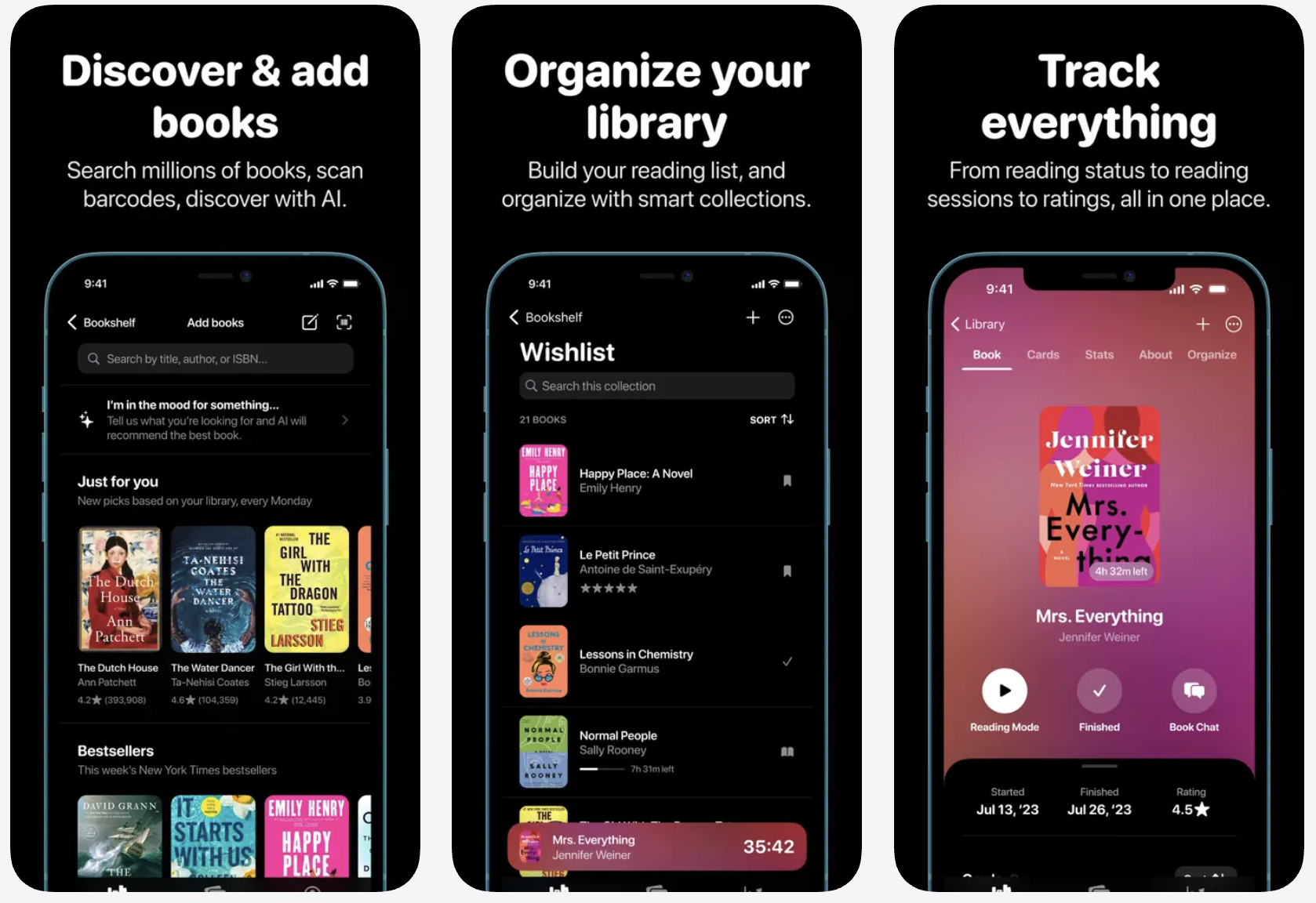
Bookshelf positions itself explicitly as a Goodreads alternative and integrates AI-powered tools throughout the experience. After completing a book, users can access AI-generated summaries, key insights, and thematic analyses to help retain and deepen understanding of what they’ve read. The app offers traditional features like custom shelves, reading reminders, and the ability to save and organize favorite quotes. Reading goals are also built in, giving users the standard tracking features expected in modern reading apps. Bookshelf powers its book discovery through AI as well. Available as a free download on iOS, the app charges $6.99 monthly for premium features including unlimited collections and enhanced analytics that let readers track reading habits across multiple custom categories and preferences.
Mood-Based Discovery
Margins approaches book discovery from an emotional and aesthetic angle rather than through traditional categorical systems. The app lets users search by vibe or feeling—typing something like “chaotic academia,” “dark academia,” or “1920s Paris aesthetic” returns books matched to that emotional or aesthetic profile rather than to a genre category. This method appeals to readers who know how they feel and what mood they’re in but don’t necessarily think in terms of genre. Beyond discovery, Margins addresses the reading experience itself through significant customization. Users can choose book cover designs that match their personal aesthetic and organize their virtual shelves by color as well as by category. The app also includes a “Reading Time” meditation timer that blocks social media apps during reading sessions, addressing the distraction problem that many readers report when trying to focus on reading. Goal-tracking features let users set and monitor reading targets. Margins is free to download though the app does not currently offer or publicly list a paid subscription tier.
Pricing and the Free-to-Premium Model
All five apps follow a free-to-premium model, making core features available without payment. Subscription prices cluster around two distinct tiers. StoryGraph, Fable, and Margins operate in the $4.99 to $5.99 per month range, while Bookshelf and Pagebound charge higher rates at $6.99 and $9.99 monthly respectively. Paid features typically unlock advanced analytics and statistics, additional customization options, or in some cases enhanced recommendation algorithms and exclusive community features. The free versions provide sufficient depth for readers to test an app and evaluate whether its particular approach (community, analytics, mood-based, or AI-assisted) matches their reading style. For readers uncertain which app fits their needs, the free versions allow extended testing periods before committing financially to a subscription.
Finding Your Platform
The choice between these platforms depends on what drives reading motivation and behavior for each individual. Readers whose engagement comes from group participation should explore Fable for structured book clubs or Pagebound for flexible, asynchronous discussions that eliminate spoiler risk. Readers focused on understanding their reading patterns and discovering books that match specific preferences should consider StoryGraph for its mood-and-pacing recommendations or Bookshelf for its AI-powered insights and summaries. For mood-readers who select books based on how they feel rather than genre classification, Margins offers dedicated discovery tools built around emotional and aesthetic vibes, plus reading customization features. The existence of free versions across all platforms means readers can download and test multiple apps without financial commitment, trying different platforms in parallel to discover which one becomes their primary reading tool and tracking system.
Source: TechCrunch
Frequently Asked Questions
What's the difference between these apps and Goodreads?
These apps are built around specific reader needs—community, analytics, or mood-based discovery—rather than trying to be a one-size-fits-all platform. All offer free versions with optional paid tiers.
Do all these apps cost money?
All five apps are free to download. They offer optional premium subscriptions ranging from $4.99 to $9.99 per month that unlock features like advanced analytics, custom goals, and enhanced community features.
Which app is best for discussing books with other readers?
Fable offers virtual book clubs and general reader discussions, while Pagebound organizes conversations by reading progress to prevent spoilers from interrupting discussions.
