
Key takeaways
- EloElo raised $80M in Series C at a $500M valuation, bringing total funding to $130M as it expands Story TV, which reaches 33 million active users in India.
- Only 15 to 17 million Indians pay monthly for microdramas despite 40 million having tried the format at least once, presenting a significant monetization challenge.
- The company is developing Dolphin AI for content creators and brands, positioning AI as a creative tool that augments rather than replaces human storytellers.
- The microdrama industry in India is projected to reach $3 billion to $4 billion in annual revenue by 2030, driven by over one billion internet users consuming entertainment primarily on mobile devices.
EloElo, the creator of the Story TV platform, has closed an $80 million Series C funding round led by Hornbill Capital and NBCUniversal. The round brings the company’s total capital raised to $130 million and values it at $500 million. Additional backers include MIT Investment Co., Play Ventures, Kalaari Capital, Waterbridge Ventures, and Griffin Gaming Partners.
The investment reflects growing confidence in India’s serialized video market, where more than 118 million people watch microdramas monthly. Story TV itself reaches 33 million active users, making it one of the country’s most-watched platforms in this category.
Market Scale and Growth Trajectory
The microdrama format has gained traction across multiple geographies, with celebrities like Issa Rae, James Franco, and Kim Kardashian investing in or appearing in such content. India presents a particularly compelling opportunity for platforms betting on this category.
The country’s internet population exceeds one billion, and entertainment consumption habits are shifting decisively toward mobile devices. Analysts expect the microdrama industry to reach annual revenues of $3 billion to $4 billion by 2030. Last year, dedicated platforms including Story TV, Kuku TV, and Quick TV ranked among India’s most-downloaded video streaming applications.
Story TV’s Reach and Engagement
Platform Growth and Content Library
Saurabh Pandey, a former Flipkart executive, founded EloElo in 2020. Under his leadership, Story TV has built a catalog of more than 5,000 titles available in six languages.
User Behavior and Daily Sessions
The platform’s engagement metrics stand out in the streaming landscape. According to Pandey, users spend an average of 95 minutes daily on Story TV across multiple viewing sessions. This pattern reflects the episodic nature of the content, designed for consumption in multiple short bursts rather than single prolonged viewing.
Pandey explained his strategic vision to TechCrunch: “The next billion users will probably not grow up on television. They will grow up consuming content on their phones, and this entertainment has to be designed differently. It will not be appointment viewing. It will be content consumed in slots throughout the day. Short clips addressed part of this need, but serialized storytelling was never properly solved until now.” He acknowledged that large-screen viewing within family or social settings will retain value, but said mobile viewing will dominate total entertainment consumption.
Monetization Remains the Central Challenge
The Subscription Conversion Gap
Despite substantial user engagement, converting viewers into paying subscribers has proven difficult in India’s market. Industry data reveals a wide gap between trial adoption and sustained payment.
According to Redseer, over 40 million Indians have paid for microdrama content at least once, but only 15 to 17 million pay on a monthly recurring basis. A separate survey by Ormax Media found that 72 percent of microdrama consumers have never paid for the format. Story TV offers multiple subscription tiers (monthly, quarterly, and annual) alongside ad-supported free content, though subscription revenue typically outpaces advertising returns.
Competition From Dominant Free Platforms
Story TV competes against YouTube, Instagram, and TikTok, all of which host serialized storytelling at no cost to viewers. Some of these platforms have added tools specifically for serialized uploads, further fragmenting the paid microdrama market.
Pandey contends that producing quality original content is the key differentiator. Story TV maintains partnerships with established Indian TV production studios, such as Balaji Telefilms, to ensure content quality that justifies subscription fees over free alternatives.
Dolphin AI and Content Production
AI as Creative Enhancement
EloElo has developed Dolphin AI, an internal tool originally built to optimize its own production workflows. The company is now positioning it for broader use by creators and is exploring monetization through marketing campaigns and advertising applications.
Dolphin AI functions as an editor with templates and generative models capable of creating images, audio, and video. Pandey characterizes the role of AI carefully, drawing a distinction between tool and creative vision. “AI is like a really fast race car, but you need an extremely capable Formula One driver on the steering wheel,” he told TechCrunch, referring to the creative director or showrunner. He stressed that while AI can assist in story writing, the strongest narratives he has encountered combine significant human creative input with AI capabilities.
Broader Industry Adoption of Production Tools
Other Indian microdrama platforms are pursuing similar AI strategies. Kuku, backed by Google, is using AI to enhance production workflows and create additional content. Dashverse’s Shortfree is exploring video AI models to generate serialized clips directly.
The approach differs across the creator economy. Platforms like Pocket and Kuku have distributed AI tools to independent creators to accelerate content output pipelines. InVideo, by contrast, has not deployed comparable solutions for Indian creators seeking alternatives to tools like CapCut or Instagram Reels’ editing features.
Portfolio Beyond Microdramas
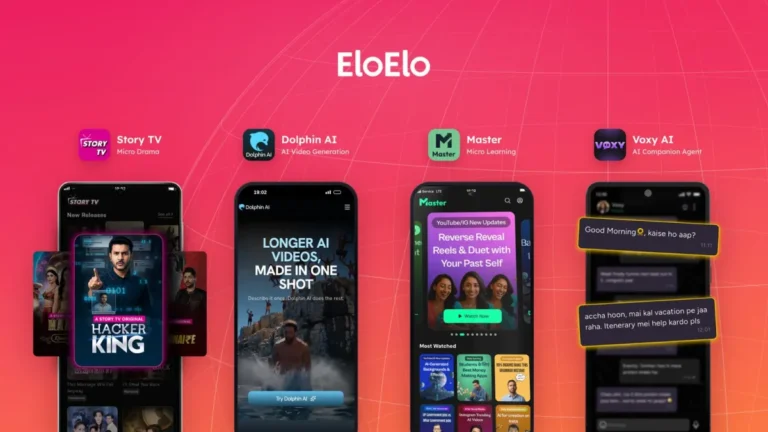
Story TV is EloElo’s flagship, but the company operates a broader suite of applications. Master, a vertical video learning platform, competes with Seekho and Kuku’s Guru. Voxy AI functions as an artificial intelligence companion. Combined, these three apps reach 40 million monthly active users, though Story TV captures the majority of this audience.
EloElo currently operates with 240 employees and plans to expand, with particular focus on hiring engineers and researchers for its artificial intelligence and machine learning divisions. A portion of the Series C capital will support the production of original content, addressing both technical capability and content supply as the company competes against free platforms and pursues growth across India’s expanding internet user base.
Source: TechCrunch
Frequently Asked Questions
How many people use Story TV and watch microdramas in India?
Story TV reaches 33 million active users, and more than 118 million people watch microdramas monthly across all platforms in India.
What challenges does EloElo face in converting users to paid subscribers?
According to Redseer, only 15 to 17 million out of 40 million Indians who have tried paid microdramas convert to monthly subscribers. Ormax Media found that 72 percent of microdrama consumers have never paid for the format, as free content on YouTube, Instagram, and TikTok remains a strong competitor.
How does EloElo plan to use artificial intelligence in content creation?
EloElo developed Dolphin AI, originally an internal tool, to assist creators with templates and generative models for images, audio, and video. Founder Saurabh Pandey views AI as a creative director's tool rather than a replacement for human storytellers, saying the best stories combine human creativity with AI capabilities.
