
Key takeaways
- Limited partners show concentration concerns as capital piles into just OpenAI and Anthropic across multiple funds, departing from traditional diversification rules.
- Venture fund cycles have compressed from 2-2.5 years to 12-18 months or annual fundraising, creating LP anxiety over pacing despite strong underlying company metrics.
- Unlike the prior crypto bubble, AI-backed companies are reaching $100 million in revenue rapidly, partially justifying the accelerated investment pace.
- Emerging managers continue to raise funds at smaller sizes (typically $25-50 million) if they demonstrate clear differentiation and access to AI-native talent.
The limited partners who supply capital to venture firms are operating in uncharted territory. They’re deploying money into a landscape shaped by artificial intelligence, where valuations for leading companies have compressed timeframes and potential returns have shifted from typical to extraordinary. Yet beneath the optimism, these institutional backers are signaling caution.
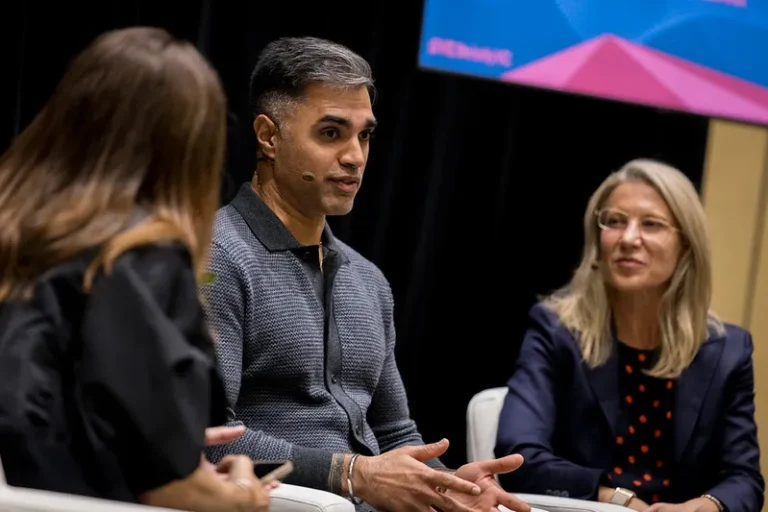
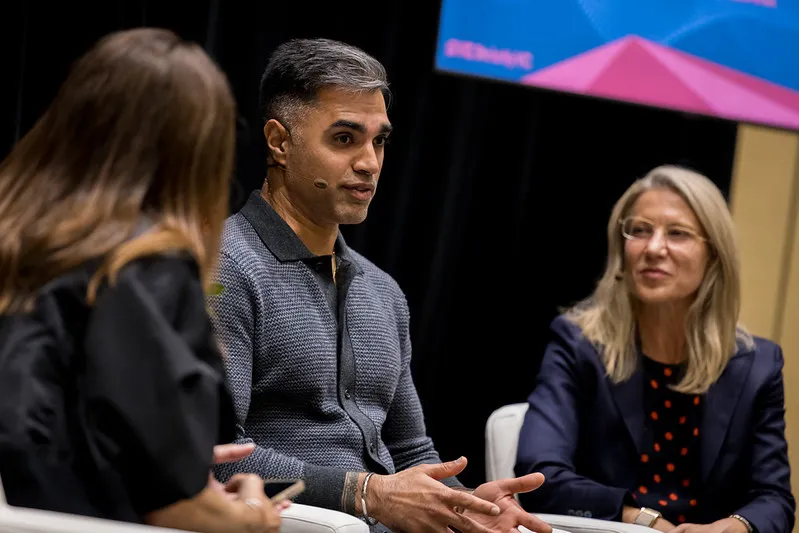
In conversations with Beezer Clarkson at LGT Capital Partners, a diversified asset manager based in Zurich, and Amit Bhatti at TrueBridge, a venture-focused firm in Chapel Hill, the picture emerges of an ecosystem under pressure. LPs are excited by the moment. They’re also uneasy about the pace, the concentration, and what happens if the tailwinds reverse.
The Concentration Gamble
The fundamental rule of LP investing has always been diversification: spread capital across many firms, stages, and sectors to reduce risk. But that rule has become nearly irrelevant in the AI moment.
A Departure From Tradition
OpenAI and Anthropic’s valuations rose with such speed that nearly everyone piled into the same two companies. LPs found themselves concentrated in both firms across multiple venture funds, often backing the same companies through different managers. This breaks a longstanding convention that venture firms avoid conflicting investments.
Clarkson and Bhatti describe themselves as unbothered by the gamble. The potential returns justify the risk. But they’re watching carefully. This concentration exists because of the power-law nature of venture, Bhatti explains. At the maturity stage, few winners from past generations, including Databricks, SpaceX, and Stripe, came to dominate portfolios. The difference with Anthropic and OpenAI is velocity. The consolidation happened in months, not years.
A Feature, Not a Bug
Bhatti frames the concentration as expected, not alarming. Mature funds often hold substantial positions in a small number of companies. The structure itself is sound. What matters is whether managers identify genuine breakthrough companies early, and whether returns bear out the bet. Clarkson adds that early-stage funds still maintain diversity because dollar sizes are smaller, so concentration appears later in the portfolio’s evolution.
The Pacing Problem
If concentration is the portfolio challenge, fund pacing is the operational one. Venture funds have traditionally returned to limited partners every two to two and a half years for fresh capital. That cycle has collapsed.
Cycles Compressed
Clarkson reports funds coming back on one-year cycles. Bhatti says 12 to 18 months is “not crazy” for aggressive managers now. The norm used to anchor around 24 to 36 months. This acceleration creates tension. It’s harder to deploy capital correctly on a one-year timeline. Mistakes compound faster. The LP calendar, the expected pattern of when commitments will be needed, gets thrown off.
Bhatti notes that many funds are bumping their sizes mid-cycle, which he describes as “definitely unusual.” The culprit is round size. When Anthropic raises a massive funding round and a manager commits 20 percent of the fund to it, that one check pulls the entire fund ahead of its deployment schedule. Seed rounds have doubled in size; leading seed rounds now require checks twice as large as before.
Heartburn, Not Panic
Both LPs acknowledge the tension. Clarkson and Bhatti describe it as a “yellow light,” a signal to monitor closely but not yet a reason to pull back. It’s a worrisome sign when it points to rushed decision-making. Yet the actual companies funded tell a different story than the last acceleration cycle, when venture rushed money into zero-revenue crypto projects. Today, companies are reaching one hundred million dollars in revenue, a transition that was previously unheard of. The velocity of value creation justifies some of the velocity of investment.
Liquidity Takes Shape
For decades, venture capital meant waiting. Exits came through IPOs, or they didn’t come at all. That singular path has fractured.
Secondaries Come of Age
Secondaries, which involve sales of stakes by LPs or fund managers, were once taboo in venture. You only sold if distressed. Now they’re standard. Clarkson describes the secondaries market in venture as far more sophisticated than it was five years ago. It’s localized mostly in the top handful of companies, but it’s normalized. Managers can now return capital by selling portions of winning positions, especially if they still believe in the power-law thesis and keep 80 percent of the position.
M&A and IPO Alongside Secondaries
The exit menu has expanded. Liquidity no longer means waiting for an IPO. Cerebras exited in a significant acquisition this year. SpaceX marked a major milestone. M&A deals have exceeded ten billion dollars. A sixty-billion-dollar transaction occurred. These paths give LPs options and allow managers to return capital without needing a public market window or a traditional acquisition.
The Founder and Employee Question
Younger, well-funded companies are experimenting with employee tenders, offering partial liquidity for staff before exit. Founders are selling shares. The question for LPs is how to balance access to returns with maintaining founder and employee incentive alignment.
Bhatti draws a parallel to crypto, where employees received fully liquid token compensation. When downturns came, employees left. The structural problem was obvious. For mature companies like Stripe and Databricks, offering partial employee liquidity is reasonable. The company’s financial picture is clear. But venture backers report conversations with managers where they’ve discouraged employee tenders too early, worried about motivation during the hard phases of a company’s growth. The enforcement depends on investor leverage.
Emerging Managers Still Find a Path
A common concern is that a handful of mega-funds now command most LP capital, shutting out new managers. The conversation with Clarkson and Bhatti suggests a different picture: smaller, more constrained, but still open.
First Funds Still Raising
First-time and emerging managers are raising funds in 2026, 2025, and 2024. They raise smaller funds, typically twenty-five to fifty million dollars. The point is differentiation. “You still need a reason for being,” Clarkson says. Without a differentiated thesis or unique access, fundraising is harder. But the pathway exists.
Youth and Access
Bhatti backs extremely young managers, ages 22 and 23, who’ve built accelerator programs at MIT, Harvard, and Stanford. Their first cohorts included Cursor and Mercor. They’re young, but they’re embedded in a density of AI-native talent and demonstrated judgment. Success in picking winners before they had capital to deploy earned them capital to deploy now.
Building Track Record First
The formula for emerging managers is to raise small, prove the thesis, build access, and make good picks. Fund two becomes easier to raise once fund one shows returns or a clear pattern of judgment. Trying to raise fifty to one hundred million dollars on day one, Bhatti says, creates “a giant hill to climb.”
The Geographic Question
San Francisco housing costs have accelerated past what many employees and founders can afford. Will the next generation of leaders price themselves out, and will venture capital follow them to New York or elsewhere?
Clarkson points to density effects and history. The Bay Area has held its position despite cycles. It could move from San Francisco proper into suburbs, as YC once operated from Mountain View. New York has a deep tech scene, but the density and proximity of talent and capital here have been hard to replicate. Clarkson’s view is that geography holds, at least for now.
Source: TechCrunch
Frequently Asked Questions
Why are LPs concentrated in OpenAI and Anthropic despite diversification rules?
Their valuations rose so quickly that venture firms across the market invested in both companies, often inside the same LPs' portfolios across multiple funds. Clarkson and Bhatti report being unbothered by the concentration given potential returns, though they describe it as a "yellow light" situation requiring monitoring.
How much faster are venture funds fundraising now?
Venture funds historically returned to LPs every 2-2.5 years. Now cycles are 12-18 months or even annual. Amit Bhatti of TrueBridge called this acceleration a "yellow light" that gives them "a little bit of heartburn." The compression is driven by massive company funding rounds and doubled seed sizes.
Can new venture managers still raise funds in this concentrated environment?
Yes, but at smaller sizes. First-time funds now average $25-50 million. Amit Bhatti backs extremely young managers, ages 22 and 23, who demonstrated judgment through accelerator programs at MIT, Harvard, and Stanford, with early cohorts including Cursor and Mercor. The key is showing clear differentiation and proven access to emerging talent.
