
Key takeaways
- US tariffs on Chinese drones and robots take effect in September 2026, with component tariffs following in 2027, but trade barriers cannot address China's manufacturing cost advantage.
- Chinese manufacturers shipped 22,000 humanoid robots in the first half of 2026, with the top five makers—Unitree, AgiBot, Galbot, UBTECH, and Leju Robotics—controlling 86 percent of global supply.
- The robotics industry is fragmenting into regional markets rather than splitting cleanly between the US and China, with Chinese companies competing on cost worldwide and US manufacturers focusing on security-critical applications.
- Japan, South Korea, and Taiwan are emerging as alternative suppliers, but Chinese components remain deeply embedded in global robotics supply chains.
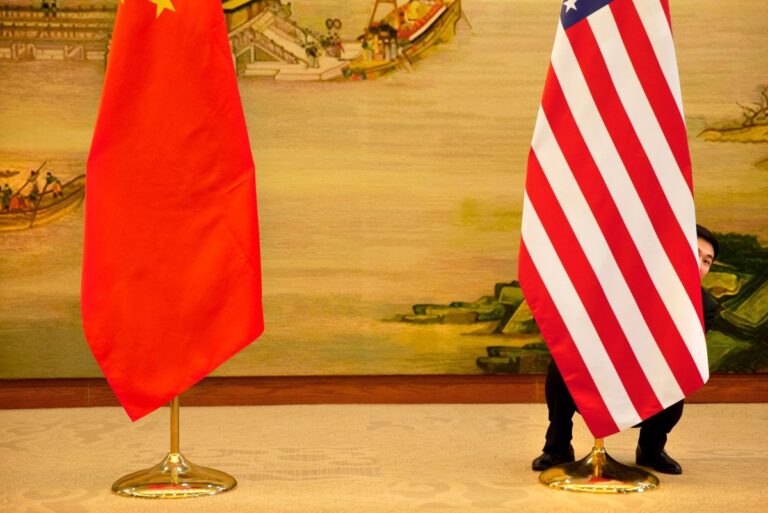
In July and August, the U.S. government tightened restrictions on foreign-made advanced robotic systems and imposed steep tariffs on imported drones and their components, citing national-security concerns. The drone tariffs will take effect in September, while additional tariffs on components are scheduled for 2027. These moves extend the FCC’s Covered List—initially established in 2021 to restrict telecommunications and surveillance equipment from companies like Huawei, ZTE, and Hikvision—to foreign-made drones and advanced robotic devices.
The policy shift reflects growing concern about American access to critical technologies. Yet industry analysts and executives question whether tariffs alone can slow China’s advance in robotics, where manufacturing scale rather than regulatory barriers poses the primary obstacle to U.S. competitiveness.
China’s Commanding Position in the Humanoid Market
Chinese manufacturers have built a dominant position in both drones and humanoid robots. Global shipments of humanoid robots reached 22,000 units in the first half of 2026, according to Counterpoint Research, with the vast majority coming from Chinese producers. The world’s five largest humanoid robot makers by shipments—AgiBot, Unitree, Galbot, UBTECH, and Leju Robotics—were all Chinese and together accounted for 86 percent of global shipments in the first half of 2026. By contrast, U.S. companies operate at a far smaller scale, with limited production volumes and higher per-unit costs that constrain their ability to compete on price or market penetration.
The Cost and Innovation Cycle
Lower prices allow Chinese manufacturers to put more robots into active use, generating real-world data that improves their technology over time. Higher production volumes, in turn, drive costs down further. Chinese humanoid makers are also reducing costs by bringing more of the technology stack in-house and drawing on China’s existing manufacturing infrastructure. Unitree is developing more components internally, while automakers such as XPeng can leverage their experience in chips and vehicle manufacturing as they enter robotics.
Why Tariffs Cannot Match the Cost Curve
According to Ankur Saxena, an investment director at TDK Ventures, the United States leads in frontier AI, software, and semiconductor innovation, while China leads in manufacturing scale, supply-chain depth, and cost. The manufacturing edge has allowed Chinese companies to cut humanoid prices faster than most U.S. competitors can match. “You cannot sanction your way around a cost curve,” Saxena told TechCrunch. “You can only out-build it, and America has yet to begin making the decade-long investment that will require.”
Structural Advantages Chinese Companies Hold
Chinese companies operate within deeper supply chains and can draw on domestic expertise in semiconductors, batteries, and manufacturing. This structural advantage means that tariffs on finished goods or components will not eliminate China’s price advantage, only redirect where Chinese robots and drones are sold. The fragmentation of the market, rather than its collapse, is the more likely outcome.
Where the Market Is Heading: Regional Fragmentation
Rather than creating a clean U.S.-China split, trade restrictions appear likely to fragment the global robotics market along regional lines.
Two Competing Ecosystems
The drone market offers an early glimpse of this fragmented landscape. The industry is increasingly splitting into two ecosystems: a U.S.-led market built around American-made, NDAA-compliant systems, and a China-led market focused on low-cost, high-volume production, according to Bentzion Levinson, founder and CEO of Virginia-based drone maker Heven AeroTech. Western manufacturers are unlikely to beat Chinese competitors in the low-end consumer drone market, where cost remains decisive. Instead, U.S. and allied companies are likely to compete in long-range autonomous systems for defense and critical infrastructure, where security requirements carry more weight.
The International Expansion Strategy
Chinese robotics companies are already targeting price-sensitive markets with severe labor shortages across Europe, Southeast Asia, Latin America, and the Middle East. Industry experts expect humanoid makers to follow a trajectory similar to Chinese electric-vehicle companies: build scale at home, expand into overseas markets, and eventually establish local production. Countries facing labor shortages and demographic decline could become early markets for humanoids, particularly in manufacturing where robots can handle repetitive work.
Japan, South Korea, and Taiwan as Middle-Ground Suppliers
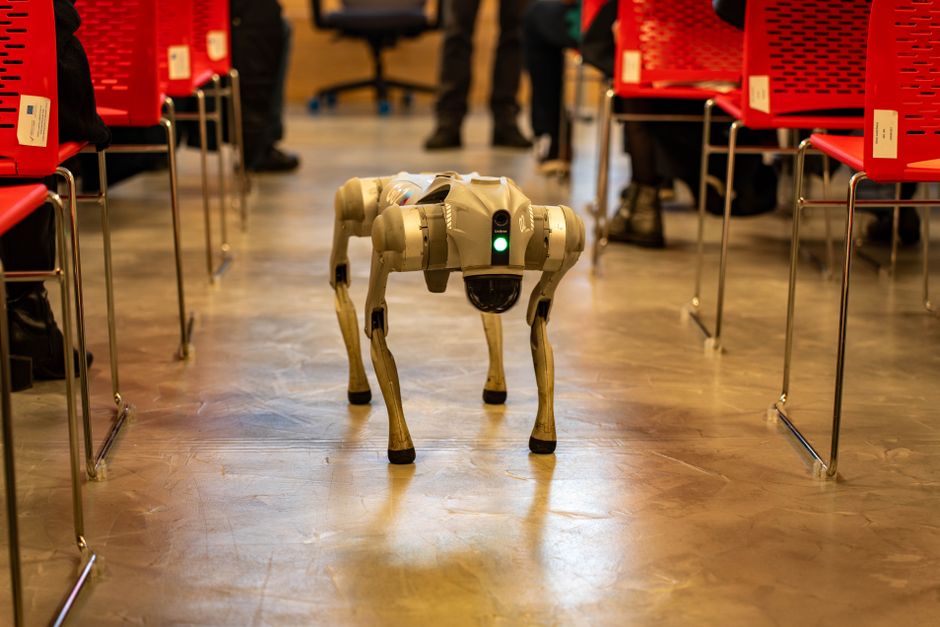
Alternative suppliers in Asia could emerge between lower-cost Chinese robots and more expensive U.S. offerings. Japan has decades of experience in industrial robotics and precision manufacturing. South Korea brings strengths in electronics, batteries, and automobiles. Taiwan is a major player in semiconductors. Yet none can simply replace China given how deeply Chinese components remain embedded across the global robotics industry.
Some automakers are already investing in robotics. Hyundai, which owns Boston Dynamics, and Toyota are among the companies drawing on their expertise in vehicles, manufacturing, and autonomous systems. However, these efforts remain nascent compared to the scale of Chinese production and the cost advantages Chinese manufacturers have already achieved.
Robotics Designed for Regional Markets
The future may involve robotics optimized for regional demands rather than global platforms. Yang Fang of Beagle Technology, a California-based agtech startup using AI and robotics software to automate farm equipment, noted that robotics is likely to become more regional as companies design machines for the labor needs, working conditions, and customers in their home markets. Chinese companies may focus on products suited to China and nearby markets, while U.S. companies are more likely to build for industries across North America.
The Shift to Power Systems and Energy
The next competitive frontier is shifting from robotics hardware itself to the technology that powers them and the equipment they carry. According to Levinson, “The next battleground is over who owns the next-gen energy and payload architecture,” with battery constraints emerging as particularly important. As robots become more capable, power systems and energy efficiency could become increasingly important competitive differentiators.
Agility Robotics welcomed the FCC’s decision in July, saying the restrictions could address security concerns before foreign-made robots become as deeply embedded in the U.S. market as drones already are. The company manufactures and assembles its Digit humanoid in the U.S. while also calling for continued access to tools and technologies needed to advance robotics research.
The result may not be two separate U.S.- and China-led robotics industries. Instead, trade restrictions could accelerate the emergence of regional markets: Chinese companies competing on cost and scale across much of the world, U.S. and allied manufacturers gaining ground where security requirements matter most, and manufacturers in Japan, Taiwan, and South Korea trying to carve out space between the two.
Frequently Asked Questions
When do the US drone tariffs take effect?
The drone tariffs take effect in September 2026, with additional component tariffs scheduled for 2027, according to announcements made in July and August.
Which Chinese companies dominate the humanoid robot market?
The five largest humanoid robot makers by shipments are AgiBot, Unitree, Galbot, UBTECH, and Leju Robotics—all Chinese companies that together accounted for 86 percent of global shipments in the first half of 2026.
How might Chinese robotics companies respond to US trade restrictions?
Chinese robotics companies are expected to follow the strategy of Chinese electric-vehicle makers: build scale at home, expand into overseas markets in Europe, Southeast Asia, Latin America, and the Middle East, and eventually establish local production.
