
Key takeaways
- Science Corporation has already begun U.S. human trials for brain-computer interfaces and raised $230 million at a $1.5 billion valuation.
- The company's PRIMA implant has restored functional eyesight in patients with severe vision loss, demonstrating that neural interfaces can deliver real clinical benefits.
- Max Hodak argues that direct brain-computer communication could replace screens by eliminating the translation step between human intention and machine input.
- The technology remains years away from mainstream adoption, facing major challenges in implant longevity, signal reliability, and regulatory approval beyond highly restricted clinical use.
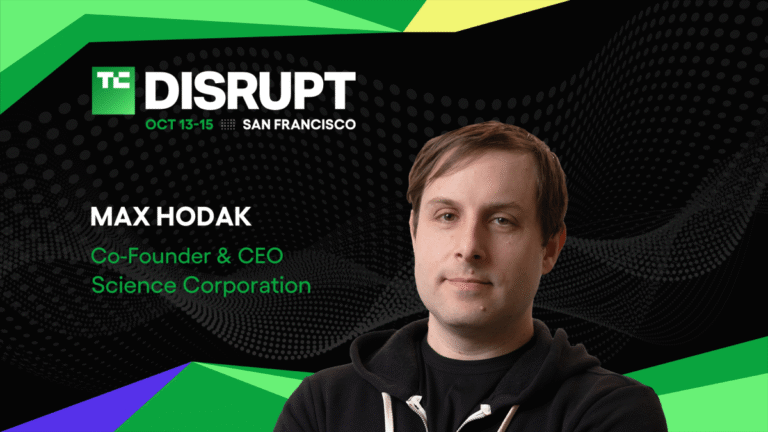
Max Hodak, who co-founded Neuralink before launching Science Corporation, will present an argument this October that the screen era is ending. Speaking at TechCrunch Disrupt 2026, he plans to make the case that direct brain-computer interfaces represent the next fundamental shift in how humans interact with machines. Rather than keyboards, clicks, and touchscreens, Hodak envisions a future built on neural implants that adapt to each user’s brain activity.
Hodak’s company has already begun U.S. human trials for a biohybrid brain-computer interface, moving beyond laboratory demonstrations into actual clinical testing. His presentation, titled “Beyond Screens,” will reach more than 10,000 technology leaders, founders, and investors at Disrupt, which runs October 13 to 15 at Moscone West in San Francisco across 250 sessions and six industry stages.
Science Corporation’s Clinical Work
Science Corporation has demonstrated proof of concept through its PRIMA implant system, which has restored functional eyesight in patients with severe vision loss. The system works through a straightforward but sophisticated approach: specialized glasses with an embedded camera capture visual information and transmit it to a chip implanted directly in the retina. Users can then perceive the visual field through neural stimulation, effectively bypassing damaged photoreceptors.
Funding and Financial Scale
The company raised $230 million in its Series C funding round at a $1.5 billion valuation, providing substantial capital to accelerate both near-term applications and longer-term research. This level of investment reflects confidence from venture capital firms that neural interfaces represent a genuine technology frontier, not merely speculative science.
Beyond Vision Restoration
Hodak has outlined additional applications for implanted neural sensors developed by Science Corporation. The technology could potentially detect seizures before they fully develop, provide warnings that allow patients to take protective measures. The company is also exploring whether implanted sensors might help heal damaged brain tissue or contribute to treating severe neurological conditions such as Parkinson’s disease, though these applications remain earlier in development.
Hodak’s Path to Neural Interfaces
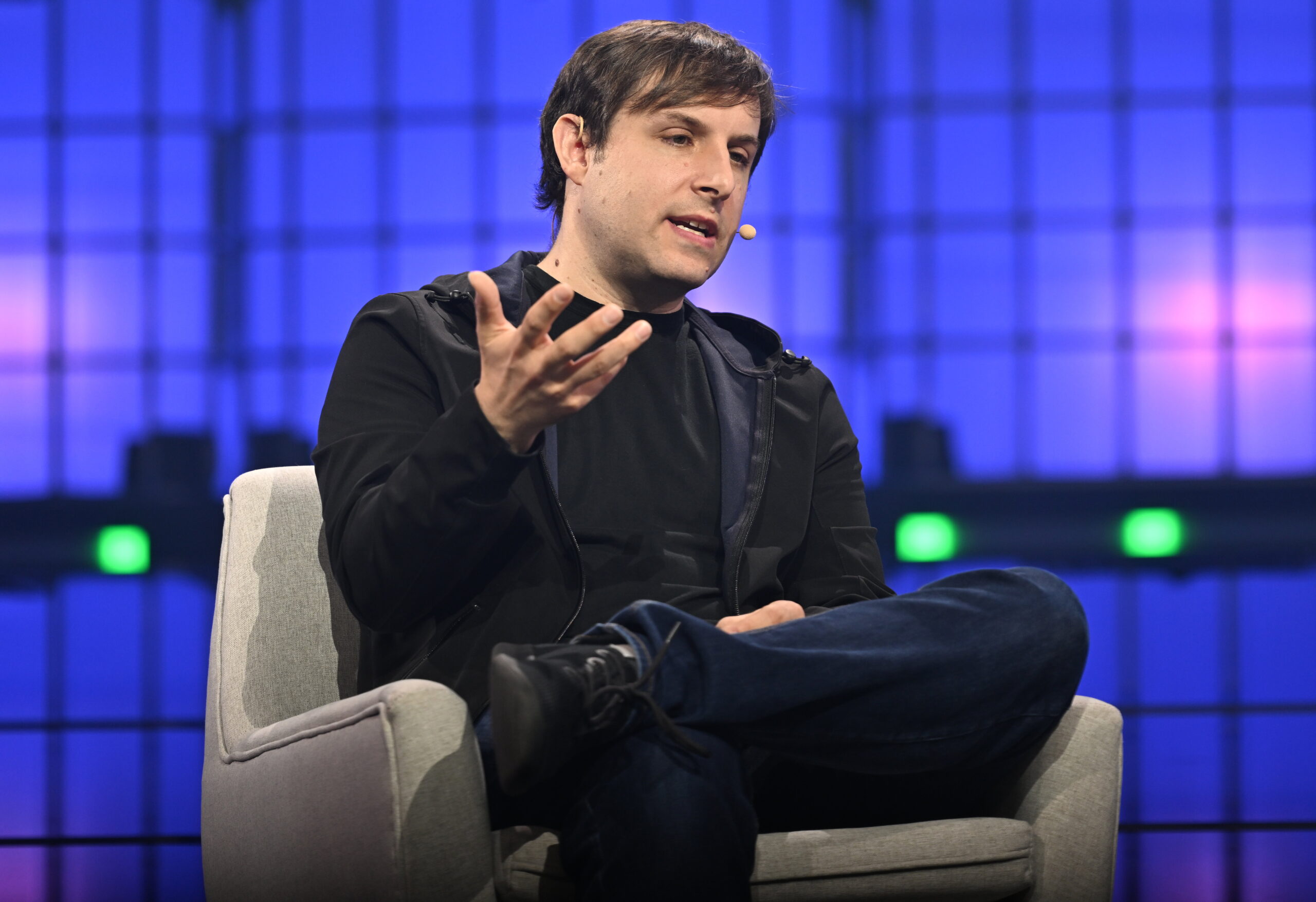
Hodak’s career trajectory shows a consistent focus on human-machine interaction at the biological level. He began programming at age six and later pursued formal study in biomedical engineering at Duke University’s Pratt School of Engineering. During his university years and beyond, he worked in Miguel Nicolelis’ laboratory, a research group specializing in brain-computer interface technology. These early experiences shaped his conviction that the interface between humans and machines could be fundamentally reimagined.
His first entrepreneurial venture, Transcriptic, operated as a robotic cloud laboratory serving life sciences researchers. The company automated laboratory work that had traditionally required human technicians, pointing to automation as a solution for productivity. But Hodak’s real breakthrough in public awareness came through Neuralink, which he co-founded in 2016 and served as initial president. At Neuralink, he worked on the technical foundations of implantable neural interfaces and helped translate the concept from academic research into something approaching commercial reality.
In 2021, Hodak founded Science Corporation specifically to pursue applications in neural engineering and brain-computer interfaces. The company’s stated focus areas are vision, cognition, and mobility—three domains where neural interfaces could provide substantial benefits to people with disabilities or injuries.
The Case Against Screens
Direct Neural Communication
Hodak’s argument rests on a specific claim about efficiency and naturalness. Screens, keyboards, and touchscreens all require translation: a user must formulate thoughts, convert them into gestures or typed commands, and transmit those commands to a computer. A neural interface, by contrast, could theoretically receive signals at the moment a user forms an intention, eliminating intermediary translation steps. This would create what Hodak describes as a more natural mode of human-machine engagement, one that adapts to human neurology rather than forcing humans to adapt to mechanical input methods.
Neuroscience Foundations
This vision builds on neuroscience research spanning decades. Researchers have demonstrated that brain signals can be decoded and used to control external devices—prosthetic limbs, computer cursors, and robotic arms have all been successfully operated through brain implants in laboratory and clinical settings. Hodak’s work at Miguel Nicolelis’ lab exposed him to these foundational studies, and his career has been a sustained attempt to productize discoveries that remain mostly within academic settings.
Clinical Testing and Regulatory Progress
Science Corporation’s human trials represent a critical milestone. The U.S. regulatory environment for implantable neural devices remains highly restrictive, with clinical testing permitted only under strict oversight. The fact that the company has progressed to human trials suggests that either the company’s technology or regulatory bodies’ assessments—or both—view the approach as ready for validation beyond animal models and computer simulations.
The path from animal testing to human trials typically spans years and requires extensive safety data. The trials now underway will be the first opportunity to gather systematic evidence about whether neural implants can work reliably inside human brains over extended periods, whether they trigger immune responses that degrade performance, and whether the benefits Hodak envisions actually materialize in real patients.
The Road from Prototype to Mainstream
The jump from PRIMA’s success with vision to broader cognitive or motor applications presents substantially greater engineering challenges. Decoding visual information involves relatively straightforward patterns: light hitting the retina follows predictable rules. Decoding intention or complex motor planning involves far more elaborate neural signals distributed across multiple brain regions. Implants must remain functional and safe for decades, avoid infections, maintain stable connections to neural tissue, and continue decoding signals as the brain’s response to the implant evolves over time.
The $1.5 billion valuation reflects investor conviction that these challenges are solvable, but the gap between investor enthusiasm and actual clinical proof remains substantial. Even if Hodak’s technical approach succeeds, regulatory approval for broader applications, evidence of long-term safety, and genuine consumer demand could take years or decades to establish.
The Disrupt Moment
TechCrunch Disrupt 2026 carries a particular focus this year on building sustainable artificial intelligence companies, with AI programming spread across six industry stages. Hodak’s session on post-screen futures fits into broader industry conversations about how human-machine interaction might evolve. His audience will include venture investors, startup founders, and technology executives—the constituencies most likely to fund or build on neural interface technologies if his vision accelerates toward mainstream adoption. Whether that vision comes to pass may depend less on the elegance of the idea than on whether the technology can scale to thousands or millions of users, whether regulators will approve it beyond extremely limited clinical use, and whether people ultimately choose to undergo brain surgery to replace their screens.
Frequently Asked Questions
What is Science Corporation's PRIMA implant?
PRIMA is an implant system that restores eyesight to patients with severe vision loss. Specialized glasses with a camera capture visual information and transmit it to a chip implanted in the retina, allowing users to perceive the visual field through neural stimulation.
How much has Science Corporation raised, and at what valuation?
Science Corporation raised $230 million in a Series C funding round at a $1.5 billion valuation.
What is Max Hodak's background before founding Science Corporation?
Hodak studied biomedical engineering at Duke University's Pratt School of Engineering and worked in Miguel Nicolelis' brain-computer interface laboratory. He co-founded Transcriptic, a robotic laboratory company, and then co-founded Neuralink in 2016, where he served as initial president before founding Science Corporation in 2021.
