

Key takeaways
- Instagram launched First Draft, an automated editing feature that assembles rough cuts from multiple video clips in under 10 seconds, now rolling out on iPhone.
- The feature is part of a broader creator tooling strategy that includes Replace Audio and an AI assistant in the Edits app, aiming to keep creators within Instagram's ecosystem.
- Automated video editing already exists in competitors like CapCut and Adobe Firefly, but Instagram's advantage lies in integration—keeping the entire workflow within a single app.
- The announcement coincided with Instagram head Adam Mosseri's expected testimony in a lawsuit accusing Meta of designing platforms to encourage compulsive use, particularly among minors.
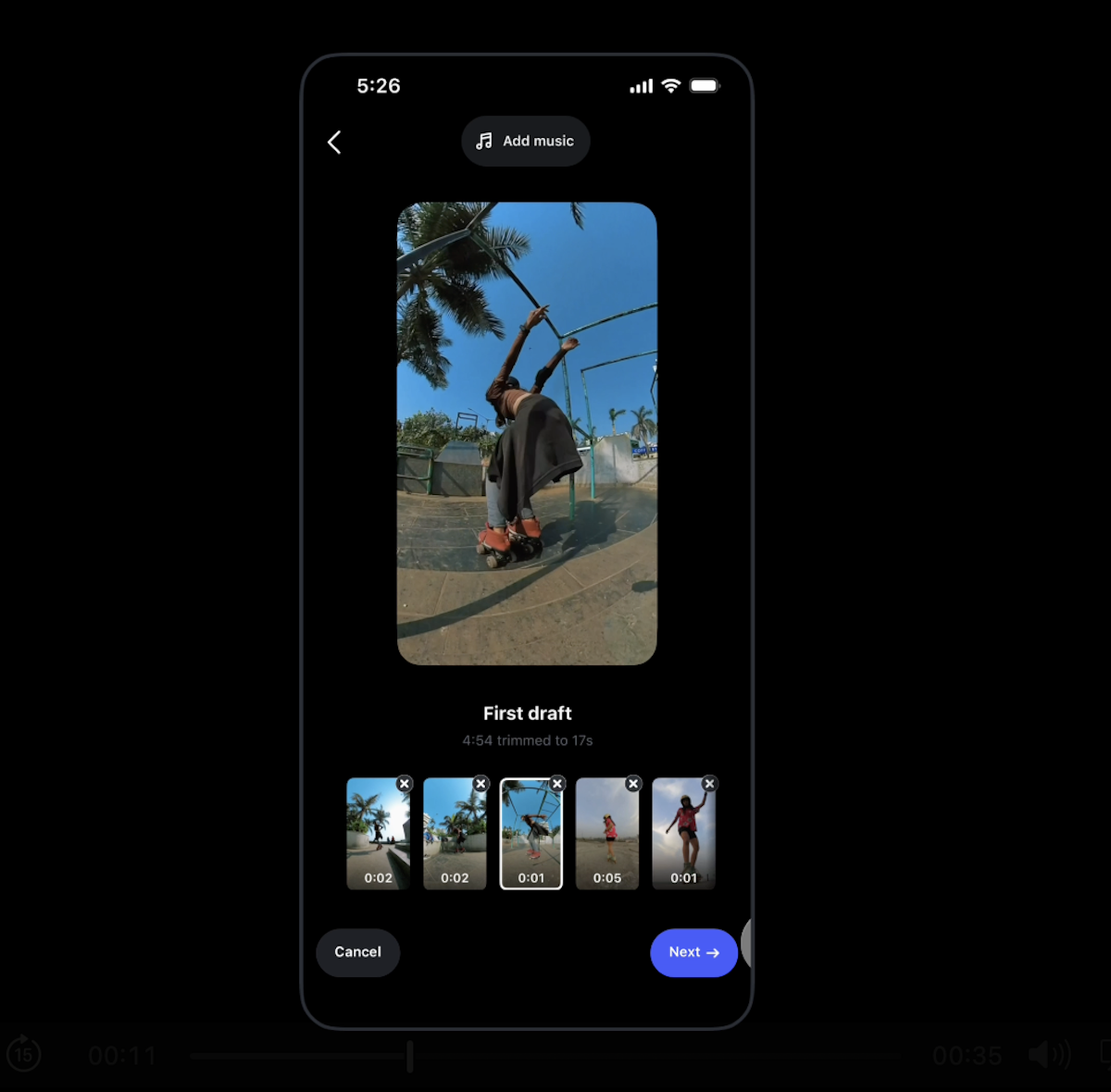
Instagram announced Tuesday through a Threads post that it is rolling out “First Draft,” a new feature designed to streamline Reels creation by automating the initial editorial pass. The tool identifies the strongest moments in selected video clips, removes pauses and dead time, and assembles them into a rough cut in less than 10 seconds. For creators without professional editing experience or software, the feature promises to make video production significantly less time-intensive.
How First Draft Works
From Manual to Algorithmic Assembly
The feature operates by analyzing multiple video clips a creator has selected and using algorithms to identify sections with motion, audio changes, or other markers of content-bearing moments. It then automatically trims out silent or static sections between these moments and stitches the keepers together into a preliminary version. This rough cut is not a finished product—creators can still adjust pacing, add transitions, change audio, trim further, or make any other refinements. But it eliminates the most tedious initial step: the pass through footage where someone watches everything at normal speed, marks the parts worth keeping, and assembles them. By automating that pass, Instagram shifts a creator’s work from passive assembly to active refinement.
Speed as a Barrier to Adoption
The time savings matter because the difference between a 10-second process and a 10-minute process isn’t just numerical—it changes whether someone attempts a task at all. When First Draft can show a result in the time it takes to read two sentences, creators might experiment with a format they would skip if it required manual editing. Instagram’s own framing emphasizes this: the feature is meant to make Reels creation “more approachable for people who don’t have much experience with editing software,” suggesting the company views the primary value as lowering barriers to entry rather than enabling professionals to work faster.
Where Creators Can Access It
Instagram is launching First Draft initially on iPhone, with no announced date for Android availability. Creators can access it in two contexts: directly from the Instagram camera while actively recording, or afterward by opening the Reels gallery, selecting multiple clips, and triggering automated assembly. The dual entry point accommodates different workflows. Some creators record multiple takes and then assemble, while others might realize mid-shoot that they want to see how a sequence looks rough-cut before continuing to film.
Competition From Established Editing Tools
Automated video assembly is not new. Adobe’s Firefly image-generation suite includes Quick Cuts, which performs similar functions. CapCut, the ByteDance-owned editing app, offers Auto Cut. The technical capability of trimming clips and removing dead space is now standard across multiple video editing platforms. Instagram’s competitive angle is not technological novelty but friction elimination. When a creator uses CapCut’s Auto Cut, the workflow involves exporting footage to CapCut, letting Auto Cut run, exporting the result, and importing into Instagram. When a creator uses Instagram’s First Draft, the entire process stays within one app. This matters because switching apps—even briefly—introduces cognitive overhead and abandonment risk. Instagram is betting that keeping creators inside its own editing environment increases the probability they finish and publish their Reels there rather than jumping to TikTok or YouTube Shorts.
Part of Instagram’s Broader Creator Tooling Push
First Draft is not Instagram’s only new creator feature. The platform rolled out “Replace Audio,” which allows creators to change the music on existing feed posts and carousel cards without deleting and re-uploading the original content. This solves a friction point: a creator publishes, realizes the audio is wrong or rights-expired, and previously had no choice but to start over. Instagram is also developing a new AI assistant within its Edits app, a dedicated video-editing application. The company is testing a “Series” feature that lets creators group related Reels in a specific order, converting a stream of individual short videos into episodic content. These releases map a strategy: reduce friction at every step of Reels creation and editing, bundle functionality into Instagram’s own apps, and give creators less reason to export footage elsewhere. Each new feature removes a task that previously required switching apps or platforms.
Building Creator Retention Through Ecosystem Integration
The cumulative effect of these features, if the pattern continues, is an ecosystem where creators can shoot, edit, organize, and publish entirely within Instagram’s suite. This shift matters strategically because creators who stay within a single app ecosystem tend to produce more frequently, experiment more readily, and accumulate less of their work on competing platforms. A creator who can rough-cut a video in 10 seconds is more likely to post five Reels than someone who must invest 10 minutes per Reel in manual editing. The volume and frequency of content creation directly affects engagement metrics, which drive advertiser interest and platform growth. By making creation faster, Instagram incentivizes more posts; more posts mean more time spent and more advertising inventory.
Announcement Arrives Amid Legal Scrutiny
Instagram’s Tuesday announcement of First Draft came the same day that Adam Mosseri, Instagram’s head, is expected to testify in a major lawsuit against Meta. The case accuses the company of deliberately designing Instagram and Facebook to maximize engagement in ways that encourage compulsive use, particularly among minors, while failing to mitigate potential harms. Meta has rejected the allegations. While First Draft is a relatively benign feature—a productivity tool for creators—its arrival during this period of legal pressure raises a contextual observation: as Meta faces criticism for designing platforms that encourage excessive use, the company is simultaneously investing in tools that make content creation faster and more accessible, which could amplify how much creators produce and how much time users spend on the platform.
Frequently Asked Questions
How long does First Draft take to create a rough cut?
First Draft can produce a rough cut in less than 10 seconds.
Which devices are getting First Draft?
Instagram is initially rolling out First Draft on iPhone, with no announced date for Android availability.
How does Instagram's First Draft differ from similar tools like CapCut's Auto Cut?
Unlike CapCut or Adobe's Quick Cuts, which require exporting footage to a separate app, First Draft keeps the entire editing workflow within Instagram, reducing friction and app-switching.
