
Key takeaways
- Mozilla's May 2025 shutdown of Pocket prompted users to adopt 16 alternative read-it-later apps, ranging from established players like Instapaper to indie developers.
- Alternatives span free tools to premium services costing up to $79.99 annually, with features including AI co-readers, text-to-speech, offline reading, and knowledge integration.
- Open-source projects like Wallabag and novel approaches like Burn 451's 24-hour accountability model offer distinct philosophies for saving and consuming content.
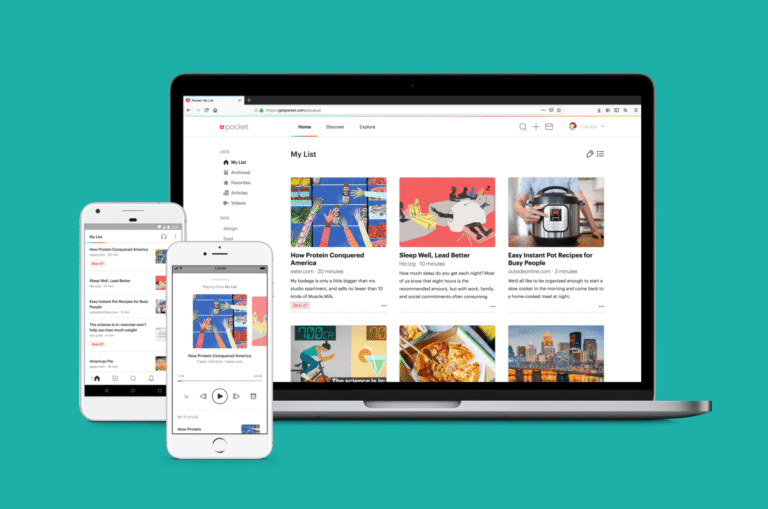
When Mozilla announced the shutdown of Pocket in May 2025, it left millions of users searching for alternatives to save and organize web content for later consumption. The company had acquired the read-it-later app in 2017, but determined that the way people browse the web had evolved beyond its original model. The news unleashed a surge of adoption for competing services, with established players like Matter, Instapaper, and Raindrop.io gaining traction alongside a wave of new indie developers entering the space. This fragmentation created an opportunity for tools designed around different philosophies: some prioritize AI features, others emphasize privacy through self-hosting, and a few take radical approaches like forcing users to read within 24 hours.
A Market Opened by Mozilla’s Exit
The timing of Pocket’s closure was significant. Users had until October 8, 2025, to export their saved articles, lists, archives, favorites, notes, and highlights—creating urgency but also clarity. Rather than leaving a void, Pocket’s exit accelerated a diversification that was already underway. The market is no longer dominated by a single mainstream tool, but instead fragments across use cases: users who want AI-powered summarization, users who prefer open source, users who need knowledge management integration, and users who want simplicity.
Premium Services with AI and Integration Focus
Several well-funded alternatives have positioned themselves as direct Pocket replacements with additional features. These tend to charge annual or monthly subscriptions and emphasize either intelligent organization or multimedia support.
Matter’s Expansion Beyond Article Saving
Matter, backed by Google Ventures (GV), offers a free iOS app and browser extensions for Chrome, Safari, and Firefox. The service lets users listen to articles and transcribe favorite podcasts, but premium features unlock at $79.99 per year. In March 2025, Matter added an AI-powered co-reader designed to answer questions about topics while reading. The premium tier includes improved transcriptions for podcasts and YouTube videos, adjustable reading speeds, and integrations with notes apps, Gmail, and Kindle.
Instapaper and the Established Challengers
Instapaper, founded by developer Marco Arment in 2008, remains one of the oldest read-it-later apps and was acquired by Pinterest in 2016. It offers unlimited article and video saving on iOS and Android for free, but $59.99 per year unlocks features like note-taking, permanent archives, text-to-speech playlists, full-text search, and Kindle integration. Notably, Instapaper explicitly supported Pocket imports and offered three-month free trials to users switching from Mozilla’s service.
Raindrop.io initially positioned itself as a bookmark manager with browser support, but its iOS and Android apps enable reading saved articles and PDFs. The free version supports unlimited bookmarking with Zapier and IFTTT integrations. At $33 per year, the paid tier adds AI-powered organization suggestions, full-text search, bookmark reminders, duplicate and broken link detection, and 10GB monthly file uploads.
Developer-Focused and Knowledge Integration Tools
A second tier of alternatives emerged aimed at users who want to integrate saved content into broader workflows, particularly knowledge workers and developers building personal information systems.
Readwise Reader’s Annotation-First Philosophy
Readwise, a tool for adding notes and highlights to articles, launched its Reader app in 2021 with a specific philosophy: tightly integrate reading with knowledge management. The Reader app allows users to import RSS feeds, YouTube videos, and Twitter threads. Because of its integration with Readwise, the Reader app emphasizes annotation features and includes offline text search plus an AI assistant. Users can connect Reader with knowledge apps like Obsidian, Notion, Roam Research, Evernote, and Logseq. The app is free for 30 days, then requires a $9.99 monthly Readwise subscription. Readwise allowed Pocket users to import their entire archives and highlighted that Reader supports PDFs, ePubs, and X posts—features Pocket never offered.
Plinky, created by former Twitter engineer Joe Fabisevich, takes a simpler approach to link saving and categorization. The free version allows users to save 50 links, create three folders, and use five tags across Apple platforms and browser extensions. Pricing starts at $3.99 monthly, $39.99 annually, or a one-time $159.99 for unlimited capacity. Recall, meanwhile, combines a browser extension with a mobile app that saves articles, PDFs, blogs, podcasts, Wikipedia pages, and videos. Unlike traditional read-it-later apps, Recall uses AI to automatically summarize and categorize content, then resurfaces it during relevant research. The free tier supports 10 AI summaries; $7 per month unlocks unlimited summaries.
Open Source and Community Models
For users concerned about vendor lock-in or data privacy, several projects offer self-hosted and open-source options. These typically charge less or rely on donations.
Wallabag’s Self-Hosting Foundation
Wallabag is an open-source read-it-later service available on iOS, Android, and the web, with e-reader support for Kindle and Kobo. Users can save articles for offline reading and export data in PDF, ePUB, .mobi, JSON, CSV, TXT, or HTML. The app highlights sections and adds tags with built-in reader mode. A €11 per-year hosted subscription is available if self-hosting is not preferred, with proceeds funding open-source development. Wallabag also supports importing data from Pocket, Instapaper, and other services.
Readeck, another open-source web app, helps users organize articles, videos, and photos with highlighting, e-book export, and video transcript saving via browser extension. The company said it will offer a hosted version in 2025 and is developing a mobile app. Obsidian’s Web Clipper is free and designed to highlight and capture web pages through browser extension, with templates that customize how different content types—articles with citations, recipes with ingredients—are saved into Obsidian’s note-taking app.
Unconventional and AI-Powered Approaches
Burn 451 and Accountability-Driven Reading
Burn 451 takes a provocative stance on the “read later” problem: users save an article but rarely read it. The app enforces a rule: articles must be read or tagged within 24 hours, or they are automatically deleted. Available on web and iOS, Burn 451 also offers an MCP (Model Context Protocol) server for users of AI tools to reason over reading habits. This approach directly contradicts the hoarding mentality Pocket enabled.
Omphalis, an AI-powered consume-it-later app, accepts articles, documents, podcasts, and videos, then transforms them into more comprehensible versions with summaries, top points, and chapter-like structures. The free version offers limited AI comprehensions and transcription minutes, while Pro plans starting at $9 per month provide higher limits, key moment recaps, and read-along features.
Folio, designed by Nick Chapman—who previously worked at Pocket as head of product—offers a simple interface with filtering by tagged, favorites, short reads, and long reads. Users can add articles via Chrome extension, share sheet, or manual URL entry, and import data from Instapaper. Notably, Folio offers many premium features like text-to-speech, highlights, custom fonts, and full-text search for free, with a discovery section for exploring new content to read.
Other alternatives include DoubleMemory, a newer macOS and iOS app that saves content to a Pinterest-style tile layout and syncs via iCloud; Karakeep, an open-source bookmarker for iOS, Android, Chrome, and Firefox that uses AI to auto-tag items; and Dewey, which saves links, videos, and social media posts from X, TikTok, Bluesky, Threads, Reddit, Instagram, and LinkedIn, starting at $7.50 monthly with bulk AI tagging and Notion sync.
Choosing Among Fragmentation
The Pocket shutdown accelerated a trend toward specialized, purpose-built tools rather than a single catch-all service. Users concerned with cost have free options across every category. Those prioritizing privacy can choose open-source self-hosted tools. Readers who want AI assistance, knowledge graph integration, or accountability mechanisms each have dedicated solutions. The October 2025 export deadline has largely passed, and the competitive landscape is now stable. Rather than waiting for a single dominant player to emerge, users have learned to compose workflows across multiple tools—saving in one place, reading in another, and archiving in a third. That fragmentation is not a failure of the market; it reflects the diverse ways people actually consume and organize information online.
Frequently Asked Questions
When was Pocket shut down?
Mozilla announced Pocket's shutdown in May 2025. Users had until October 8, 2025, to export their saved articles, lists, archives, favorites, notes, and highlights.
What are the most expensive Pocket alternatives?
Matter charges $79.99 per year for AI co-readers and improved podcast transcription, while Instapaper costs $59.99 annually for note-taking, text-to-speech, and Kindle integration.
Are there free read-it-later apps available?
Yes, several free options exist including Obsidian Web Clipper, Karakeep, and the free tiers of Raindrop.io and Folio, though some offer premium subscriptions for additional features.
