
Key takeaways
- The proposal represents an unprecedented corporate offer to align private AI profits with public Inter est through direct equity allocation.
- OpenAI released an April 2026 policy document that provides intellectual scaffolding for the Public Wealth Fund concept, explicitly comparing artificial intelligence’s societal impact to the Industrial Revolution.
- The OpenAI proposal has triggered a stark political divide over AI wealth distribution mechanisms.
- OpenAI is not alone in advocating for equity allocation to public funds.
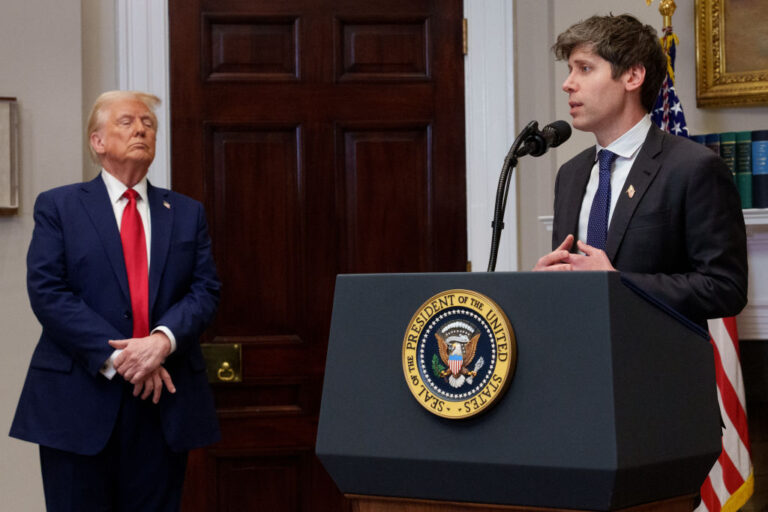
OpenAI has formally proposed donating a 5% equity stake in the company to the Trump administration to seed a “Public Wealth Fund,” a voluntary donation valued at approximately $42.6 billion based on the company’s $852 billion valuation. CEO Sam Altman pitched the framework to the White House in early 2025, with discussions intensifying in June 2026 as the administration signals openness to the concept of ensuring American citizens share in AI-driven economic growth through direct returns.
A $42.6 Billion Voluntary Donation Reshapes AI Policy
The proposal represents an unprecedented corporate offer to align private AI profits with public Interest through direct equity allocation. Sam Altman, OpenAI’s CEO, has positioned the donation as a mechanism to “clear political obstacles” by tying the company’s future gains to government interests and demonstrating that technological transformation can benefit all Americans rather than concentrate wealth among investors and founders.
The 5% stake valuation reflects OpenAI’s extraordinary market position following a record-breaking funding round completed in March 2026 that assessed the company at $852 billion. At this valuation, the proposed equity transfer would create one of the largest sovereign wealth fund seeding contributions in US history, dwarfing the GDP of most small nations and establishing a precedent for how transformative AI companies might structure their relationship with government.
Policy Framework Draws Parallels to Industrial Revolution Wealth Distribution
OpenAI released an April 2026 policy document that provides intellectual scaffolding for the Public Wealth Fund concept, explicitly comparing artificial intelligence’s societal impact to the Industrial Revolution. The framework argues that technological transformations of such magnitude require new mechanisms for distributing resulting wealth beyond traditional taxation or regulatory approaches, positioning voluntary corporate equity allocation as a pragmatic alternative to more aggressive government intervention.
President Donald Trump endorsed the conceptual framework in June 2026, stating that “there are concepts where pieces could be given to the American public, where the American public essentially becomes a partner.” The administration has signaled that the government could pursue equity stakes in other leading AI developers beyond OpenAI, suggesting the proposal could establish a template for broader industry participation in sovereign wealth structures.
Competing Visions Emerge: Sanders Proposes 50% Expropriation
The OpenAI proposal has triggered a stark political divide over AI wealth distribution mechanisms. Senator Bernie Sanders released the American AI Sovereign Wealth Fund Act in June 2026, proposing a 50% ownership stake transfer in companies like OpenAI, Anthropic, and XAI through a one-time federal tax rather than voluntary corporate donation. Sanders’ op-ed in The New York Times frames mandatory wealth reclamation as essential to preventing AI-driven inequality, directly contrasting with OpenAI’s softer voluntary approach.
This political tension reveals fundamental disagreement about whether corporations should voluntarily allocate equity to serve public interest or whether government should mandate wealth redistribution through legislative action. The competing proposals signal that AI policy will remain contentious through 2026 and beyond, with corporate self-regulation clashing against progressive calls for more aggressive wealth reclamation in transformative technology sectors.
Anthropic Joins the Sovereign Wealth Fund Movement
OpenAI is not alone in advocating for equity allocation to public funds. Anthropic, a rival AI firm founded by former OpenAI researchers, has also floated the concept of creating a public investment fund alongside its private operations. The parallel support from competing AI developers suggests an industry-wide strategy to preempt mandatory taxation or expropriation by voluntarily offering government stakes that distribute profits to citizens once companies achieve profitability.
This coordinated industry positioning indicates that major AI developers view sovereign wealth fund structures as preferable to regulatory alternatives or competitive disadvantages that might arise from unilateral government action. By aligning their interests with public benefit rhetoric, OpenAI and Anthropic are attempting to shape the policy landscape before legislation crystallizes around more punitive wealth redistribution mechanisms.
International Capital Flows Complicate Domestic Negotiations
OpenAI’s proposal to donate equity to the US government coincides with simultaneous fundraising efforts targeting Middle Eastern sovereign wealth funds. Sam Altman traveled to the United Arab Emirates in 2026 to negotiate a $50 billion funding round co-led by MGX, associated with Abu Dhabi’s sovereign wealth fund, with closing expected in the first quarter of the year. This parallel capital raising demonstrates OpenAI’s strategy to balance government equity allocation with international investment capital.
The timing of both negotiations reveals a sophisticated corporate approach: offering the US government a significant equity stake while simultaneously securing massive private capital from foreign sovereign funds. This dual-track strategy ensures OpenAI maintains flexibility in its ownership structure while demonstrating commitment to American public interest, potentially creating a hybrid model where government, domestic investors, and international capital coexist in the company’s cap table.
No Final Agreement Reached as Negotiations Continue
As of early June 2026, the discussions between OpenAI and the Trump administration remain in preliminary negotiation phase with no finalized investment terms or ownership structure agreed upon. The Financial Times and CNBC report that specifics remain fluid, with the proposal functioning as a voluntary equity donation rather than a government mandate, leaving room for significant modifications before any formal agreement reaches execution.
The absence of a finalized deal underscores the complexity of structuring government equity stakes in private companies and the political sensitivity surrounding AI governance. Resolution of these negotiations will establish crucial precedent for how the US approaches wealth distribution in transformative technology sectors, influencing regulatory frameworks, tax policy, and corporate governance for years to come. The outcome will signal whether American policymakers embrace corporate self-regulation or pursue more aggressive wealth reclamation strategies championed by progressive legislators.
