
Key takeaways
- Pebble Time 2 smartwatch launches at $225 with 64-color e-paper display, physical buttons, and approximately 21-day battery life per charge.
- Core Devices has shipped more than 25,000 units across 93 countries, with 2,120+ watch faces and apps built by the developer community.
- The original Pebble founder Eric Migicovsky revived the brand after Google open-sourced the operating system in 2025 with help from former company engineers.
- Physical interface and e-paper display differentiate it from Apple Watch, though iOS restrictions limit some notification and synchronization features.
The Pebble smartwatch, once acquired by Google through Fitbit before the company eventually ceased operations, has returned to the market. Core Devices, the startup founded by Pebble’s original creator Eric Migicovsky, has begun shipping the Pebble Time 2 at $225. The new device charts a deliberate course away from the touchscreen-dominated smartwatch category, instead emphasizing mechanical buttons, passive displays, and long battery life.
A Different Approach to Wearables
The Pebble Time 2 uses a 64-color e-paper display rather than the OLED screens prevalent in competing devices. This fundamental choice cascades through the rest of the watch’s design philosophy. The screen remains constantly visible, even without backlighting, so checking time or notifications requires no wake gesture. Users can toggle backlighting via an RGB LED system either by flicking their wrist or tapping the display, with this behavior itself customizable. The display trades visual vividness for legibility in direct sunlight and for battery endurance: the watch runs approximately 21 days per charge depending on usage patterns, with a charger included at purchase.
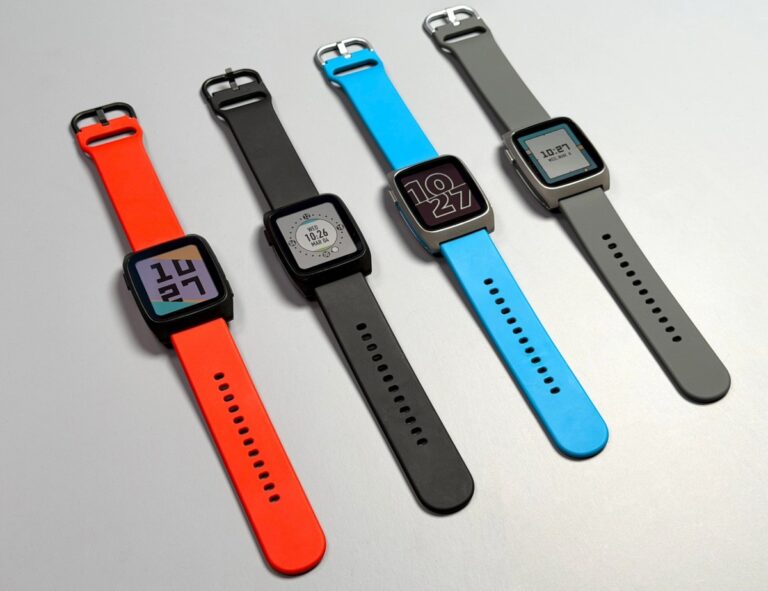
Physical controls anchor the interface. Four buttons—top, bottom, left, and right—handle navigation and selection, with each programmable to launch specific apps via single or long press. The watch arrives in one of four silicone band colors: blue, red, silver, or black. The case itself, made of stainless steel, comes in silver or black.
Design as Philosophical Statement
Where competitors position smartwatches as wearable computers, Pebble embraces constraint as virtue. The silicone band situates it closer to casual sports watches than luxury wearables. The e-paper screen reduces processing demands. The mechanical buttons eliminate touchscreen gesture learning. What emerges is a device that feels purposeful rather than trying to accomplish everything.
The Community That Resurrected the Brand
The original Pebble never achieved market dominance. It sold 2 million watches and generated $230 million in revenue, yet Migicovsky publicly stated these numbers were insufficient to sustain the business independently. After the company’s exit, Fitbit and Google maintained Pebble’s infrastructure. When Fitbit discontinued support in mid-2018, an unusual situation unfolded: Pebble’s user community volunteered to maintain the servers and software repositories themselves, effectively keeping the platform alive for free.
This foundation proved essential to revival. In 2025, Migicovsky convinced Google to open source the original Pebble operating system. With legal clearance and assistance from former Pebble engineers at Google and Fitbit, he launched Core Devices and resumed production.
The Developer Ecosystem
The Pebble app store now hosts more than 2,120 watch faces and applications. A spring developer contest alone contributed over 500 new entries. Customization options range from simple analog or digital displays to watch faces featuring cartoon animals, pixelated retro designs, oversized numbers, and fonts styled after comic books or science fiction. Some reference memes or video game franchises—Pokémon, Kirby, and Mario have all appeared despite obvious trademark questions.
Apps span health tracking, games, utilities, remote controls, and specialized niches. Developers have built tools for tracking local transit schedules, tennis scores, sunscreen reapplication timing, and Claude AI usage—projects no major software platform would greenlight but which individuals created because they personally needed them. Pixelminer, a self-described pointless mining game, and FitCat, a virtual pet combined with activity tracking, rank among the most downloaded creations. The PebbleGoBrrrr app tells time through vibration. Separate AI-powered applications offer chatbot or agent access directly from the wrist.
Vibrancy Through Hobbyist Development
What distinguishes Pebble’s app library is the absence of economic gatekeeping. Developers are not optimizing for marketplace ranking or revenue per user. Many built their creation because solving a specific problem mattered more than launching a business. This inverts the typical smartphone dynamic: instead of apps chasing metrics, they pursue genuine use cases, however niche.
Practical Features and Restrictions
Without additional software, the watch mirrors notifications from your phone, with per-app toggles available in the companion application. Music controls sync to whatever audio application your phone runs. Alarms and timers can be set directly on the device. The watch tracks steps, sleep, and heart rate, though it does not market itself primarily as a fitness instrument. The timeline feature, accessed via the down button, displays upcoming calendar events, reminders, weather, and app-generated pins—a scrollable digest of what lies ahead.
The iOS Constraint
Apple’s platform restrictions significantly limit the Pebble Time 2 on iPhones. The watch cannot take actions on notifications, respond to text messages, or integrate with most third-party iOS applications. Daily alarms set on the phone do not synchronize to the watch; users must establish alarms directly on the device itself. These limitations stem from Apple’s control over its ecosystem, not from Pebble’s hardware or software design.
How Limitation Became Feature
The inability to perform immediate actions paradoxically creates benefit. Because the Pebble Time 2 can do less, it demands less attention. Checking notifications becomes a glance rather than a prompt to respond. For users fatigued by the expectation of constant engagement, this constraint becomes desirable. The watch has 30-meter water resistance, sufficient for rain or handwashing but not for swimming or diving.
Future Development
Core Devices has shipped more than 25,000 Pebble Time 2 units across 93 countries. The company’s third device, the Pebble Round 2, is scheduled to arrive in September. Firmware updates deploy every few weeks, and the companion application receives regular improvements. New application programming interfaces have rolled out since launch. Core Devices has committed to features not yet available, including a second microphone to enable noise cancellation.
Migicovsky’s second attempt at building Pebble differs markedly from the original venture. The watch targets those who prefer mechanical input to glass, clarity of purpose to feature density, and community-driven development to corporate polish. Whether that specific audience proves sufficient to sustain the business where the previous Pebble could not remains an open question. The foundation—a devoted user base that maintained infrastructure voluntarily for years, and open-source software now accessible for future development—suggests the conditions for lasting viability exist.
Frequently Asked Questions
How long does the Pebble Time 2 battery last?
The device runs approximately 21 days per charge depending on usage, with a charger included in the box.
What sets the Pebble Time 2 apart from the Apple Watch?
Pebble uses a 64-color e-paper screen instead of OLED, includes four physical buttons instead of relying on touch, and prioritizes simplicity over extensive functionality. The trade-off is longer battery life and a less demanding user experience, though iOS restrictions limit some capabilities.
Who is making the new Pebble and how did it return?
Core Devices, founded by original Pebble creator Eric Migicovsky, revived the brand after Google open-sourced the original Pebble operating system in 2025, with assistance from former Pebble and Fitbit engineers at Google.
