
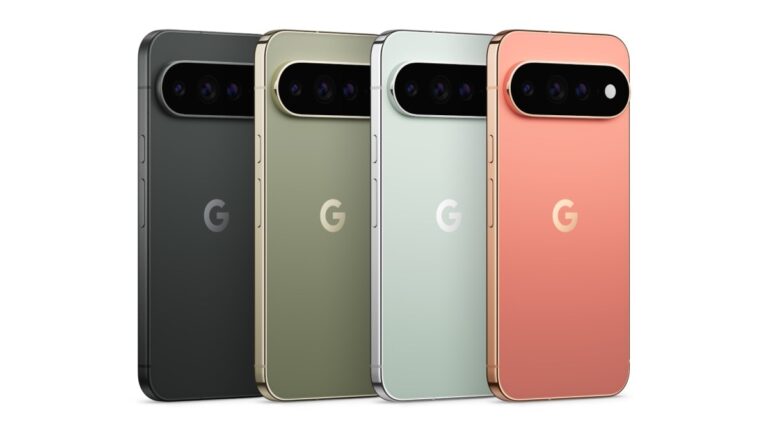
Key takeaways
- Pixel 11 prioritizes Gemini AI capabilities—including agentic task automation, live translation, and transcription—over hardware design changes from the previous generation.
- New computational photography features like Magic Capture automatically select and optimize photos from video, while zoom capabilities increased to 120x for Pro models.
- Processor efficiency improved 20% with Tensor G6, enabling faster inference on AI models, though Google declined to specify exact performance metrics.
- Base Pixel 11 storage minimum doubled to 256GB, eliminating the cheaper 128GB option, while Pro XL pricing rose $100 compared to last year's model.
Google’s approach to smartphone innovation has shifted markedly in recent years, and the Pixel 11 series represents a continuation of this trend. Rather than pursuing radical hardware redesigns, the company is positioning artificial intelligence as the primary differentiator for its latest devices. The Pixel 11, Pixel 11 Pro, and Pixel 11 Pro XL retain familiar form factors and internal architectures from their predecessors, but introduce a significant expansion of Gemini-powered capabilities aimed at automating daily tasks and enhancing content creation.
This AI-centric strategy reflects a broader industry pattern where processor improvements and sensor refinements receive less marketing emphasis than the software intelligence built atop them. For Google, the Pixel 11 launch prioritizes demonstrating how AI can meaningfully reduce friction in user workflows rather than highlighting incremental hardware specifications.
Gemini’s Expanded Task Automation
The most consequential additions to the Pixel 11 lineup revolve around Gemini’s ability to execute tasks on behalf of users. Google announced that U.S.-based users can now direct Gemini to place grocery orders, book rides, or purchase coffee—actions that previously required manual navigation through multiple apps. Beyond consumer transactions, Gemini can initiate calls to businesses to reserve restaurant tables or schedule appointments, with the capability for users to intervene or terminate tasks at any point during execution.
Transcription and Live Translation
To compete with products like Wispr Flow and Aqua, Google integrated a dictation feature called Rambler directly into the Pixel 11 phones. This capability, first announced in May, enables continuous speech-to-text conversion similar to existing competitors. The feature represents Google’s response to a growing market for always-on transcription tools that capture conversations and meetings without requiring users to manually start recording.
Complementing transcription, the Pixel 11 introduces live translation functionality that works across multiple content types. Users can translate videos, podcasts, and voice messages in real time into their target language. This capability extends to a new accessibility feature that uses Gemini to convert sign language into text, facilitating communication between deaf and hard-of-hearing individuals and those without sign language fluency.
Contextual Intelligence Through Magic Cue
Google evolved its “Magic Cue” feature, which previously surfaced basic contextual information, into a more sophisticated intelligence layer powered by Gemini. The enhanced Magic Cue now aggregates data across installed applications to provide proactive suggestions—such as dinner recommendations based on calendar entries or entertainment suggestions tied to viewed content. This represents a shift toward what Google describes as “agentic AI,” where the system anticipates user needs rather than simply responding to explicit requests.
Computational Photography and Camera Intelligence
The camera system in the Pixel 11 lineup incorporates multiple AI-driven enhancements that blur the line between photography and videography. A new feature called “Magic Capture” automatically selects the best frames from hundreds of images captured between the moment a user presses the recording button and releases it. The system then auto-crops and deblurs selected frames to optimize them for sharing without requiring manual post-processing.
Zoom Capabilities and Sensor Improvements
Google increased the digital zoom specifications across the lineup. The Pixel 11 base model now offers 30x zoom compared to the previous generation’s 20x, while Pro models achieve 120x zoom, up from 100x in the prior year. The Pixel 11 Pro XL specifically enables the 120x magic zoom capability through enhanced image signal processing on the new Tensor G6 chip.
The Pro models receive an updated main camera sensor that Google claims delivers higher-quality photos than the previous generation, though the company did not specify measurable improvements. The new telephoto sensor allows 32% more light to reach the sensor during image capture, theoretically improving low-light performance and dynamic range.
Night Photography and Video Enhancements
A feature called “Instant Night Sight” accelerates low-light photography, requiring 4.5 times less processing time than the Night Sight mode on previous-generation Pixel phones. Google enhanced video capabilities by introducing 8K resolution recording with video boost and improved stability features. The company also added “Circle to Search,” a gesture-based feature previously available only in other contexts, directly within the camera interface—matching a similar capability Apple introduced in iOS 27 with Siri.

Processor Performance and Power Efficiency
All Pixel 11 devices utilize the new Tensor G6 processor, which Google claims delivers 20% better power efficiency and enables 25% faster web browsing compared to the chip in previous models. The processor’s improved image signal processing enables faster low-light photography through Night Sight Instant, though Google did not disclose specific latency metrics for running inference on newer AI models.
The company emphasizes that the Tensor G6 allows for running the latest AI models “with lower latency,” suggesting improvements in on-device inference for Gemini features, but declined to quantify these improvements. The processor supports all the computational photography features mentioned above, indicating that much of the AI functionality relies on local processing rather than cloud-based inference.
Video Creation and Professional Tools
Google introduced a “creator suite” mode in video settings that transforms the Pixel 11 into a teleprompter while users record video content. After recording completes, clips automatically save to a dedicated folder, streamlining the workflow for creators who need to organize and edit multiple takes. This addition targets content creators who use smartphones as primary production devices.
The device’s enhanced video capabilities—including 8K resolution recording with video boost and improved stabilization—cater to this creator-focused positioning. Google also enabled custom camera looks, which are specialized filters applied during image capture rather than post-processing, giving users additional creative control at the moment of shooting.
Pricing, Storage, and Availability
The Pixel 11 lineup arrives at three price points: $899 for the base Pixel 11, $1,099 for the Pixel 11 Pro, and $1,299 for the Pixel 11 Pro XL. The base models now ship exclusively with 256GB of storage, eliminating the 128GB option that was previously available at a $100 discount. This represents a de facto price increase for users who previously purchased the 128GB variant.
The Pixel 11 Pro and Pixel 11 Pro maintain their previous-generation pricing. However, the Pixel 11 Pro XL increased by $100 compared to last year’s Pixel 10 XL, reflecting rising component costs, according to Google. Pre-orders began immediately upon announcement. New accessories launched alongside the phones, including expanded color options for Pixelsnap cases and new Pixelsnap Ring Stand variations.
Physical Design and Accessibility Updates
While the Pixel 11 prioritizes software over hardware changes, Google made a subtle modification to the device’s physical design: an LED indicator light positioned on the back of the phone near the flashlight. This light signals incoming calls or messages from favorite contacts and illuminates when Gemini is actively listening or processing requests.
The Pro models receive a marginally brighter display compared to the base model, a distinction that primarily benefits outdoor usability in direct sunlight. Google also redesigned the live transcribe interface across the lineup to improve accessibility for users with hearing impairments, moving beyond the transcription feature itself to enhance the overall communication experience.
Frequently Asked Questions
What specific tasks can Gemini perform on the Pixel 11?
Gemini can order groceries, book rides, purchase coffee, call businesses to make restaurant reservations or schedule appointments, with users able to intervene or stop tasks at any time.
How much has Google improved zoom capabilities in Pixel 11?
The base Pixel 11 zoom increased from 20x to 30x, while Pro models now achieve 120x zoom up from 100x. The Pixel 11 Pro XL enables 120x zoom through enhanced image signal processing.
What storage is available with Pixel 11?
All Pixel 11 phones start with 256GB of base storage. Google eliminated the previous 128GB option that was sold at a $100 discount in prior generations.
