
Key takeaways
- Petra Power manufactures solid oxide fuel cells that convert fuel like natural gas to electricity in a single step, bypassing the multiple efficiency-losing stages of traditional combustion power generation.
- The company has received $9 million in Defense Department contracts and targets first deployments with mid-market data center operators in 2028, with full-scale production starting in 2029.
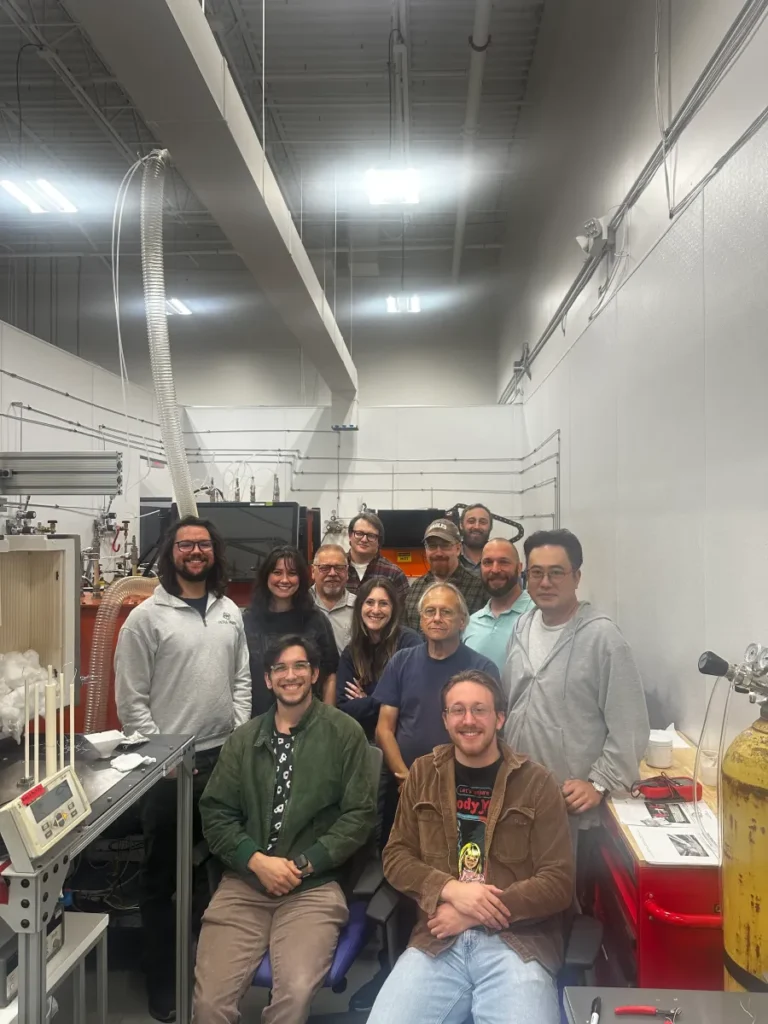
- Petra remains a 15-person team working to move its fuel cells from testing phases into commercial and military applications as AI data centers seek more efficient power sources.
As artificial intelligence systems consume ever larger quantities of electricity, companies running data centers face mounting pressure to find power sources that are both efficient and economical. Petra Power, founded in 2017, has positioned itself in this space by manufacturing solid oxide fuel cells — ceramic devices that convert fuel such as natural gas into electricity through a chemical process rather than combustion.
The company’s founder, Aaron Goodman, describes the product as offering lower fuel costs and reduced emissions compared to traditional power generation, along with a smaller physical footprint due to their compact and lightweight design. Petra is one of several startups targeting the energy needs of AI infrastructure, though most of its current traction comes from government contracts rather than commercial data center deployments.
How efficiency becomes cost savings
The fundamental advantage of Petra’s approach centers on the thermodynamic path to electricity. Traditional power generation follows a series of conversions: fuel combustion creates an explosion, which generates heat, which drives mechanical motion, and that motion ultimately produces an electrical charge. Each step introduces efficiency losses.
Goodman explained the difference by contrasting this multi-stage process with fuel cell operation. “Combustion takes fuel and creates explosions,” he said. “Those explosions create heat. That heat creates motion. The motion powers an electromotive force, which eventually creates electricity. It’s a lot of steps, and they all have so much loss in them that you end up with a really inefficient system.”
A single conversion step
Fuel cells sidestep most of these intermediate stages. “What fuel cells do is they take the electrons directly off of the fuel, so they strip the fuel of its electrons, which creates electricity,” Goodman explained. This single-step process eliminates multiple points where energy dissipates as waste heat or mechanical friction.
Dollar savings at scale
The efficiency gain translates directly into operational cost reductions. Any organization consuming large amounts of fuel to generate electricity stands to realize significant savings over time. For data centers operating 24 hours daily, even modest percentage improvements in efficiency compound into millions of dollars annually. Defense applications offer similar economics at a different scale.
Two customer bases, two different sales cycles
Petra is targeting two distinct markets with different buying processes and deployment timelines. The first is cloud infrastructure operators; the second is the Department of Defense.
For commercial data centers, Goodman said Petra is currently working with infrastructure providers that operate below the hyperscaler tier — companies like neoclouds that do not yet have the massive scale of Amazon Web Services, Google Cloud, or Microsoft Azure. These firms have confirmed interest, and the company targets its first deployment with these customers for 2028, with full-scale production expected in 2029.
Hyperscalers remain the long-term goal
Despite this focus on mid-market operators, Goodman acknowledged that the largest cloud providers represent the ultimate opportunity. “Hyperscalers are an ICP [ideal customer profile] for us, and we talk a lot to them, but we don’t have anything firm with them yet,” he said. “We’re still kind of working in that direction. Obviously, they’re the largest consumers of power. They’re the ones that we can make the biggest impact with, so that’s where we’d like to go.”
Defense deployments still in the testing phase
On the military side, the timeline remains more uncertain. The Defense Department is evaluating fuel cells for use as auxiliary power systems on land vehicles, supplying electricity to onboard equipment when the main engine is shut down. Petra has already received nearly $9 million in contracts from the Defense Department, but the product has not been deployed on any operational vehicle. Instead, it remains in testing phases while the government decides whether to move forward with adoption.
Funding momentum and team scale
Petra is still small by venture standards. The company operates with approximately 15 employees and is actively hiring to support its growth. The $9 million in Defense Department contracts represents the company’s primary revenue source to date, though Goodman expressed confidence about scaling this work significantly over the coming years.
The company was selected for this year’s TechCrunch Startup Battlefield 200, a program that identifies 200 early-stage companies for presentation to investors and industry leaders. Petra’s participation in the program reflects growing attention to alternative energy solutions for computing infrastructure.
Why the timing matters for AI
The urgency around Petra’s mission has intensified alongside the AI boom. Training large language models and running inference servers at scale demands enormous amounts of electricity. Data center operators have begun publicly discussing power constraints as a potential bottleneck to expanding AI capabilities. Any technology that can reduce the energy footprint of computing while cutting operating costs has potential to influence industry growth trajectories.
Petra’s solid oxide fuel cells address this dynamic directly. If the company successfully deploys systems with non-hyperscaler infrastructure providers in 2028 as planned, and if those deployments deliver the efficiency gains Goodman claims, the technology could see adoption by larger operators thereafter. The Defense Department’s parallel interest creates an additional revenue stream independent of commercial data center cycles.
The path from prototype to production
The gap between a working prototype and a certified, deployable system is substantial. Petra must satisfy both commercial customers’ performance requirements and government procurement processes. The 2028 target for first deployment with neoclouds and other infrastructure providers represents an aggressive but achievable timeline for a company founded less than a decade ago.
Success in that window would validate not just Petra’s technology but the broader market thesis that novel power sources can address AI infrastructure challenges. It would also open the possibility of the hyperscaler partnerships Goodman described as his longer-term target. For now, the company remains focused on delivering working fuel cells to smaller cloud operators and demonstrating viability to defense planners testing the systems in vehicles.
Source: TechCrunch
Frequently Asked Questions
What is a solid oxide fuel cell?
A solid oxide fuel cell is a ceramic device that converts fuel like natural gas into electricity through a chemical process that strips electrons directly from the fuel, creating power in a single step without combustion.
When will Petra's fuel cells be deployed in data centers?
Petra targets its first deployment with infrastructure providers like neoclouds for 2028, with full-scale production expected to begin in 2029. The company has not yet secured agreements with large hyperscalers like Amazon or Google.
How much funding has Petra received?
Petra has received nearly $9 million in contracts from the Defense Department. The company has not disclosed venture capital funding totals in public statements.
