
Key takeaways
- Amulya Vishwanath, who spent seven years leading product marketing for Nvidia's robotics platforms, founded Techable VC to invest in physical AI across robotics, materials science, and life sciences.
- Vishwanath argues robotics remains in its "Lego era," where foundational infrastructure like actuators, robotic hands, software, and safety standards are still underdeveloped and fragmented.
- She contradicts the optimistic narrative that a general foundation model will create a "ChatGPT moment" for robotics, maintaining that AI cannot overcome hardware and standards gaps.
- Her investment thesis focuses on foundational infrastructure companies, reflecting the belief that robotics must solve engineering and standardization problems before AI can enable rapid scaling.
After seven years leading product marketing for Nvidia’s robotics division, Amulya Vishwanath has moved to venture capital with a thesis that challenges much of the current optimism around how quickly artificial intelligence will transform robotics.
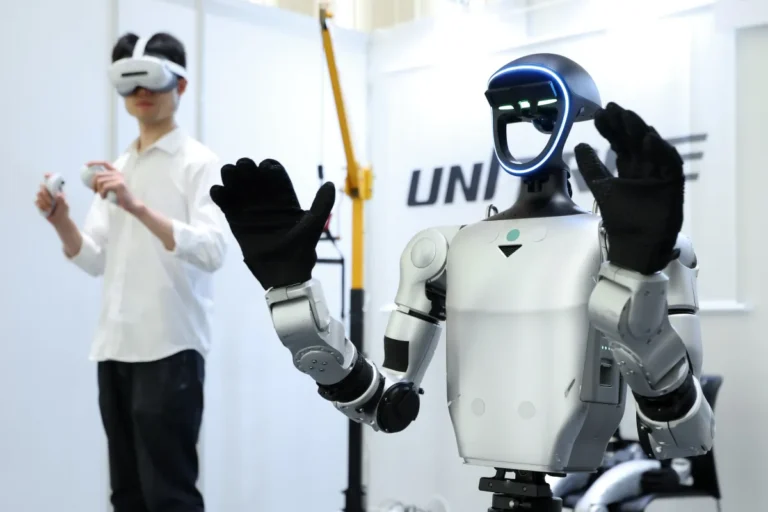
The argument Vishwanath is making, outlined in a recent appearance on TechCrunch’s Equity podcast, centers on a specific metaphor: robotics today exists in its “Lego era.” The industry has not yet standardized or reliably solved the foundational components—actuators, robotic hands, software architecture, and safety standards—that would be necessary for a general AI model to create the kind of breakthrough moment that ChatGPT achieved in late 2022.
This positions her against a vocal camp of roboticists and investors who contend that a sufficiently powerful foundation model will render much of today’s specialized robotics engineering obsolete and unlock mainstream adoption across industries. Pim de Witte, CEO of General Intuition, articulated that view when speaking to Equity earlier this year, arguing that a single general foundation model would make much of today’s specialized robotics work redundant.
From Nvidia to Techable VC
The Background and Fund
Vishwanath founded Techable VC as an early-stage venture fund focused on what she calls physical AI—a category that spans robotics, materials science, and life sciences. Her background gives her unusual credibility in the space. At Nvidia, she spent seven years shaping the company’s approach to robotics platforms and how customers interacted with them.
As founder and managing partner of Techable VC, Vishwanath is now one of the first women executives to have spun out of Nvidia and launched her own early-stage firm. This distinction matters in a venture ecosystem where executive departures from major tech companies typically lead to startups in software, cloud infrastructure, or AI software—less frequently to robotics capital.
Investment Strategy
The fund’s focus on physical AI broadly suggests Vishwanath is betting on foundational infrastructure rather than on application-layer companies or pure AI development. By investing across robotics, materials science, and life sciences, she is positioning Techable VC to back companies solving the substrate-level problems that robotics needs before it can have its ChatGPT moment.
Understanding the “Lego Era”
The Foundational Gaps
The core of Vishwanath’s argument is that robotics companies and investors have mistaken the sequencing of how this sector will mature. Speaking on TechCrunch’s Equity podcast in an interview conducted by Dominic-Madori Davis, she laid out what she sees as the current state of the industry.
Actuators, the mechanical components that convert energy into motion, remain fragmented across different designs and standards. Robotic hands—the grippers and manipulators that perform actual work—have not coalesced around reliable, production-ready architectures. Software stacks for coordinating these components across different platforms continue to diverge rather than consolidate. Safety standards, which any robotics system operating around humans must satisfy, are still being written and standardized.
Why This Sequence Matters
Each of these components, in Vishwanath’s framing, is a building block that must be solidified before the higher-level software and AI can do its most powerful work. This is what she means by the “Lego era”—the pieces are still being invented and assembled, not snapped together into predetermined configurations.
The General Foundation Model Debate
The Optimistic Case
The competing narrative, advanced by figures like General Intuition’s de Witte, assumes that the hard problem in robotics is understanding and reasoning about tasks. From this perspective, a general foundation model solves that bottleneck, and specialized robotics engineering becomes a lower-order problem that will resolve once that foundational capability exists.
Vishwanath’s Counter-Argument
Vishwanath’s position is that understanding and executing remain fundamentally different challenges. A foundation model might know how a gripper should move or how a robot should navigate a warehouse, but that knowledge becomes useless if the gripper does not exist in reliable form, if it lacks safety certifications, or if it cannot integrate with other standard components.
The disagreement, at its core, is about timing and prerequisites. Both camps might agree that robotics will eventually achieve much broader commercial deployment. They differ on whether an algorithmic breakthrough can accelerate that timeline, or whether the industry must first solve a lengthy list of engineering, manufacturing, and standardization problems.
Implications for Capital and Development
Vishwanath’s thesis has direct consequences for where capital flows and what problems robotics companies choose to tackle. If she is correct, then the most important investments are in the foundational layers—the startups building better actuators, safer and more capable hands, production-ready software infrastructure, and the standards that allow different components to work together.
If the optimists are correct and a sufficiently powerful general AI model can coordinate and accelerate development across these layers once it exists, then capital might be better spent on the model development itself or on application-layer startups that wait for that infrastructure to mature.
The Market’s Unresolved Questions
The robotics industry remains unsettled on these questions. Deployments exist in controlled environments—manufacturing, logistics hubs, specialized labs—but mainstream adoption across diverse sectors has not yet materialized despite decades of research and billions in investment.
The emergence of powerful language models and AI systems has reinvigorated the robotics narrative, leading some to argue that the barrier to rapid scaling was always the software, not the hardware. Vishwanath’s counter-argument suggests that until the hardware layer matures, even the best software will face hard limits.
Source: TechCrunch
Frequently Asked Questions
What is Techable VC and what does it invest in?
Techable VC is an early-stage venture fund founded by Amulya Vishwanath. It invests in physical AI, which includes robotics, materials science, and life sciences.
What does Vishwanath mean by robotics being in its "Lego era"?
She means that foundational building blocks remain unstandardized or underdeveloped—actuators, robotic hands, software stacks, and safety standards are still in active development or fragmentation across the industry.
How does Vishwanath's view differ from predictions of a "ChatGPT moment" in robotics?
While some, including General Intuition CEO Pim de Witte, believe general foundation models will make specialized robotics work redundant, Vishwanath argues that robotics first needs to mature its physical infrastructure and standardization before any AI model can create that breakthrough moment.
