
Key takeaways
- The 2027 Porsche Macan Turbo EV delivers 630 horsepower and genuine sports car performance in a visually unremarkable crossover body that attracts no attention on highways or in parking lots.
- The electric Macan charges from 19 to 80 percent in 20 minutes on 350-kilowatt chargers and provides 285 miles of highway range, making long-distance driving between cities practical.
- Starting at $112,700, the test vehicle reached $149,610 with options, many offering little functional value—puddle lamps project branding for $420 and a passenger display costs $1,710 despite being inaccessible to most occupants.
The Porsche Macan Turbo is an exercise in automotive contradiction. On highways and city streets, it looks like every other luxury crossover, blending seamlessly into traffic without attracting notice. Yet behind the wheel, it delivers performance that questions fundamental assumptions about what defines a sports car. According to TechCrunch’s week-long test, the 630-horsepower electric Macan answered this question through driving experience rather than visual drama.
The Anonymity Paradox
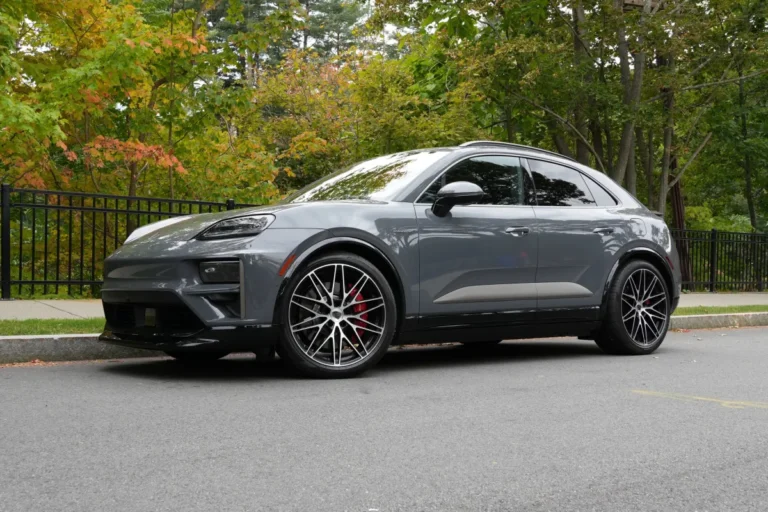
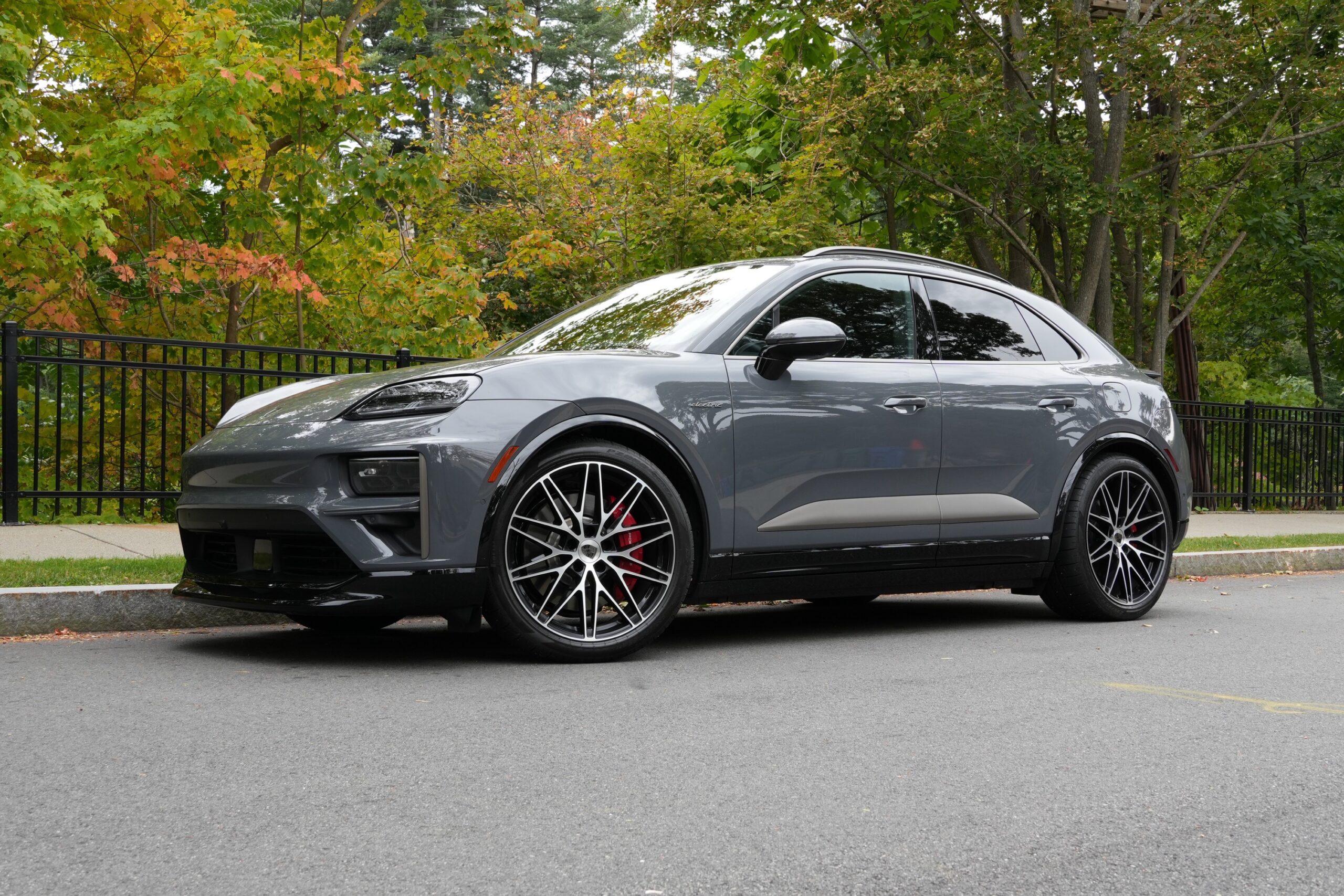
The Macan Turbo’s styling presents a paradox that Porsche seems to have deliberately embraced. The grey color, bulbous roofline, and SUV proportions read as utterly conventional. This is not a vehicle designed to attract attention in parking lots or spark questions from automotive enthusiasts. According to TechCrunch, shuttling kids and groceries produced no envious stares, no curious onlookers, just another crossover moving through suburban streets.
A Six-Figure Porsche Nobody Notices
The two-row crossover body sits atop a 100-kilowatt-hour battery and houses 630 horsepower. By performance specifications, this is a serious machine. Yet nothing about its exterior announces this capability. The proportions, silhouette, and styling language remain crossover-standard. For those seeking subtlety, Porsche offers the Slate Grey Neo option at $2,620, a color the reviewer found among the most convincing greys currently produced.
Performance Answers the Design Question
The contradiction dissolves when the accelerator engages. Passengers, including children being transported to soccer practice, registered the G-forces with enthusiasm. Stab the accelerator at highway speeds and the Macan responds as though standing still. The performance is not theoretical or marginal, it is immediately apparent to anyone inside the vehicle. This transforms the design question from “Why does it look like an SUV?” into “Why wouldn’t you want one?”
Performance and Handling Dynamics
Porsche equipped the test vehicle with hardware that translates capability across every driving scenario. The four-wheel steering system at $2,150 and air suspension work together to create a chassis that responds crisply to driver input. Sport Plus mode actively lowers the vehicle on its air suspension, a tangible shift in stance that signals performance readiness.
Acceleration and Precision
The Macan’s acceleration profile separates it distinctly from typical crossovers. The head-up display at $2,660 presents G-force readings that accompany highway acceleration, translating physics into visible numbers. The steering wheel extends far enough to enable a properly sporty driving position, placing occupants in the vehicle rather than atop it. This positioning, combined with a classically styled Porsche chronometer at $1,040 ticking away on the dash, creates a driving environment aligned with performance intentions rather than practical transportation assumptions.
Responsive Handling in Real Conditions
On winding roads, the Macan demonstrates the precision expected from a Porsche chassis. The four-wheel steering system manages the additional width effectively, and the air suspension maintains composure through direction changes. The crossover proportions do impose height-related handling constraints compared to lower sports cars, but within the category of practical daily-use vehicles, the Macan’s dynamics stand distinctly apart.
The Options Ecosystem
The test vehicle started at $112,700 but reached $149,610 with destination fees and options. This $37,000 climb reflects Porsche’s comprehensive approach to optional possibilities, though not all additions justify their cost through functional value or aesthetic contribution.
Upgrades That Deliver Measurable Value
The four-wheel steering and air suspension systems improve driving dynamics in concrete ways. The heated steering wheel at $720 works exceptionally well, though Porsche embeds the activation button on the wheel’s inner rim between two spokes rather than providing obvious dashboard access. The chronometer at $1,040 combines functional timekeeping with brand expression, appropriate for drivers who value precise time measurement.
Options That Exist Primarily for Possibility
Other offerings venture into pure luxury theater. Puddle lamps projecting “PORSCHE” onto pavement cost $420. An illuminated Porsche wordmark on front seatbacks runs $1,710 despite serving children who cannot legally occupy front seats. Illuminated Turbo badging on door sills adds $1,230. The passenger display at $1,710 can stream YouTube videos but remains inaccessible to rear-seat passengers, earning dismissal from the reviewer’s family who noted their washing machine also plays YouTube videos.
The Turbo badge itself sparked debate among friends of the reviewer, who noted that electric motors lack turbochargers. This observation is technically accurate, though automotive naming abandoned literal accuracy long ago. BMW model numbers no longer reflect engine displacement, and the Ford Galaxie never traveled between star systems.
Range and Charging Capabilities
The electric powertrain delivers practical distance for both daily driving and longer journeys. The Macan achieved approximately 285 miles of highway range during the TechCrunch test, sufficient to drive from New York to Boston with reserve charge remaining. Larger wheels at $4,110 and performance tires at $660 reduced this figure compared to standard configurations, though the resulting range remained adequate for the test’s requirements.
DC fast charging performance proved competitive for the category. The battery charges from 19 to 80 percent in 20 minutes on 350-kilowatt chargers, with peak charge rates reaching 245 kilowatts against a maximum specification of 270 kilowatts. This speed makes intercity travel practical, though the vehicle’s navigation system undermined this advantage through flawed routing logic.
Technology: Capable Systems and Critical Gaps
Navigation Routing Failure
The most significant technology shortcoming emerged during charging route planning. When battery state of charge dropped to 22 percent, the navigation system responded to a request for the nearest fast charger by directing the vehicle to two chargers in sequence: first a 50-kilowatt station at a mall parking lot ten minutes away, then a 350-kilowatt charger at another location. The system insisted on this roundabout routing even as the vehicle arrived at the faster charger with 19 percent charge remaining. The car continued commanding the slower charger even after beginning the charging process at the 350-kilowatt location.
Systems That Perform Effectively
The advanced driver assistance system at $1,140 performs adequately despite occasional lane-hunting. The AI-powered voice assistant interprets commands and queries effectively. The Burmester sound system at $4,960 continues playing until the door locks, providing a useful reminder to secure the vehicle. Simpler features operate correctly: a vestigial power button remains unpaid-for functionality on the left of the driver’s display.
The Fundamental Question About Electric Performance
The Porsche Macan Turbo EV represents an automotive category not yet fully settled: performance vehicles in the electric age. Starting at $112,700 and reaching $149,610 in the test configuration, it offers genuine sports car capability wrapped in crossover practicality. Enthusiasts with multiple vehicles can use the Macan as a daily driver that also delivers convincing performance on twisting roads. The electric powertrain eliminates fuel consumption and associated costs while maintaining the performance that justified Porsche’s investment in the platform.
For buyers with sufficient budget, the Macan satisfies a specific need: high-performance driving without the running costs of traditional gasoline-powered sports cars. Whether anonymous styling and increased height represent acceptable compromises remains a personal calculation. The Macan Turbo does not announce itself, but it delivers entirely when asked.
Source: TechCrunch
Frequently Asked Questions
What are the key specifications of the Porsche Macan Turbo EV?
The 2027 Macan Turbo is a two-row crossover with 630 horsepower, a 100-kilowatt-hour battery, approximately 285 miles of highway range, and a starting price of $112,700.
How fast does the Macan Turbo charge on DC fast chargers?
The battery charges from 19 to 80 percent in 20 minutes on a 350-kilowatt charger, with peak charge rates reaching 245 kilowatts compared to a maximum specification of 270 kilowatts.
What are the main technology issues?
According to TechCrunch's test, the navigation system's charger routing was underwhelming, directing the reviewer to inefficiently sequence a slower 50-kilowatt charger before a faster 350-kilowatt location. Additionally, many options like puddle lamps projecting brand logos and front seatback illumination offer little practical value.
