
Key takeaways
- Relativity Networks closed a $22 million seed round to commercialize hollow-core fiber, which transmits data 30% faster than conventional fiber.
- An unnamed hyperscaler's $40 million order signals that hollow-core fiber is progressing from laboratory research into production deployment.
- CEO Eisenholz describes data center optimization evolving through three eras: compute-focused, networking-focused, and now geography-focused.
- Hollow-core fiber reduces latency per kilometer by 30%, allowing AI infrastructure operators to span greater distances in multi-facility deployments.
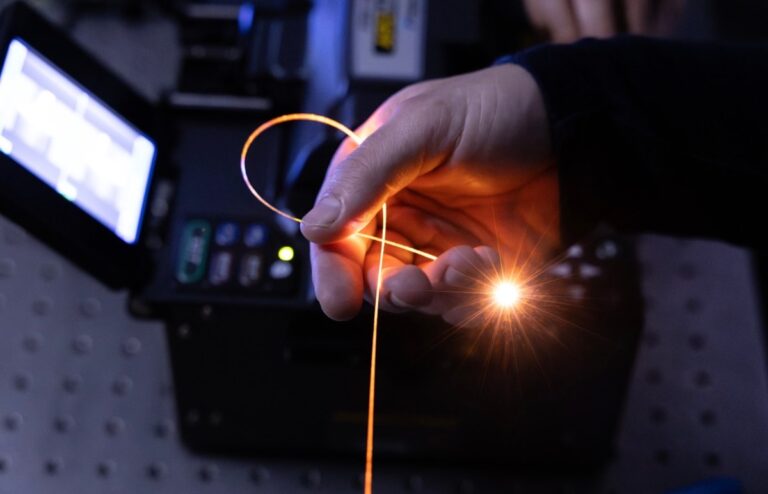
Relativity Networks closed a $22 million seed funding round to commercialize hollow-core fiber technology that transmits data 30% faster than conventional fiber-optic cables used in most data centers today. The round was led by Rhapsody Venture Partners, Bell Ventures Inc., and Faster Than Glass LLC, among other backers. The company also announced a $40 million order from an unnamed hyperscaler, validating that the technology is progressing from laboratory research toward production deployment. The funding comes as data center developers face increasingly severe constraints on where they can build, even as demand for AI infrastructure drives investment projections of $4 trillion through the end of this decade.
Hollow-core fiber transmits light through a vacuum chamber running down the center of the cable, rather than through dense glass material like conventional fiber. This fundamental change in transmission medium allows data to travel closer to light’s theoretical speed in a vacuum. CEO Jason Eisenholz quantified the latency advantage: signals travel approximately five microseconds per kilometer through conventional fiber, but only three and a half microseconds through hollow-core. Across multi-kilometer inter-facility connections spanning large data center campuses, that difference compounds significantly.
The financial and operational constraints facing data center developers create acute urgency for efficiency improvements. Hyperscalers can no longer locate facilities wherever they prefer; they must navigate political opposition, environmental regulations, and power-grid capacity limits in desirable regions. Simultaneously, modern AI systems require compute distributed across hundreds of racks, multiple buildings, and increasingly separate facilities—not by choice, but because no single site can provide sufficient power and cooling for the world’s largest AI training jobs. Hollow-core fiber addresses a critical gap in this scenario: how to synchronize distributed compute across greater distances without incurring prohibitive latency penalties.
How Hollow-Core Fiber Works and Why It Matters
The technology is not new—researchers have validated the fundamental physics in academic settings for years. But the gap between laboratory demonstration and commercial production has remained vast. Producing hollow-core fiber at scale requires precision manufacturing equipment and careful process control to maintain the vacuum chamber consistently across entire cable runs. The manufacturing complexity adds cost compared to conventional fiber, making it difficult to justify replacement unless the performance benefit is substantial enough to warrant the upgrade.
For AI infrastructure operators, that benefit has become concrete. Eisenholz notes that when AI compute ran on single racks of GPUs, fiber latency was negligible. Data center campuses have now sprawled across hundreds of acres and dozens of buildings. The largest AI systems now distribute the compute across multiple campuses to access available power. As he explained, operators are moving to regions where power and cooling capacity exists, yet they still need to operate these distributed systems as single synchronized units.
Hollow-core fiber reduces latency per kilometer by 30%, which translates directly into a 30% increase in permissible geographic distance before synchronization latency becomes limiting. For operators planning multi-facility deployments or linking existing data centers to operate as unified systems, that margin is material. It changes the calculus of where facilities can be built and how they can be integrated.
The Manufacturing and Integration Challenge
Overcoming production complexity
Scaling hollow-core fiber from laboratory prototypes to production volume requires solving multiple manufacturing challenges simultaneously. The vacuum chamber must be maintained with precision across fiber runs measured in kilometers. Equipment to produce the fiber at scale did not exist and had to be developed. The manufacturing process adds cost and complexity that commodity fiber does not require. Relativity must achieve sufficient cost parity with conventional fiber, or provide overwhelming performance justification to convince operators to pay premiums for replacement infrastructure.
Ensuring compatibility with existing systems
Data center operators do not replace network infrastructure lightly. Fiber plants are often buried, armored against physical damage, and integrated into facilities designed around them. New fiber must work with standard optical equipment—transceivers, switches, routers—that operators have already deployed throughout their infrastructure. Relativity either needs hollow-core fiber to work seamlessly with existing equipment or must convince major operators to upgrade entire networking systems simultaneously. The compatibility requirement alone could have derailed commercialization if not addressed.
Demonstrating reliability at operational scale
Hyperscalers manage systems with zero tolerance for unexpected outages. Introducing new materials into critical infrastructure requires extensive prototype validation and real-world testing. A fiber that performs perfectly in controlled laboratory conditions might fail under actual deployment scenarios: temperature fluctuations, physical stress, aging, environmental exposure. The $40 million order likely came only after a hyperscaler ran rigorous testing and confirmed that hollow-core fiber meets reliability standards comparable to conventional alternatives.
The Three Eras of Data Center Optimization
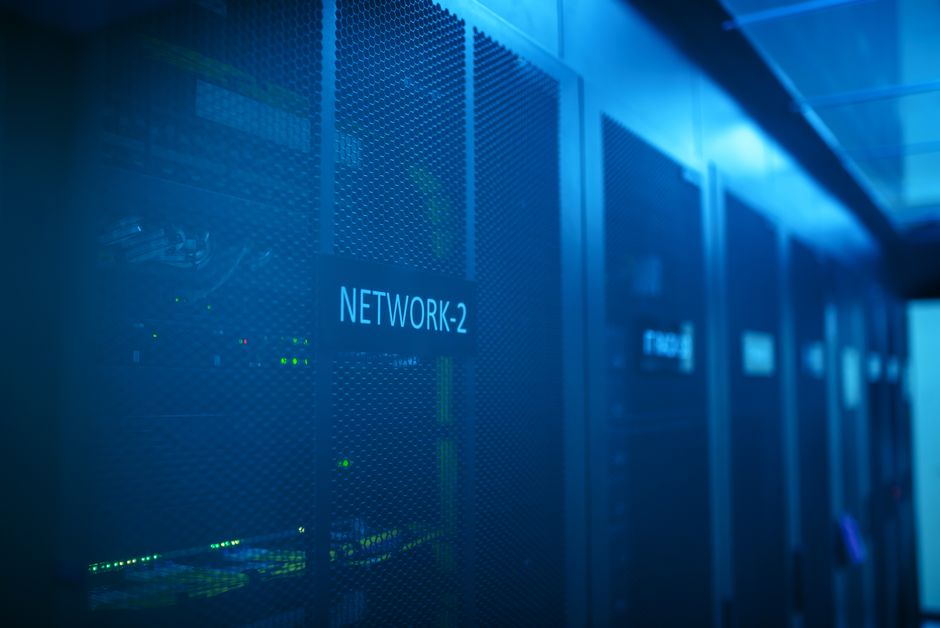
Eisenholz articulated a conceptual framework for understanding how data center optimization priorities have shifted alongside the growth of AI. The first era, spanning roughly 2016 to 2020, optimized for raw compute. GPU, GPU, GPU, as he summarized it. The focus was density and throughput—maximizing processor count in each facility and optimizing raw mathematical output. Cost per floating-point operation per second drove investment decisions.
The second era, beginning around 2020 and extending to the present, shifted optimization to the networking layer within data centers. Engineers realized that processor density meant little if GPUs could not communicate efficiently with each other and with memory. Networking fabric became a co-design problem alongside processor selection. Operators tuned collective communication algorithms to reduce hops between GPUs and provisioned dedicated networking hardware optimized for AI workloads.
The third era, which Eisenholz believes is beginning now, optimizes geography itself. As AI compute scales beyond what any single facility can power and cool, operators must distribute it across geographic distance. The questions become: where can you build? How do you link multiple sites? What is the latency cost of distributing massive training jobs across separate facilities? Hollow-core fiber is a tool enabling this third era—allowing operators to push the boundaries of how far distributed compute can span while maintaining the synchronization required for modern AI systems.
Market Validation and Funding Implications
The funding structure and investor composition reveal how seriously infrastructure leaders view the technology. SAFE notes, in which investor capital converts to equity once a company raises a traditional priced funding round, are standard in early-stage investing. The participation of Bell Ventures, the venture capital arm of Canada’s telecommunications heritage, signals that established infrastructure players see strategic relevance in hollow-core fiber.
The $40 million follow-on order carries even greater weight. Orders of that magnitude typically come only after hyperscalers have evaluated prototypes extensively, tested performance under realistic operating conditions, and confirmed that the technology meets their specifications. A single hyperscaler committing nine figures to hollow-core fiber deployment indicates that at least one major infrastructure operator believes the technology is production-ready and valuable enough to justify significant procurement.
The hyperscaler’s anonymity is notable. Major cloud and AI infrastructure operators typically remain undisclosed in these contexts to avoid revealing their infrastructure spending priorities or signaling which technologies they consider strategically important. The very existence of a nine-figure order, even if the customer remains unnamed, validates that Relativity has moved beyond proof-of-concept into genuine commercial deployment. This suggests the company has solved the technical and operational validation problems that stop most infrastructure startups from reaching serious customers.
Reshaping Data Center Geography in the AI Era
Relativity Networks occupies a specific but important niche in the evolving ecosystem of AI infrastructure innovation. Power and cooling remain the dominant constraints limiting data center expansion, but latency is emerging as a secondary but material constraint. A company that reduces long-distance fiber latency provides a concrete tool for addressing one of the remaining technical barriers to geographic flexibility.
The $4 trillion investment forecast through the end of this decade means thousands of new and upgraded facilities will be built over the coming years. Every efficiency improvement—whether in power per GPU, cooling per kilowatt, or latency per kilometer—can determine whether a facility design fits within operational constraints or faces resource scarcity. Hollow-core fiber alone will not solve data center scarcity, but it expands the design space available to operators planning multi-facility AI infrastructure.
For the broader AI infrastructure industry, Relativity’s funding reflects a maturing recognition that optimization cannot remain siloed to single technical domains. Compute architecture, networking infrastructure, power supply, cooling systems, and geographic distribution are now tightly coupled co-design problems. Companies that enable effective integration of these systems—making it possible to deploy larger, more distributed, more efficient infrastructure—are attracting serious capital and serious customers as the AI boom creates unprecedented demand for data center capacity.
Frequently Asked Questions
What is hollow-core fiber?
Hollow-core fiber transmits light through a vacuum chamber at the center of the cable instead of through glass like conventional fiber, allowing data to travel 30% faster. A signal takes approximately five microseconds per kilometer through conventional fiber but only three and a half through hollow-core.
Why does Relativity Networks' funding matter now?
Data center operators are distributing AI compute across multiple separate facilities to access available power and cooling, requiring faster long-distance networking. Hollow-core fiber reduces latency enough to allow operators to span 30% greater distances before synchronization becomes problematic.
What does the $40 million order from a hyperscaler indicate?
It indicates that at least one major operator has validated the technology extensively under real-world conditions and is ready to deploy hollow-core fiber at scale, moving it from proof-of-concept into genuine commercial deployment.
