
Key takeaways
- Tesla’s Q2 performance shattered expectations after a disappointing Q1 that had raised questions about demand sustainability.
- Wall Street’s reaction to the delivery beat reflected growing confidence in Tesla’s turnaround narrative.
- Alongside the delivery beat, Tesla announced a significant strategic pivot: the official sunset of the Model S and Model X sedans after Q2 2026.
- While Tesla’s vehicle delivery beat dominated headlines, the company’s energy storage business has emerged as a strategically critical revenue driver.
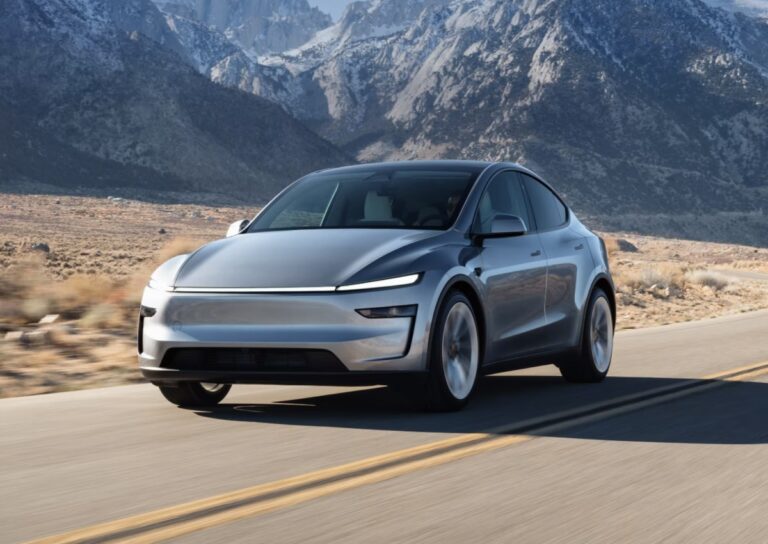
Tesla delivered 480,126 vehicles in the second quarter of 2026, obliterating Wall Street consensus expectations of 406,024 units and marking the company’s strongest quarter since 2023. The 74,102-vehicle beat represented a 19% sequential jump from Q1 and a 25% year-over-year gain, signaling a dramatic recovery after two years of declining sales across the EV maker’s global operations. CEO Elon Musk announced the results on social media, declaring that Tesla had “ANNIHILATED” analyst forecasts and reasserting the company’s market dominance amid intensifying competition in the electric vehicle sector.
The Delivery Blowout: Record-Breaking Performance Across Markets
Tesla’s Q2 performance shattered expectations after a disappointing Q1 that had raised questions about demand sustainability. The company delivered 358,023 vehicles in the first quarter—falling short of the 365,645-unit consensus—which triggered concerns about inventory buildup and weakening customer appetite. The Q2 rebound of 480,126 units represented a 34% sequential increase, proving that Tesla had successfully cleared excess inventory while simultaneously re-accelerating sales through aggressive pricing and product availability improvements.
The surge was driven by exceptional performance in two critical markets: Europe and China. Tesla registrations in greater Europe hit 28,610 units in June 2026 alone, representing a 108% year-over-year increase. In China, Tesla’s Shanghai Gigafactory shipped 79,478 Model 3 and Model Y vehicles in April 2026, a 36% surge compared to April 2025. These regional gains offset earlier weakness in the North American market and demonstrated Tesla’s ability to maintain pricing power and demand even as traditional automakers accelerated their EV rollouts globally.
Analyst Validation and Market Confidence
Wall Street’s reaction to the delivery beat reflected growing confidence in Tesla’s turnaround narrative. Goldman Sachs raised its Q2 delivery forecast from 405,000 to 420,000 vehicles shortly before Tesla’s official report, citing evidence that deliveries were “likely tracking ahead of consensus.” The bank’s revision came as part of a broader upgrade cycle that saw Goldman increase its full-year 2026 vehicle forecast from 1.72 million to 1.73 million units while raising its 2026 earnings-per-share estimate from $1.30 to $1.35. Goldman maintained a $375 price target on Tesla stock, reflecting analyst conviction that the delivery beat would sustain momentum through the remainder of 2026.
The stock market validated this optimism immediately. Tesla’s shares closed up more than 8% on the day of the Q2 delivery announcement, reflecting investor relief that the company had arrested the sales decline that had plagued it throughout 2025. The beat also vindicated Musk’s public confidence in Tesla’s ability to navigate competitive pressures and maintain its position as the world’s leading EV manufacturer by volume.
Strategic Portfolio Shift: The End of Model S and Model X
Alongside the delivery beat, Tesla announced a significant strategic pivot: the official sunset of the Model S and Model X sedans after Q2 2026. The company will no longer include these vehicles in its quarterly Production and Delivery reports, marking the end of an era for Tesla’s premium sedan lineup. Only 12,364 non-Model 3/Y units—primarily Cybertrucks—were delivered in Q2, compared to 467,762 Model 3/Y units, underscoring the company’s decisive focus on its volume-driving platforms.
This portfolio consolidation reflects Tesla’s strategic reorientation toward profitability and scalability rather than model proliferation. By eliminating lower-volume luxury sedans, Tesla can concentrate engineering resources and manufacturing capacity on the Model 3 and Model Y—vehicles that command massive global demand and deliver superior margins. The shift also signals management’s confidence that the company’s future growth will be driven by autonomous driving technology, artificial intelligence, and robotics rather than traditional vehicle sales expansion alone.
Energy Storage: The Overlooked Growth Engine
While Tesla’s vehicle delivery beat dominated headlines, the company’s energy storage business has emerged as a strategically critical revenue driver. Tesla’s energy storage deployments reached 46.7 gigawatt-hours in 2025, more than doubling from prior years and demonstrating robust demand for battery storage solutions independent of vehicle sales. This diversification became particularly valuable during 2025, when vehicle sales declined but energy storage momentum helped maintain Tesla’s valuation tied to AI, autonomy, and long-term growth narratives.
The energy storage surge reflects broader global trends: grid modernization, renewable energy adoption, and corporate demand for power security. As Tesla executes its strategy to transition from a pure-play automaker to an energy and technology conglomerate, energy storage deployments provide a high-margin revenue stream that is less cyclical than vehicle sales and more closely aligned with long-term infrastructure trends.
Tesla’s Rebound in Historical Context
Tesla’s Q2 2026 performance represents a decisive inflection point after a challenging 2025 marked by declining deliveries, competitive pressures, and skepticism about the company’s growth trajectory. The 480,126-unit quarter matches the strongest performance Tesla achieved since 2023, when the company was navigating the post-pandemic EV boom and supply chain normalization. The fact that Tesla achieved this result despite facing a far more competitive landscape—with established automakers like Volkswagen, General Motors, and BMW launching aggressive EV lineups—underscores the company’s enduring competitive advantages in manufacturing efficiency, battery technology, and brand appeal.
The Q2 beat also marked the largest quarterly delivery beat since 2023, demonstrating that Tesla’s ability to surprise on the upside remained intact despite heightened analyst scrutiny and more conservative consensus forecasts.
What Comes Next for Tesla
Investors and analysts will closely monitor Tesla’s Q3 and Q4 2026 deliveries to confirm whether Q2 represents a sustainable inflection or a temporary spike driven by inventory clearance and regional promotional activity. The company’s execution on next-generation vehicle platforms, autonomous driving capabilities, and energy storage expansion will determine whether 2026 marks the beginning of a multi-year growth reacceleration or merely a quarterly bounce within a longer-term slowdown.
Tesla’s Q2 delivery beat and strategic portfolio shift have reset market expectations and restored confidence in management’s ability to navigate competitive disruption. The company’s focus on volume models, energy storage, and emerging technologies positions it to compete effectively in a rapidly evolving EV market where scale, efficiency, and technology differentiation matter more than ever.
