
Key takeaways
- TikTok launched Must Eat, a restaurant guide drawing from 40 million posts, and is developing money transfer features to compete with Google Maps, Yelp, and fintech platforms.
- TikTok Shop reached $15.82 billion in U.S. sales in 2025, growing 108 percent, while capturing 18.2 percent of social commerce with projections to reach 24.1 percent by 2027.
- The platform is expanding into travel booking, sports hubs, gaming, and entertainment to create an all-in-one ecosystem, reducing friction between discovery and purchase.
- TikTok's super app strategy directly competes with Google Search and Maps by consolidating restaurant discovery, travel booking, shopping, and entertainment within a single app.
TikTok this week announced the launch of “Must Eat,” an in-app restaurant guide marking another expansion beyond social media into a sprawling ecosystem. The move joins a series of initiatives—from payments and travel booking to gaming and microdramas—that position the platform as a “super app,” a single destination where users can manage a significant portion of their digital lives without switching applications.
The super app model originates in China, where platforms like WeChat function simultaneously as messaging, payment, shopping, and entertainment services. While adoption outside China remains uncertain, TikTok has shown willingness to pursue this strategy, even as the company operates under new primarily U.S. ownership following its January transition.
Restaurant Discovery Without Leaving the App
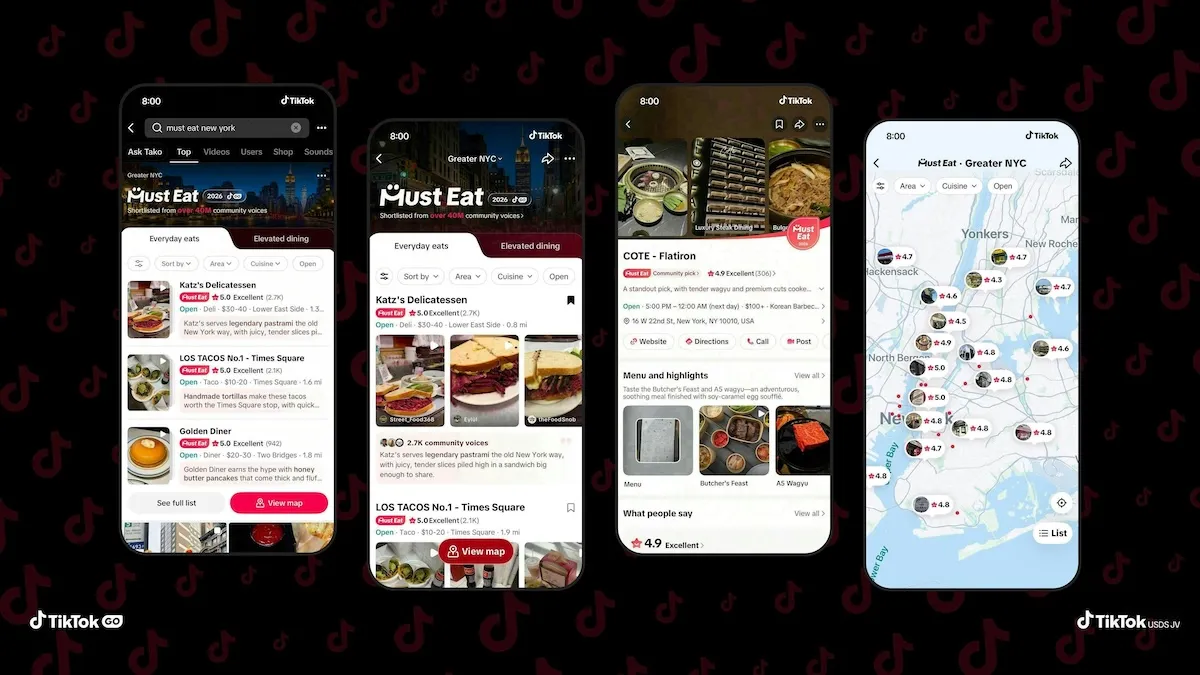
The “Must Eat” feature compiles recommendations from more than 40 million posts and comments on the platform. Users can browse establishments by city and filter by cuisine, price range, rating, and proximity. The feature capitalizes on TikTok’s existing role as a discovery engine for dining, where viral videos frequently drive traffic to local restaurants.
The launch puts TikTok in direct competition with Yelp and Google Maps. Unlike those platforms, which rely primarily on reviews and structured data, Must Eat emerges from the platform’s native video content, offering a different lens on restaurant popularity. The feature also represents how TikTok is consolidating user tasks within its app rather than directing traffic to competitors.
Payments and Financial Services
Developing Money Transfer Features
According to Bloomberg’s August reporting, TikTok is developing a feature allowing users to send money directly via direct messages using TikTok Pay. The payment system already operates in Southeast Asia for TikTok Shop purchases. If launched globally, the feature would bring financial transactions into the messaging context where users already spend time.
Seeking Regulatory Approval
Reuters reported in March that TikTok applied to Brazil’s central bank to operate as a financial technology company offering lending and payment services. The application signals intent to embed financial functionality into the platform at a structural level, not merely as a transactional convenience.
Revenue and Engagement Goals
Expanding into payments serves multiple objectives: increasing user engagement by reducing reasons to leave the app, opening new revenue streams, and positioning TikTok to compete directly with fintech startups and e-commerce platforms. Each expansion layer reinforces the others—shopping, payments, and messaging integrate within a single ecosystem.
The Dominance of TikTok Shop
The most mature of TikTok’s services outside entertainment is TikTok Shop. Launched in the U.S. in 2023 after testing beginning in 2021, the marketplace has demonstrated significant trajectory. According to eMarketer, TikTok Shop sales in the U.S. grew 407 percent in 2024 and another 108 percent in 2025, reaching $15.82 billion. As of last year, TikTok Shop captured 18.2 percent of total U.S. social commerce, with projections to climb to 24.1 percent by 2027.
The platform has expanded beyond its reputation for budget goods into luxury retail. Late last year, TikTok also launched gift cards, further diversifying how users can shop and spend within the ecosystem.
Travel, Sports, and Entertainment Integration
Booking Travel Without Third-Party Apps
In May, TikTok launched TikTok GO, allowing users to discover and book hotels, attractions, and experiences directly within the platform in the United States. The feature surfaces options through videos, search, and location pages, then enables booking and availability checks without routing users to external websites. The service transforms TikTok from a discovery engine into a transaction platform, capturing revenue that would otherwise flow to travel marketplaces.
Building Sports Hubs and Leagues
TikTok launched a dedicated hub for the FIFA World Cup in early June, providing scores, match schedules, standings, trending videos, highlights, and player content. The initiative resulted from TikTok GamePlan, a sports-focused product designed to help teams, leagues, and broadcasters drive discovery on the platform. TikTok maintains partnerships with Major League Soccer and Major League Baseball for exclusive and behind-the-scenes content.
Diversifying Entertainment and Games
TikTok introduced a Minis section and a stand-alone app for bite-sized scripted shows delivered as one-minute episodes. The company also added casual games to its app, allowing users to challenge friends within direct messages. Music remains a mixed chapter in this expansion. TikTok launched TikTok Music in 2023 to challenge Spotify and Apple Music, but shut it down a year later. Recently, the platform negotiated for Apple Music subscribers to play full songs discovered on their “For You” feed, opting to partner with streaming services rather than compete directly.
Reducing Friction Across Digital Life
TikTok’s layered approach reduces the friction of switching between apps. Where a user previously discovered a restaurant on TikTok, searched its hours on Google Maps, made a reservation on OpenTable, and paid via their banking app, they can now complete all steps within TikTok. The same logic applies to travel, shopping, and entertainment.
The strategy positions TikTok in direct competition with Google’s core search and maps businesses. Users discovering places, restaurants, and trips on TikTok are less likely to turn to Google Search or Google Maps. TikTok’s search features now surface maps, local hashtags, reviews, opening hours, star ratings, and price ranges for restaurants and attractions, eliminating the need to visit Google or Yelp for additional information.
By becoming a one-stop ecosystem, TikTok is betting that convenience and network effects will sustain user engagement, create new revenue streams, and establish the platform as the primary layer through which users navigate commerce, discovery, and entertainment in their daily lives.
Source: TechCrunch
Frequently Asked Questions
What is TikTok's "Must Eat" feature and what data does it use?
Must Eat is TikTok's restaurant guide drawing from over 40 million posts and comments. Users can search for restaurants by city and filter by cuisine, price range, rating, and location. The feature consolidates viral dining recommendations on TikTok into a single discovery tool.
How much has TikTok Shop grown, and what market share does it hold?
According to eMarketer, TikTok Shop grew 407 percent in 2024 and 108 percent in 2025, reaching $15.82 billion in U.S. sales. As of last year, it captured 18.2 percent of total U.S. social commerce, with projections to reach 24.1 percent by 2027.
Is TikTok developing payment features, and where are they being tested?
Bloomberg reported TikTok is developing a feature to send money via direct messages using TikTok Pay, which already operates in Southeast Asia for TikTok Shop purchases. Reuters also reported TikTok applied to Brazil's central bank to operate as a financial technology company offering lending and payment services.
