
Key takeaways
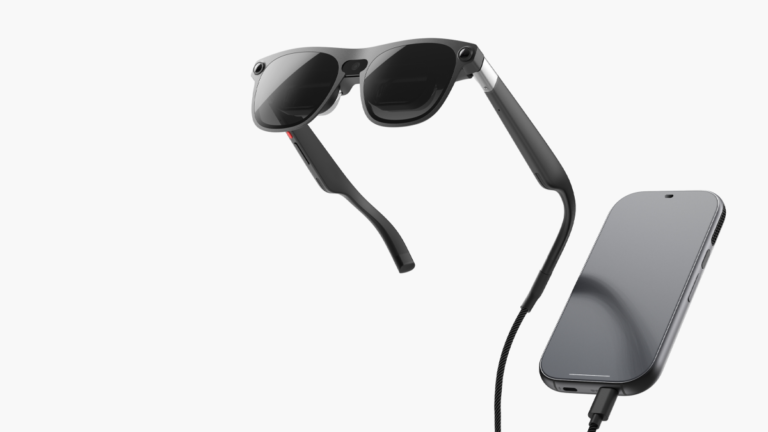
- Xreal's Aura smart glasses connect to a processing puck and run on Google's Android XR platform with Sony Micro-OLED display at 1200p resolution and 95-degree field of view.
- Launch pricing starts at $1,099 for the 12GB/256GB model through December, positioning the device between Ray-Ban glasses and Apple's Vision Pro in the market.
- Google uses Android XR as an open platform partnering with multiple manufacturers, contrasting with Apple's closed Vision Pro model and establishing a competitive alternative.
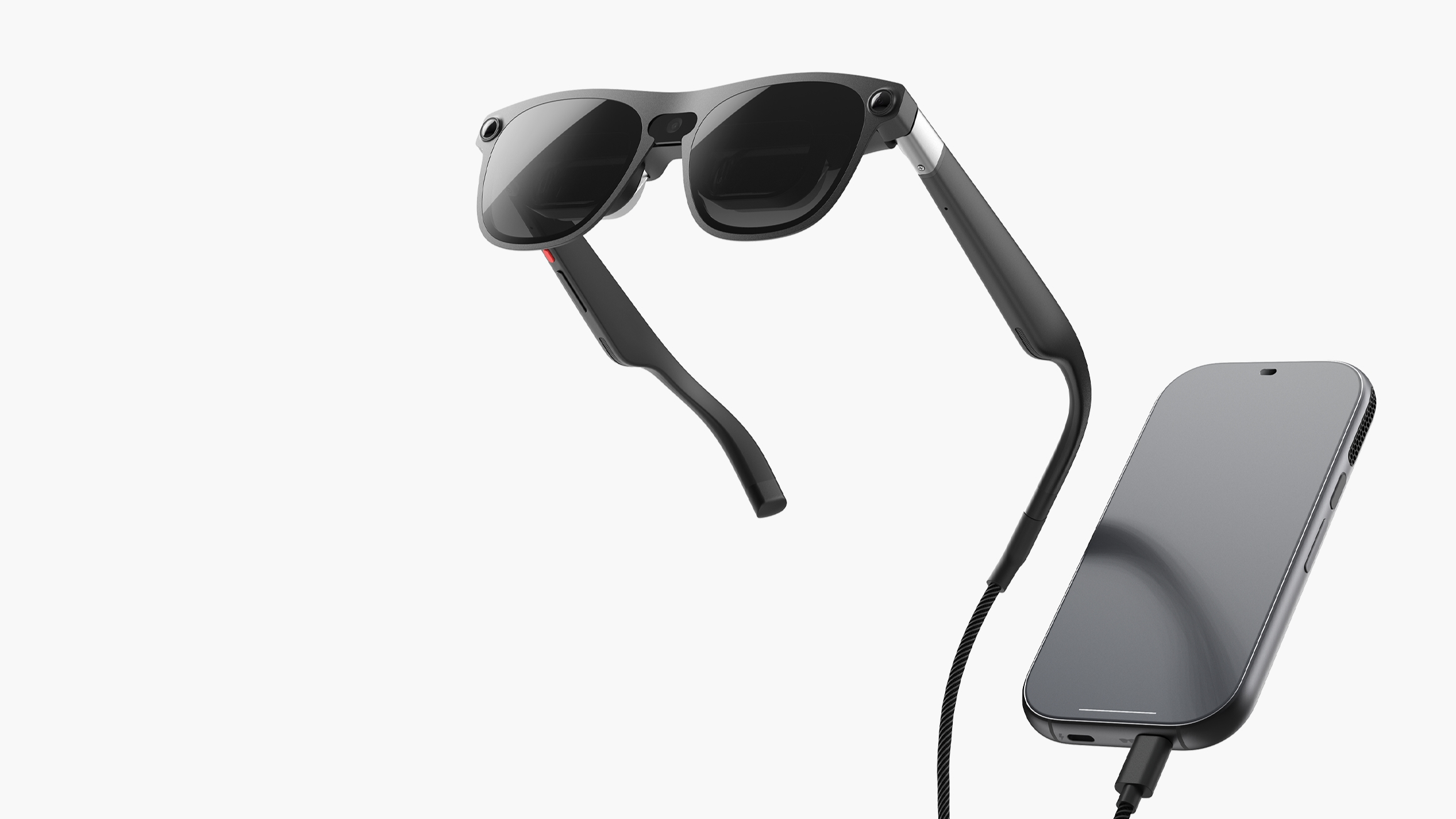
Xreal has introduced the Aura, a new tethered smart glasses device running Google’s Android XR platform and powered by Qualcomm’s Snapdragon Reality Elite processor. The announcement took place at the Android Developer Summit on Wednesday, confirming an earlier tease from Google’s I/O conference earlier this year.
Unlike Apple’s standalone Vision Pro headset, the Aura offloads processing to a separate wearable device while displaying content directly in the wearer’s field of view. This design approach mirrors Meta’s Ray-Ban smart glasses strategy more closely than Apple’s all-in-one form factor.
Hardware and Display Specifications
Display Technology and Performance
The Aura features Sony’s Micro-OLED display technology delivering 1200p resolution at 120Hz refresh rate with a 95-degree field of view. On paper, these specifications exceed the Ray-Ban Meta Display across all three metrics, providing sharper images and faster motion rendering.
Weight and Design Tradeoffs
The glasses themselves weigh 95 grams, heavier than Meta’s Ray-Ban variant at 69 grams. Users must carry the separate processing puck to operate the device, introducing a physical constraint absent from Ray-Ban glasses. The tethered design places the Aura between fully mobile smart glasses and stationary headsets in terms of portability.
Audio and Connectivity
Bose’s audio technology powers sound reproduction for video and music. The device accepts USB-C connections to external computing devices, enabling augmented display modes with desktop computers or gaming consoles. Multi-monitor virtual setups and oversized virtual screens become possible through this flexibility.
Google’s Android XR Ecosystem
Google is positioning Android XR as an open platform for smart glasses, replicating its smartphone strategy by partnering with multiple manufacturers including Samsung and Xreal. This approach contrasts with Apple’s closed-system philosophy and Meta’s single-manufacturer focus.
The platform grants developers access to Google Play’s existing app library alongside Android XR-specific experiences built for spatial interaction. This hybrid approach provides users immediate utility from legacy Android applications while introducing new immersive capabilities.
Gemini, Google’s conversational AI assistant, integrates into the platform to answer questions and interpret on-screen context, bringing generative AI capabilities into spatial computing workflows.
Launch Applications and Content
Announced Titles and Services
The launch lineup includes NBA App for Android XR, Nevatars, Fallout: Factions, Project Hail Mary: Journey Among the Stars, NASCAR XR App, and San Francisco Ballet Company’s The Nutcracker. This roster spans sports, gaming, and entertainment to demonstrate breadth across use cases.
App Ecosystem Expansion Path
The initial selection represents early-stage availability. As the platform matures, developers will expand offerings into productivity, communication, fitness tracking, navigation, and professional applications. The ability to run Google Play apps provides a foundation for gradual ecosystem expansion without requiring everything to be rebuilt for XR from launch.
Pricing and Market Availability
Orders open today in the United States, Canada, Japan, and South Korea. The 12GB RAM and 256GB storage model starts at $1,279, with launch pricing at $1,099 through December. The 16GB RAM and 512GB storage variant is priced at $1,499, with launch pricing at $1,299 through the same promotional window. Shipments begin in mid-November.
The price point positions the Aura significantly below Apple’s Vision Pro, which starts above $3,000, while remaining above Meta’s Ray-Ban smart glasses at several hundred dollars. The limited-time pricing strategy encourages early adoption before standard pricing takes effect in January.
Competitive Positioning in the Smart Glasses Market
Meta continues expanding its smart glasses portfolio as Apple and Google accelerate their own releases. Apple’s Vision Pro targets enterprise customers and enthusiasts willing to pay premium prices for standalone computing power. Google’s partnership model with Android XR aims to distribute smart glasses across multiple manufacturers and price tiers, democratizing access to spatial computing.
Xreal CEO Chi Xu noted in May that building a smart glasses business remains financially challenging, with most participants operating at losses. He simultaneously contended that the industry has reached an inflection point where hardware capabilities, software platforms, and user interface design have matured sufficiently to achieve meaningful scale.
Xu stated at that time: “You need all the key pieces ready. You need the hardware ready, the operating system needs to be ready, and then you need a great user interface.” His comments reflect an industry-wide belief that prerequisites for mass adoption are now in place.
Use Cases Beyond Consumer Entertainment
The Aura’s external device compatibility enables scenarios extending past consumer entertainment. Professionals could connect desktop computers to create multi-monitor virtual workspaces for coding, design, data analysis, or financial trading. Gamers could link consoles to overlay information during gameplay. Remote teams could visualize shared environments for collaborative work.
Entertainment applications include cinematic video playback and gaming at theater-scale displays with spatial audio. The inclusion of standard Google Play applications means users gain utility from existing Android software ecosystem alongside XR-native titles. The processing puck introduces a tether but also enables more powerful experiences than glasses-only computing, representing a middle ground between fully portable smart glasses and stationary headsets optimized for relatively stationary use.
Market Entry Strategy and Future Outlook
Xreal’s launch signals confidence that smart glasses have transitioned from experimental category to production-ready market segment. The staggered geographic availability across four major markets, combined with limited-time promotional pricing, reflects a deliberate market entry strategy designed to attract early adopters while establishing initial sales momentum.
Success depends on multiple factors: sustained developer engagement with the Android XR platform, positive real-world user experience beyond marketing demonstrations, and consumer perception of value relative to smartphone alternatives. The promotional window through December will provide initial data on market appetite. The convergence of Android XR, Snapdragon Reality Elite processing, and multiple hardware manufacturers creates conditions for platform momentum, though whether Xreal captures meaningful market share depends on execution across hardware reliability, software performance, and ecosystem growth in coming quarters.
Source: TechCrunch
Frequently Asked Questions
How much does the Xreal Aura cost and when is it available?
The 12GB + 256GB model starts at $1,279 with launch pricing of $1,099 through December. The 16GB + 512GB model is $1,499 with launch pricing of $1,299 through December. Orders open today in the United States, Canada, Japan, and South Korea, with shipments beginning in mid-November.
What devices can the Aura connect to for augmented display use?
The Aura connects via USB-C to computers or gaming consoles to function as an augmented display. It can also support multi-monitor virtual setups and large virtual screens, allowing professional and gaming applications.
How does Android XR differ from Apple's smart glasses strategy?
Google uses Android XR as an open platform partnering with multiple manufacturers like Samsung and Xreal, while Apple develops the closed-system Vision Pro independently. Google's approach aims to distribute smart glasses across multiple companies and price tiers.
