
Key takeaways
- Alteon raised $2.5 million led by Lachy Groom to develop autonomous aircraft that harvest energy from ocean winds using dynamic soaring, aiming to keep planes airborne for over a year.
- The startup recently completed a test over the Bay of Bengal where its aircraft autonomously flew seven O-shaped cycles at over 62 mph within one meter of the water's surface.
- Experts acknowledge the physics is sound but note that extracting reliable energy from real-world wind shear and operating safely at low altitudes present significant engineering challenges.
Bengaluru-based Alteon has raised $2.5 million in pre-seed funding to develop autonomous aircraft capable of remaining airborne for extended periods by harvesting energy from ocean winds. The round was led by prominent solo investor Lachy Groom and included participation from Together Fund.
The startup, founded by 20-year-old Samay Sanghvi, is pursuing a technique called dynamic soaring—the same method albatrosses use to extract energy from wind. The goal is to keep small, fixed-wing aircraft flying continuously without traditional fuel or battery limitations. Groom decided to invest within 30 minutes of meeting Sanghvi, according to TechCrunch.
How Dynamic Soaring Works
The Natural Inspiration
Dynamic soaring is an energy-harvesting technique in which an aircraft repeatedly transitions between layers of air traveling at different speeds. By moving between these wind shear layers, the aircraft gains energy from the velocity differences without active propulsion. Albatrosses have used this method for millions of years to traverse vast ocean distances on minimal energy expenditure.
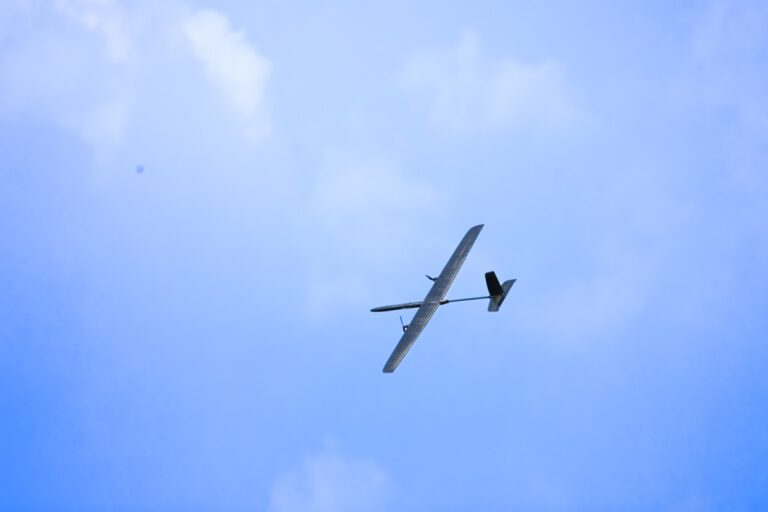
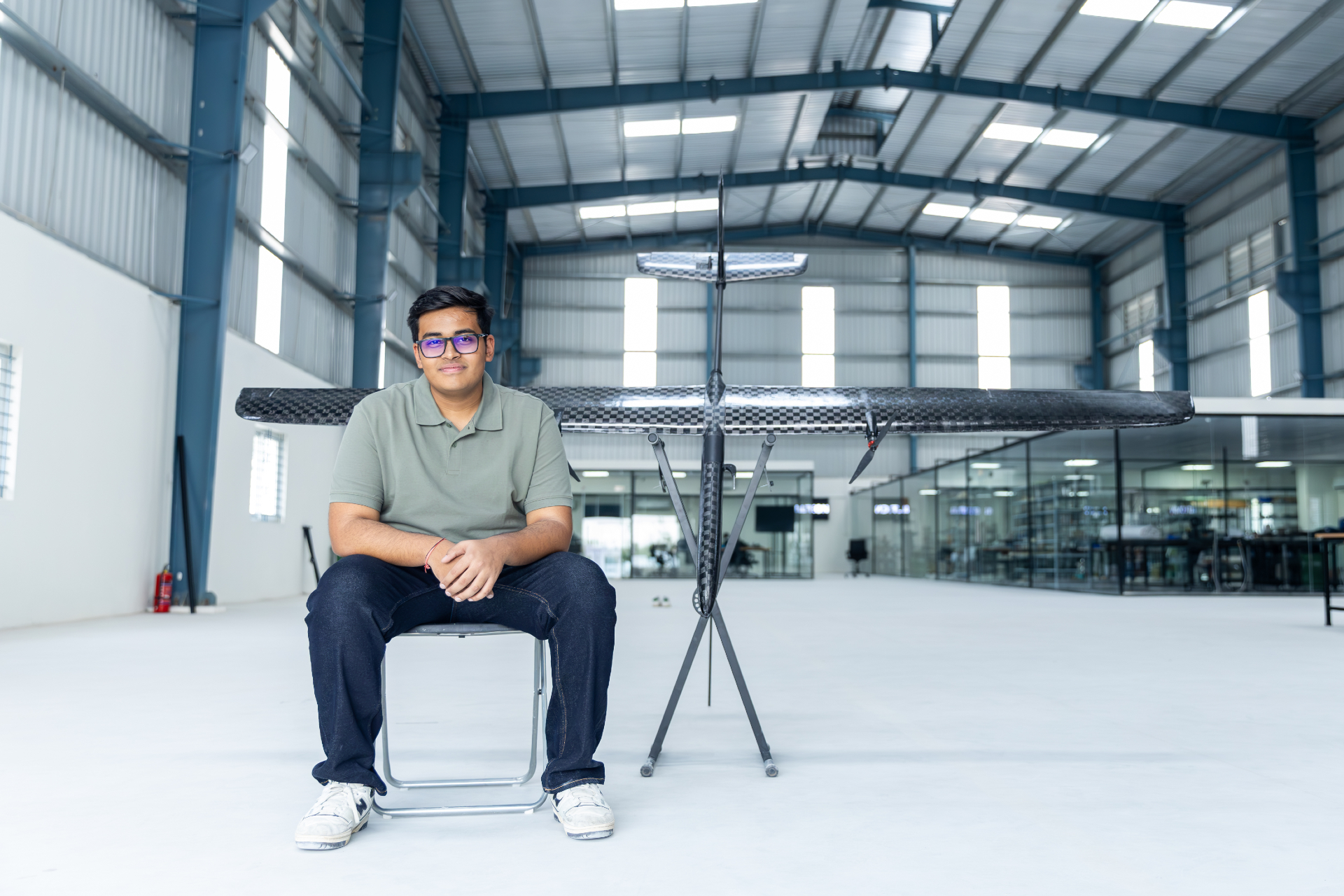
Alteon’s aircraft design centers on this principle. The autonomous craft features a small, fixed-wing frame with a planned wingspan of approximately three meters. The aircraft flies close to the ocean’s surface, climbs into faster-moving air, and then descends again in a repeating cycle that generates momentum from wind dynamics.
Energy Conversion Strategy
In its initial phase, Alteon’s aircraft simply extracts kinetic energy from the wind through the dynamic soaring maneuver. The long-term plan involves an additional layer: using the aircraft’s propellers as turbines to convert some of that extracted energy into electricity. This would recharge the onboard batteries during flight, creating a closed-loop energy system.
Sanghvi told TechCrunch that once aircraft can remain aloft for more than a year, “there are millions of things you can do with them.” The startup’s immediate application is maritime surveillance, providing governments real-time visibility into ocean activity.
Recent Progress: Bay of Bengal Test
Autonomous Flight Achievement
Alteon has not yet demonstrated sustained flight using harvested wind energy alone, but the startup completed a significant test over the Bay of Bengal recently. The aircraft autonomously completed seven O-shaped cycles at speeds exceeding 62 miles per hour while maintaining altitude within one meter of the water’s surface.
This test validated the autonomous flight control system’s ability to perform the complex maneuvers required for dynamic soaring at extremely low altitudes. The O-shaped pattern is the fundamental movement cycle that dynamic soaring requires—a continuous climb and descent between wind layers.
Testing Intensity
The startup has built considerable operational infrastructure to support rapid iteration. The 20-person team operates from a 10,000-square-foot facility in Bengaluru and manufactures four to five aircraft weekly for testing. Over the past 30 days, Alteon conducted more than 200 test flights, indicating an aggressive development schedule.
This production rate and testing volume suggest the team is pushing toward its next major milestone quickly. Sanghvi began experimenting with aircraft design straight out of high school in 2023, starting with radio-controlled models before advancing to full prototypes. He formally founded Alteon in 2025 after receiving early backing from Emergent Ventures and 1517.
The Technical Gauntlet Ahead
Expert Assessment of Feasibility
Dr. Gabriel Bousquet, a Silicon Valley-based aerospace and robotics engineer who researched dynamic soaring during his MIT PhD program, called Alteon’s low-altitude water flight a “promising first result.” However, he emphasized the harder challenge: reliably extracting enough energy from real-world winds to sustain flight over extended periods.
The physics of dynamic soaring is well-established according to Dr. Bharath Swaminathan, who earned his doctorate from IIT Madras studying the stability of dynamic soaring systems. He acknowledged that keeping an aircraft airborne for several days using this technique alone would constitute “a very big step, and a big achievement.” The jump from days to a year represents an exponential scaling of that challenge.
Environmental Hazards
Operating aircraft at the altitudes necessary for wind energy harvesting introduces complications that exist nowhere else in aviation. Bousquet noted that the aircraft would need to contend with turbulence, ocean spray, rain, and changing light conditions while continuously sensing and reacting to a moving water surface. This low-altitude, over-water environment is fundamentally hostile to sustained autonomous flight.
Swaminathan added that while large-scale wind patterns are predictable, local wind shear and turbulence vary substantially. These local variations complicate the aircraft’s ability to extract consistent energy from the wind, and some challenges may only emerge through extensive real-world flight testing.
The Founder’s Path
Samay Sanghvi’s journey to Alteon began unconventionally. Rather than following a traditional aerospace education path, he taught himself aircraft design in 2023 by building and flying radio-controlled models, learning through iteration and failure. This hands-on approach preceded his formal company founding by two years.
The progression from hobbyist experimentation to venture-backed startup reflects both the founder’s technical capability and his ability to articulate a compelling vision to investors. Groom’s 30-minute decision timeline suggests Sanghvi’s pitch aligned with the investor’s thesis around ambitious, physics-based problems.
Investor Perspective on Risk
Lachy Groom acknowledged the technical uncertainty in his backing. “Ambitious problems are always going to come with risks,” he told TechCrunch. “For me, it came down to believing Samay and the Alteon team are the ones to figure them out.” This statement frames the investment as a bet on the team’s ability to solve hard problems, not a bet that the technology is certain to work.
Next Milestone: Energy-Neutral Flight
Alteon’s immediate objective is achieving what Sanghvi calls “energy-neutral dynamic soaring”—continuous flight with the propulsion system switched off, powered entirely by wind energy extracted through the dynamic soaring maneuver. This milestone would represent proof that the fundamental concept works in practice, not just in theory.
Reaching this milestone requires solving the environmental sensing and control problems that keep the aircraft flying safely at extremely low altitudes while continuously extracting energy from wind shear. The Bay of Bengal test demonstrated the autonomous systems can execute the required flight patterns; the next phase must prove they can do so while drawing net energy from the environment.
Frequently Asked Questions
How does Alteon's aircraft extract energy from wind?
The aircraft uses dynamic soaring, a technique that involves repeatedly moving between layers of air traveling at different speeds to gain energy from wind shear, similar to how albatrosses fly.
What has Alteon achieved so far?
The startup conducted a test over the Bay of Bengal where its autonomous aircraft completed seven O-shaped cycles at speeds exceeding 62 miles per hour while flying within one meter of the water's surface.
What are the main technical challenges ahead?
Alteon must prove the aircraft can reliably extract enough energy from real-world winds to sustain continuous flight, while safely navigating turbulence, spray, rain, and changing light conditions at extremely low altitudes over water.
