
Key takeaways
- Keith Rabois will discuss Khosla Ventures' $50 million OpenAI investment in 2019, before the company had a business model, and his views on founders raising excess capital.
- Sports organizations operate at the intersection of community identity and financial return, explored with D.C. United CEO Jason Levien and venture investor Craig Shapiro.
- Tristan Walker and Brynn Putnam are launching ventures—Heirloom Craft and Board—explicitly designed to counter tech isolation through reshored craftsmanship and AI-enhanced physical games.
- Deven Parekh of Insight Partners will address how large venture firms compete when capital has become abundant and asset class boundaries have blurred.
TechCrunch’s StrictlyVC series, a boutique evening event focused on venture capital and entrepreneurship, is returning to New York on September 10 for the first time in two years. The gathering in Manhattan’s West Village marks the series’ return to the city after a calendar that included events in San Francisco, Los Angeles, and Athens during 2024. The lineup spans venture investors, founders who have built and sold companies, and business leaders examining how capital is deployed across industries—from artificial intelligence to sports to craft production.
Keith Rabois on Capital Allocation and OpenAI’s Trajectory
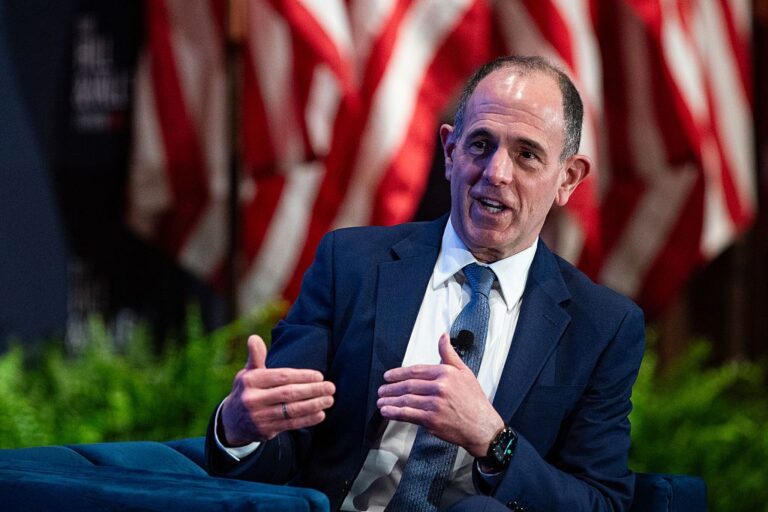
The evening opens with Keith Rabois, a prominent venture investor who recently relocated from Silicon Valley to the East Coast. Known for articulating strong positions on venture capital practice, Rabois has invested across multiple rounds in companies including Ramp, where he has been a repeat backer through four separate funding instances, and State Affairs, an artificial intelligence startup that partners local journalists with computational tools to track policy developments and news across all 50 state legislatures.
Khosla’s Early Bet on an Uncertain OpenAI
Rabois will recount Khosla Ventures’ $50 million investment in OpenAI during 2019, made at a stage when the organization had not yet articulated a business model or clear path to commercial viability. That early wager, placed before ChatGPT existed and before generative AI became a market force, exemplifies a particular venture thesis—backing fundamental research and capability-building before market adoption validates the investment. Rabois’s participation in that decision, and his current observations about it, offer perspective on how venture capital evaluates breakthroughs during periods of maximum uncertainty.
Founders Raising Capital Beyond Strategic Need
A focal point of Rabois’s commentary will center on founders who raise capital in amounts exceeding their strategic requirements, often driven primarily by capital availability rather than concrete operational need. This practice, particularly prevalent during periods of abundant venture funding, raises questions about whether larger rounds generate internal pressure to scale beyond what serves the business, and whether the availability of capital has decoupled from deliberate capital planning.
Assessing OpenAI’s Competitive Position
Rabois will address claims that OpenAI currently faces sharper competitive pressures and structural headwinds than rival companies operating in the generative AI sector, offering his assessment of how the company’s challenges compare to those of other leading firms in the space.
Sports Investment and the Commerce-Community Nexus
Craig Shapiro, founder and leader of Collaborative Fund—which is co-hosting the event—will join Jason Levien, chief executive officer of Major League Soccer franchise D.C. United, for a conversation examining sports organizations as business investments. The discussion interrogates the increasingly fluid intersection of sports, fan loyalty, commerce, and community identity, exploring how these elements reshape what ownership and investment in sports properties actually means in contemporary markets.
Identity, Place, and Financial Return
Sports franchises operate simultaneously as community institutions and financial assets. The conversation will probe how investment in sports properties differs from typical venture or private equity investments, where the asset’s value derives not only from operational cash flow but also from its role as a gathering point for collective identity and shared experience. For a city like Washington, D.C., D.C. United functions as more than a business unit—it is a cultural and civic anchor. How investors and operators balance those dimensions frames the strategic questions the discussion will address.
Two Founders Pushing Back Against Tech Isolation
The event features conversations with two founders whose current ventures explicitly position themselves against the isolation that technology has created. Tristan Walker, who built and sold Walker & Company Brands—the company behind the Bevel line of grooming products—to Procter & Gamble in 2018, has since launched Heirloom Craft, focused on reshoring American craftsmanship and establishing training programs for artisans, while simultaneously rebuilding the domestic manufacturing and supply networks that support fine craft production.
Brynn Putnam founded Mirror, a connected-fitness startup that Lululemon acquired for $500 million merely three years after its launch. Putnam’s next venture, Board, produces games that fuse physical play with AI-powered creation and design tools, intentionally constructed as an antidote to tech-mediated isolation—an effort to reassemble people around tangible, shared experiences rather than individual digital consumption.
Rebuilding Craft Supply Chains
Heirloom Craft targets a market gap created over decades: the near-total offshoring of American craft production and the collapse of associated labor markets and supplier networks. Walker’s strategy treats reshoring as both economic and cultural intervention—reestablishing training pipelines for artisans and reconstructing the supply ecosystems that support domestic fine goods manufacturing. The venture operates at the intersection of nostalgia and economic pragmatism, betting that quality and locality can compete against the cost advantages of offshored production.
Using AI to Enhance Analog Play
Board takes a different approach to the technology-isolation problem. Rather than retreating from computational tools, it deploys AI to enhance and accelerate the creation of physical games—using algorithms to improve game design, balance, and player experience, but directing the output toward analog play environments. The product embodies a specific design philosophy: technology’s appropriate role is enabling richer offline experiences, not replacing them.
Insight Partners and the Economics of Scaled Capital
Deven Parekh, who has co-managed Insight Partners—a New York-based investment firm operating for more than 25 years as one of the city’s venture powerhouses—will explore how the investment landscape has shifted now that asset classes have become harder to distinguish and the largest funds have grown to unprecedented scale. Insight Partners has maintained a notably lower public profile than most major venture firms, making Parekh’s participation valuable for the rare window it opens into the firm’s strategic thinking.
Capital Abundance and Competitive Differentiation
When capital pools reach multi-billion-dollar scale and proliferate across numerous firms, capital itself becomes less scarce and therefore less a source of competitive advantage. The strategic question then pivots: can large investors differentiate on value-add dimensions—operational guidance, access to networks, domain expertise, customer introductions—when capital availability is abundant? Parekh’s remarks will address how Insight competes in an environment where the traditional venture advantage of being a capital source has eroded, while simultaneously the potential returns on enormous investments have expanded.
Blurred Boundaries Between Investment Categories
The convergence of venture capital, private equity, growth equity, and crossover investing has collapsed traditional category boundaries. Firms once defined by specialization—venture-only, private-equity-only—now operate across stages, sizes, and asset types. For established firms like Insight, this shift presents both strategic opportunity and complexity: expand into adjacent categories and grow assets under management, or specialize more deeply and accept a narrower addressable market.
Event Format and Community
The evening is structured around fireside chat conversations interspersed with networking, drinks, and hors d’oeuvres. TechCrunch writers Connie Loizos and Rebecca Bellan will be present, along with journalists from other publications. The co-sponsorship of Collaborative Fund reflects both the firm’s investment in the New York venture ecosystem and the type of convening that has historically positioned certain investors as central nodes in their respective communities.
Frequently Asked Questions
When and where is StrictlyVC happening?
September 10 in New York's West Village, marking the event's first New York gathering in two years.
What will Keith Rabois discuss at the event?
Rabois will discuss Khosla Ventures' $50 million OpenAI investment in 2019, founders raising excessive capital, and OpenAI's competitive position relative to AI rivals.
What are Tristan Walker and Brynn Putnam building?
Walker founded Heirloom Craft to reshore American craftsmanship and train artisans, while Putnam created Board, a game combining physical play with AI-powered creation tools to combat tech isolation.
