
Key takeaways
- Ambi raised $26 million from Luminous Ventures and Huaqin to build AI that listens continuously to meetings and work activity across iPhone, Mac and Apple Watch.
- The app surfaces real-time suggestions during calls and automates follow-ups by drawing on calendar data, past meetings, knowledge bases and web information.
- Ambi plans a desktop app that observes ongoing work and a dedicated hardware device, but privacy concerns about third-party consent remain unresolved.
- CEO Peter Mo acknowledged that the AI industry has failed to solve how users should disclose ambient recording to others, placing responsibility on users rather than the product.
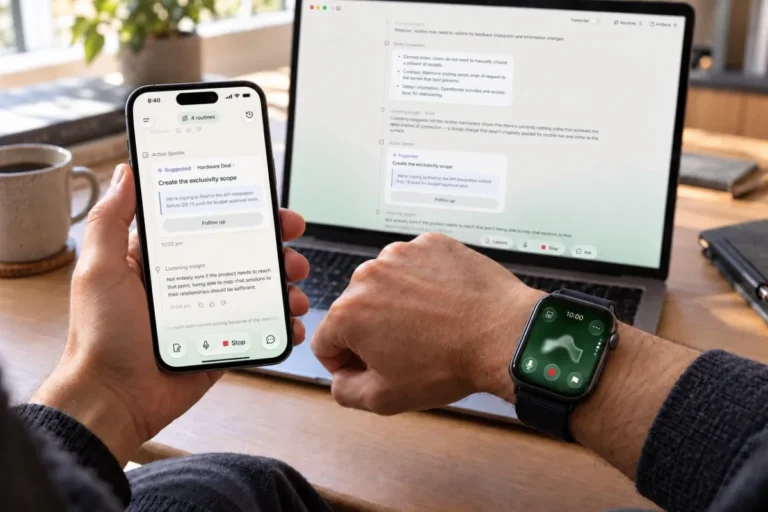
Ambi, an AI assistant founded by Peter Mo (formerly at Plaud), has secured $26 million in funding to deploy always-on listening across iPhones, Macs and Apple Watches. Luminous Ventures led the funding rounds alongside hardware manufacturer Huaqin. The app positions itself as a next-generation meeting note-taker that can listen continuously with user consent, capturing context throughout the day to surface real-time suggestions during calls and automate follow-up work.
The core premise differs from existing meeting-capture tools. Rather than processing recordings after a conversation ends, Ambi aims to act in real time, drawing on calendar data, past meeting summaries, knowledge bases and web information to make proactive recommendations while a user is still on the call. Mo described the current limitations of existing products to TechCrunch: “The way we interact with intelligence is limited. Often the intelligence is trapped on the screen, and if you use hardware like Plaud, you need to wait for recording to transfer to the phone, upload to the cloud, and get intelligence after processing. That’s why we are building Ambi to use AI anytime and anywhere.”
Real-Time Meeting Intelligence
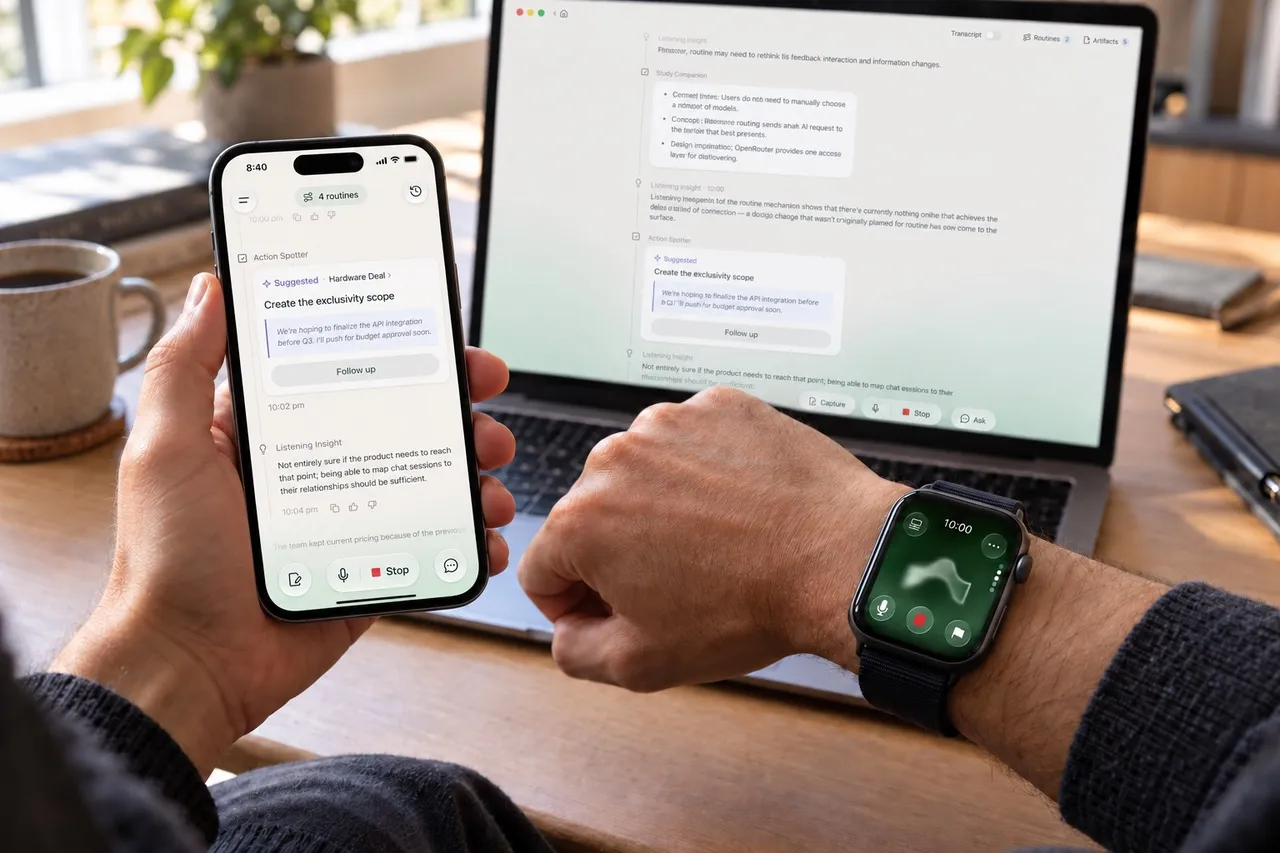
Ambi’s meeting mode activates when a user starts a call and gives the app permission to listen. The AI agent monitors the conversation and suggests actions, surfaces relevant documents or previous discussions, and identifies next steps while the call is happening. After the meeting ends, the system can automate follow-ups by sending meeting summaries, scheduling tasks or updating project management tools based on what was discussed.
How context becomes action
The system integrates multiple data sources to inform its suggestions. Calendar entries reveal other meetings and planned activities. Previous conversation summaries show what has been discussed with each participant before. Knowledge bases provide domain-specific context. Web data allows the AI to bring in current information or recent news relevant to the discussion.
A user in a customer call might receive a suggestion to address a known pain point the customer mentioned in a prior meeting, or a notification that a price change relevant to the conversation just went public. These recommendations happen in real time, not hours after the call ends.
Continuity across devices
Users can initiate or flag an action on one device and resume it on another. An item captured on Mac during a call syncs to iPhone and Apple Watch, allowing users to continue work or reference information seamlessly across Apple’s ecosystem.
Ambient Awareness Beyond Meetings
Ambi’s vision extends beyond call capture. The company is building a desktop application that observes how users work—reading email, editing documents, reviewing data—and stores significant information in a persistent memory layer. This memory feeds into future suggestions, allowing the AI to understand not just what users say on calls, but what they do between them.
Desktop observation and personalized suggestions
Similar tools like Littlebird and Minimi maintain a searchable index of user activity to power contextual AI recommendations. Ambi applies this model across devices, beginning with the audio and meeting context the current app provides. The theory is that an AI system observing real work will make better suggestions than one responding only to direct queries.
Learning from work, not just words
The distinction is meaningful. Rather than users asking “what should I do next,” the AI learns from context and offers suggestions unprompted. A user reviewing a competitive pricing report might receive a notification that the organization’s product team has a meeting scheduled where this information would be relevant, with an option to share it automatically.
Hardware Device in Development
Ambi is designing proprietary hardware combining a screen, speaker, camera and microphones to capture context and display responses. The device will handle capture, processing and display without requiring manual file transfer or cloud processing delays, a direct response to Plaud’s workflow where users record to a device and then transfer files to a phone for processing.
Mo’s track record at Plaud informed this strategy. The lesson was clear: always-on AI assistants work better when capture and response happen on the same device, eliminating the lag between recording and action. Ambi’s device aims to compress that workflow into a single appliance.
The Consent and Privacy Problem
Ambi enters a legally and ethically complex landscape. Meeting-recording startups have been sued over recording participants without consent. Apple’s recent rollout of Voice Intelligence, which continuously transcribes speech on-device, drew immediate scrutiny from privacy advocates. The core concern is unavoidable: if people around a user do not know they are being recorded, they cannot consent to it.
Responsibility placed on users
Ambi mitigates risk by requiring users to enable listening explicitly; the feature is off by default. The company also stated it does not store audio permanently and encrypts captured data, though it did not specify the encryption method. But these technical measures do not solve the consent problem. Third parties cannot verify whether they are being recorded unless the user discloses it.
Mo acknowledged the gap when speaking to TechCrunch. “We have to inform our users that they have to tell others about ambient capture. We, as an industry, haven’t solved this problem [of disclosure]. We have tried to put the information about disclosure in every place possible, but if users try to hide the capture, we can’t just solve the problem.”
Team and Hiring
Ambi operates with over 50 employees across San Francisco, Beijing, Shanghai and Shenzhen. The company is hiring for go-to-market roles and AI engineers specializing in speech recognition. The emphasis on speech recognition hiring suggests Ambi plans to develop its own models rather than rely entirely on third-party APIs.
The geographic distribution reflects investor influence and engineering expertise. Luminous Ventures has backed companies like Meituan and Unitree Robotics, both with China operations, which likely influenced the decision to maintain engineering offices in Beijing and Shanghai. Speech recognition and AI work in those regions is mature and cost-competitive.
Timeline and Next Steps
Ambi’s roadmap remains sparse on execution dates. The iOS, macOS and watchOS apps are available now. Desktop functionality is described as “upcoming.” The hardware device is in development with no announced release window. Users interested in always-on AI assistance can download the current app immediately, but the full vision Ambi describes remains partially unrealized. The company’s success depends on whether users adopt the service at meaningful scale and whether the consent model survives regulatory and public scrutiny.
Source: TechCrunch
Frequently Asked Questions
How much funding did Ambi raise and who led the rounds?
Ambi raised $26 million across multiple funding rounds led by Luminous Ventures and hardware manufacturer Huaqin.
What devices will Ambi support?
Ambi is releasing apps for iPhone, Mac and Apple Watch. The company is also developing a desktop application and a dedicated hardware device with a screen, speaker, camera and microphones.
Does Ambi store audio recordings?
No. Ambi does not store audio recordings and encrypts captured data, though it did not specify the encryption method. Users are responsible for disclosing to others that ambient recording is happening.
