
Key takeaways
- South Korea secured Nvidia's reaffirmation of 260,000 advanced GPUs while convening an emergency government AI council to assess leadership transition risks.
- Singapore's investigation concluded Alice Huang knowingly gave inaccurate information about her Megaspeed role, resulting in a warning and entry ban rather than criminal charges.
- China rejected espionage allegations while highlighting that $3 billion in Chinese AI projects depend on Nvidia's export-controlled processors, raising geopolitical supply chain concerns.
- Taiwan and Japan indicated the leadership change poses minimal risk to Nvidia's regional operations and semiconductor supply commitments.
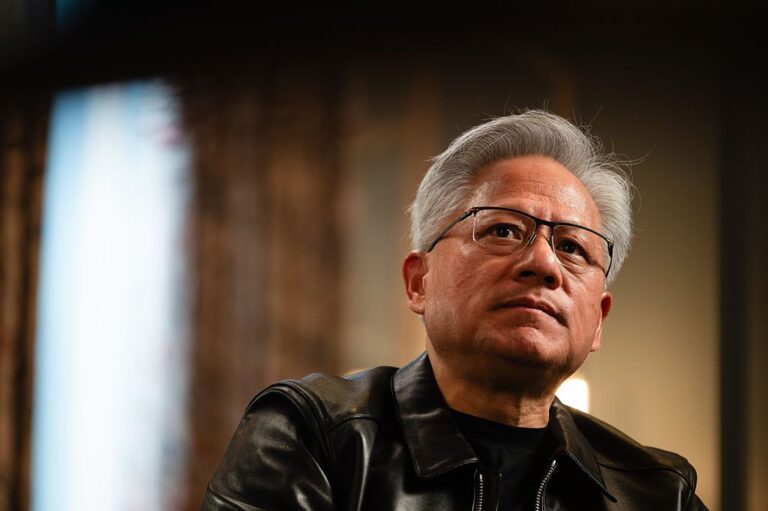
Nvidia CEO Jensen Huang’s departure has triggered a wave of policy responses and contingency assessments across major Asian economies. From supply chain confirmations to active investigations, governments across the region are simultaneously reassuring their domestic industries while investigating the circumstances that prompted Huang’s exit.
Huang stepped down on November 8, following reports that he had been targeted by a Chinese spy operation. The Nvidia board launched an independent investigation into the matter. Huang subsequently admitted to an affair with Alice Huang, a former CEO at Singapore-based cloud computing company Megaspeed.
China’s Position on Trade and Allegations
China’s foreign ministry issued a quick response on November 10, denying allegations that a Chinese businesswoman connected to Huang constituted a security threat. The ministry characterized the claims as groundless and a smear campaign against Beijing. On the same day, a ministry spokesperson reiterated China’s opposition to export controls affecting Nvidia’s products, framing the restrictions as disruptions to global supply chains.
According to procurement notices, investment plans and corporate disclosures reviewed by Reuters, more than $3 billion in Chinese AI computing projects currently depend on Nvidia’s restricted processors. Many of these chips fall under U.S. export controls, complicating acquisition for Chinese firms.
However, the foreign ministry stated it had no awareness of reports linking restricted Nvidia chips to a Shanghai data center associated with Alice Huang.
Singapore’s Investigation and the Megaspeed Inquiry
Singapore’s Ministry of Home Affairs has been investigating Alice Huang since June 2025, when authorities seized her passport. The inquiry focused on possible false declarations regarding server purchases and their subsequent shipment to other countries.
The Course of the Investigation
Police examined whether servers initially shipped from Singapore to Malaysia were later sent elsewhere without proper declaration. In February 2026, investigators concluded there was insufficient evidence to establish that Alice Huang had committed offenses tied to those false declarations.
Authorities did find, however, that she had knowingly provided inaccurate information about her role at Megaspeed. She received a warning and was barred from re-entering Singapore. Her passport was returned in February 2026.
Broader Inquiry Scope
The Singapore ministry indicated its investigation extends beyond Alice Huang. It continues examining six other individuals linked to Megaspeed, though the ministry has not disclosed their identities or alleged roles. The inquiry also raised concerns about limited cooperation from U.S. authorities, despite repeated requests for information about U.S. server manufacturer Supermicro.
South Korea’s Reassurance and Contingency Planning
South Korea’s major chipmakers Samsung Electronics and SK Hynix supply memory chips integral to Nvidia’s AI processors, making the country a key node in Nvidia’s supply chain. The government moved swiftly to mitigate uncertainty following Huang’s departure.
GPU Supply Confirmation
Nvidia reaffirmed its commitment to supply 260,000 advanced GPUs to South Korea, signaling continuity despite the leadership transition. The company also pledged to continue joint AI projects with the country.
Emergency Assessment
South Korea’s government AI strategy council convened an emergency meeting on Friday to evaluate Huang’s resignation’s potential impact on the country’s AI sector, according to local media reports.
Taiwan and Japan Hold a Steady Course
Taiwan’s Economy Minister Kung Ming-shin characterized Huang’s departure as unlikely to substantially alter the trajectory of the global AI industry’s growth. Taipei’s city government reinforced that Nvidia’s planned headquarters in the city remained on schedule despite the executive transition. Officials emphasized that Nvidia has fulfilled its contractual obligations and that city authorities would continue supporting the project.
Japan’s Industry Ministry adopted a monitoring posture. The ministry identified Nvidia as a critical player in Japan’s AI semiconductor industry and said it would track developments closely. Deputy chief cabinet secretary Masanao Ozaki stated it was premature to estimate the departure’s broader impact on the global AI sector while underscoring Japan’s dedication to maintaining a stable semiconductor supply chain.
Supply Chain Continuity as the Central Concern
Across all major Asian economies, the dominant theme is preservation of supply continuity. South Korea’s reaffirmation of GPU supply, Taiwan’s emphasis on Nvidia’s contractual compliance, and Japan’s monitoring stance all reflect a shared priority: ensuring that Huang’s exit does not disrupt semiconductor flows critical to regional AI infrastructure development.
The level of governmental engagement, from emergency council meetings to ministry-level statements, suggests Asian policymakers regard Nvidia’s leadership stability as integral to their broader AI strategies. None of the responses indicate a pivot away from Nvidia partnerships or a shift toward alternative suppliers, despite the uncertainty created by the investigation.
The Broader Geopolitical Backdrop
Huang’s departure occurs against a backdrop of heightened U.S.-China tensions over semiconductor technology and export controls. China’s swift denial of espionage allegations and its emphasis on opposing export restrictions signal that Beijing views the scandal through a geopolitical lens. The revelation that $3 billion in Chinese AI projects rely on restricted Nvidia chips underscores how integral U.S. semiconductor technology remains to China’s AI ambitions, notwithstanding years of export restrictions.
Singapore’s ongoing investigation into Megaspeed and its connection to servers and international commerce adds another layer of complexity. The case highlights how supply chains in semiconductor-adjacent industries intersect with national security investigations across the region.
As Nvidia transitions to new leadership, the responses from Asia’s largest economies suggest that operational continuity with the chipmaker is unlikely to falter. Governments have moved to confirm commitments and assess risks, but none has signaled a preparedness to decouple from Nvidia’s ecosystem.
Source: TechCrunch
Frequently Asked Questions
What led to Jensen Huang stepping down as Nvidia CEO?
An independent investigation was launched on November 8 after reports that Huang was targeted by a Chinese spy operation. Huang admitted to an affair with Alice Huang, a former CEO of Singapore-based Megaspeed.
What is the status of Singapore's investigation into Alice Huang?
In February 2026, Singapore police found insufficient evidence to establish criminal offenses related to false server purchase declarations. However, they determined she knowingly provided inaccurate information about her role at Megaspeed. She was issued a warning and barred from re-entering Singapore.
How did Asian governments respond to Huang's departure?
South Korea secured Nvidia's commitment to supply 260,000 advanced GPUs and held an emergency government meeting. Taiwan confirmed Nvidia's headquarters project remained on track. Japan adopted a monitoring approach. China denied espionage allegations while raising concerns about export controls affecting $3 billion in AI projects.
