
Key takeaways
- Aurora projects 30,000 autonomous trucks and $5 billion in revenue by 2030, up from 200 trucks and $80 million run rate expected by end of 2026.
- The company plans to shift from owning trucks to licensing self-driving software on a per-mile basis starting in 2027, moving trucks off its balance sheet.
- Third-generation hardware launching end of 2027 will be manufactured and financed by Aumovio, easing capital requirements for Aurora's scaling.
- Aurora expects to reach gross margin breakeven in first half of 2027 with 500 trucks, and plans geographic expansion to most of continental U.S. by 2030.
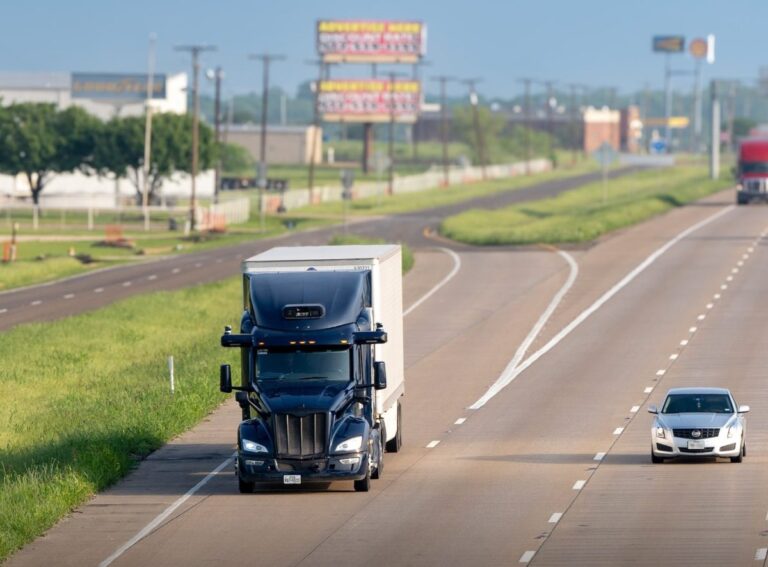
Aurora, the autonomous vehicle company, presented investors with a transformative vision at its September 23 investor day: more than 30,000 self-driving trucks on the road by the end of 2030, generating $5 billion in annual revenue. The market’s immediate reaction suggested skepticism was warranted. Stock shares fell 12.42% on Monday following the announcement, closing at $5.29.
The disconnect between current operations and that future vision is stark enough to explain the market reaction. Aurora expects to end 2026 with just 200 self-driving trucks on the road and an $80 million revenue run rate. Reaching 30,000 trucks and $5 billion in revenue by 2030 would require growth that appears outsized compared to the measured pace of autonomous vehicle deployments elsewhere in the industry, which have proven expensive and technically demanding.
Yet CFO David Maday sees the projection in a different light. In an interview with TechCrunch, he argued that the target, while ambitious, is grounded in realistic assessments of the truck market and Aurora’s ability to serve a meaningful slice of it.
The Math Behind the 30,000-Truck Vision
Maday’s central argument relies on market context that distinguishes between absolute numbers and relative scale. The major truck manufacturers—the companies that dominate long-haul and commercial trucking—produce between 250,000 and 300,000 new trucks each year. Within that annual market, 30,000 trucks represents roughly 10 percent of new production.
“While 30,000 kind of feels like a lot—and it does in the autonomy space for sure—in terms of trucks relative to the overall market, it’s kind of pretty small,” Maday told TechCrunch. “I don’t think it’s aspirational. I think we can do it.”
Why the market discounts the target
The skepticism from investors reflects a common challenge in autonomous vehicle forecasting: the gap between a company’s technical capabilities and its business model’s ability to scale profitably. The jump from 200 trucks to 30,000 represents a 150-fold increase in four years, a pace that demands not only continued technical success but also a fundamental restructuring of how Aurora operates economically.
The capital problem at scale
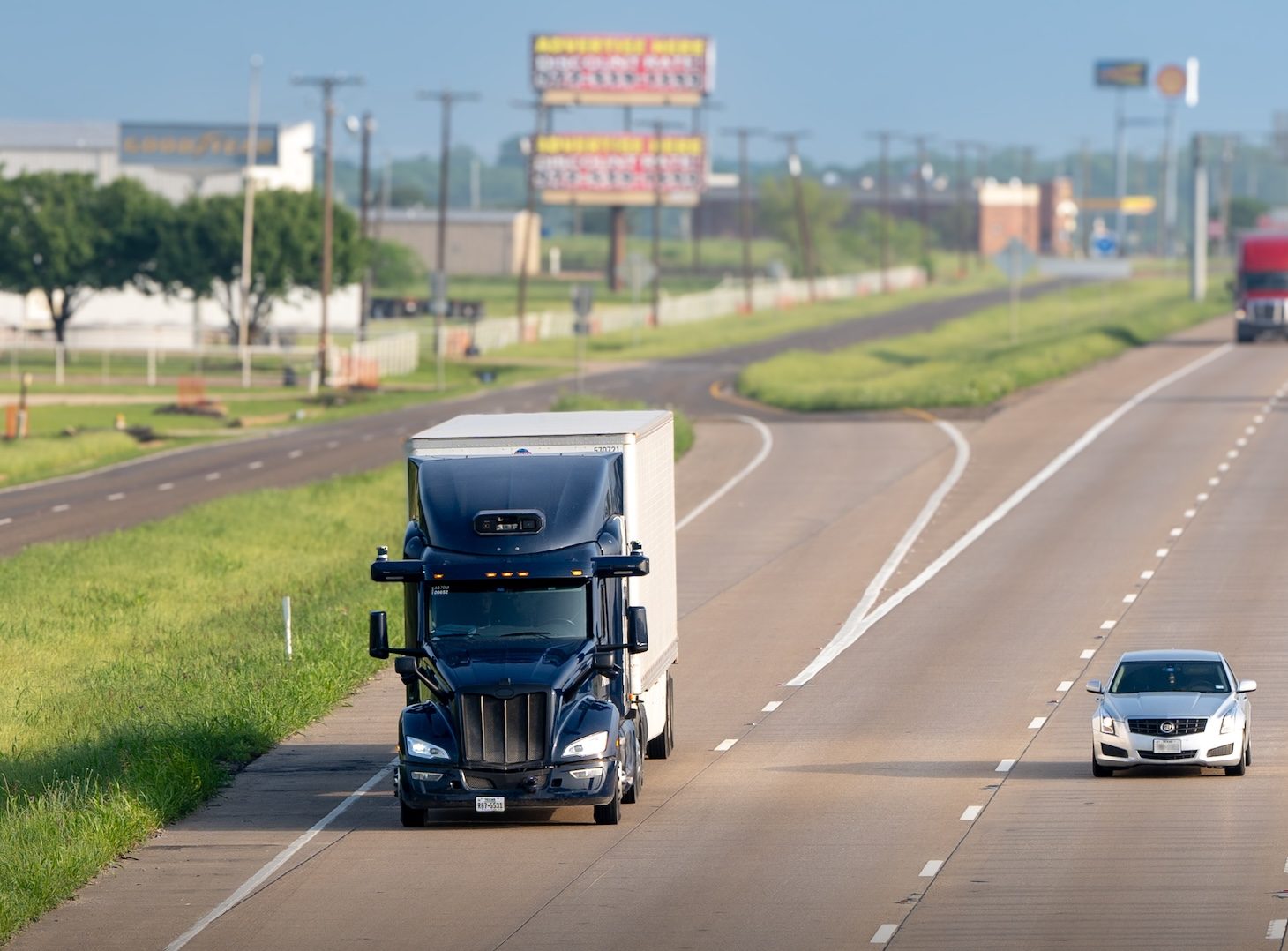
Aurora currently operates roughly 500 trucks under its transportation-as-a-service model, serving customers including Detmar Logistics, Hirschbach, McLane, and Werner. The company charges these customers about $2 per mile—a rate competitive with human-driven trucking when fuel costs are included. But if every truck Aurora deploys requires the company to sink capital into purchasing, maintaining, and insuring that vehicle, reaching 30,000 trucks without a dramatic change in business model seems impossible. The balance sheet couldn’t support it, and the capital requirements would dwarf the revenue being generated.
Shifting From Operations to Software Subscription
The critical pivot happens in 2027, when Aurora transitions to what it calls a driver-as-a-service model. Instead of owning and operating trucks, Aurora will sell customers the autonomous vehicle systems and charge them a per-mile subscription fee for the privilege of running those self-driving systems.
The current transportation-as-a-service model
Under the existing TaaS structure, Aurora owns the trucks in its fleet and operates them like a transportation company. Customers pay per mile driven. The company plans to cap this model at about 500 trucks, positioning it as a proof of concept rather than the long-term business foundation.
The driver-as-a-service transition
Starting in 2027, the model inverts. Customers will purchase autonomous trucks from manufacturers and own them outright. They’ll be responsible for maintenance and repairs, treating autonomous trucks like any other vehicle in their fleet. Aurora’s role shifts to being a software and hardware provider. The company will charge a per-mile subscription fee—estimated at around $0.85—for access to the self-driving software stack and the computing hardware that powers it.
This change moves expensive autonomous trucks off Aurora’s balance sheet. The business converts from a capital-intensive transportation operation into an asset-light software subscription service. Aurora expects to reach breakeven gross margins (where revenue covers direct operating costs) with around 500 trucks in the first half of 2027. Once that inflection point passes, additional trucks added to the fleet become increasingly profitable without requiring additional capital expenditure from Aurora.
Hardware and Manufacturing Partnerships
Aumovio and third-generation hardware
Scaling to 30,000 trucks depends on mass-producing autonomous driving hardware. Aurora has partnered with Aumovio—formerly known as Continental—to manufacture and finance the next generation of autonomous driving systems launching at the end of 2027. These systems include the sensors, computing units, and vehicle control hardware that allow trucks to drive themselves without human operators.
Critically, Aumovio isn’t just a manufacturer. The company is also financing the hardware kits, which eases the capital burden on Aurora. Aumovio also commits to handling service and repairs for customers, removing another operational requirement from Aurora’s burden.
Why manufacturing partnerships matter
By outsourcing manufacturing and financing to an established automotive supplier, Aurora avoids the capital requirements and operational complexity that would come with building its own hardware manufacturing capability. The company can focus on software development while Aumovio manages production, inventory, and customer support for the physical hardware layer.
The Path to Profitability and Beyond
Maday outlined a profitability timeline that hinges on improving unit economics. By 2028, Aurora expects its cost structure to improve substantially, enabling gross margins to accelerate upward. That inflection point is crucial because it determines whether Aurora can invest in expanding beyond trucking.
“By 2028, I expect that our cost structures are going to be really outstanding, that’s why you see our gross margin starting to take off,” Maday said during the TechCrunch interview. Once the software-subscription model reaches profitable scale, Aurora gains the financial flexibility to pursue new business lines.
Geographic expansion across the continental U.S.
Reaching 30,000 trucks requires presence across multiple regions. Aurora currently operates autonomous truck services in select areas of the South. By 2030, Maday expects the company to serve most of the continental United States. Expanding to that geographic footprint is a prerequisite for the 30,000-truck vision.
The robotaxi opportunity
Maday also confirmed that Aurora intends to eventually enter the robotaxi market, using the same autonomous driving technology underlying its trucking operations. Once the truck business reaches the profitability Maday projects for 2028, Aurora could invest capital into developing robotaxi services. That moment would mark a transition where the company moves from proving the autonomous truck model to diversifying across passenger vehicles.
Source: TechCrunch
Frequently Asked Questions
How does Aurora plan to get from 200 trucks in 2026 to 30,000 by 2030?
Aurora is shifting from a transportation-as-a-service model where it owns trucks to a driver-as-a-service model where customers buy trucks and pay Aurora $0.85 per mile for self-driving software. This removes trucks from Aurora's balance sheet and converts the business to a software subscription model, making scaling economically feasible.
Why does the CFO say 30,000 trucks is achievable?
Maday argues that while 30,000 seems large in the autonomy space, it represents roughly 10 percent of the 250,000 to 300,000 trucks produced annually by major manufacturers, making it a modest share of the overall truck market.
What is Aumovio's role in Aurora's plan?
Aumovio manufactures and finances third-generation autonomous driving hardware launching at end of 2027, while also handling service and repairs. This partnership eases Aurora's capital burden and allows the company to focus on software development.
