
Key takeaways
- TechCrunch Disrupt 2026 will host five AI safety sessions addressing enterprise deployment, agent security, and physical systems reliability.
- Enterprise AI deployments stall because integration and governance are harder than initial pilots.
- Autonomous agents require infrastructure-level security controls, not just application-level permissions.
- Robotics lacks training data at the scale that language models and autonomous vehicles enjoy.
As artificial intelligence moves from research labs and consumer experiments into actual business systems, autonomous agents, vehicles, and robots, a new set of questions emerges for founders, enterprises, and technology leaders alike. Can the system be trusted with access to critical infrastructure? Will it behave predictably when deployed in the physical world? What happens when a machine learning model that seemed safe in testing encounters an edge case in production?
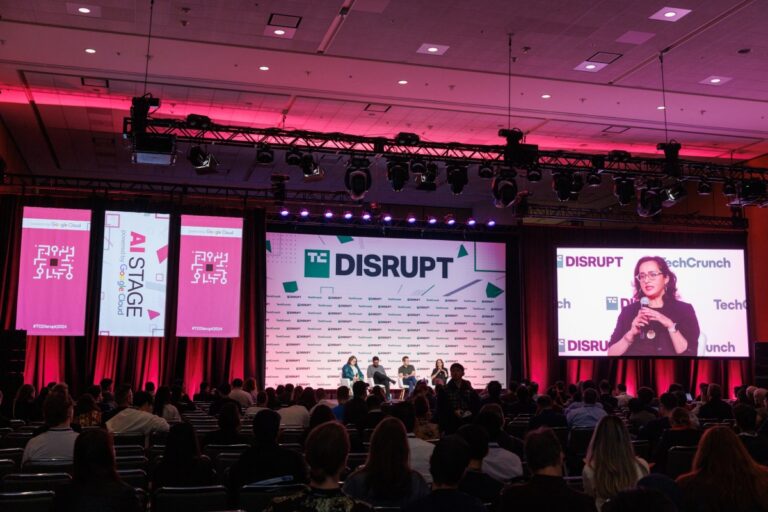
These questions sit at the center of TechCrunch Disrupt 2026, the annual conference taking place October 13-15 at Moscone West in San Francisco. Among more than 200 sessions across six industry stages, five conversations specifically address the safety, security, and trust challenges that often determine whether cutting-edge AI technology actually reaches paying customers and delivers measurable value.
The Enterprise Deployment Puzzle
Anthropic’s Head of Applied AI Cat de Jong works directly with enterprises attempting to integrate Claude into workflows that matter. These are the kinds of systems where deployment failure means wasted time, effort, and money. One persistent pattern emerges from her vantage point: some companies move successfully from experimentation to live systems and measurable business impact, while others remain trapped in pilot phase 18 months after starting.
In her session “What Anthropic Sees When Enterprises Actually Deploy Claude,” de Jong will share what separates winning deployments from stalled ones. For founders trying to sell AI solutions into large organizations, this represents a rare window into how enterprises actually think about moving beyond impressive demos to putting systems into production workflows.
The underlying challenge: AI is easy to pilot. Actually deploying it at scale, with proper integration into workflows and governance, remains surprisingly difficult.
Agent Security at the Infrastructure Level
When an AI agent gains the ability to take action — sending emails, adjusting configurations, modifying databases, calling APIs — the security profile changes fundamentally. Traditional application-level permissions designed for human users do not map cleanly to agents that operate continuously and without human supervision in each decision cycle.
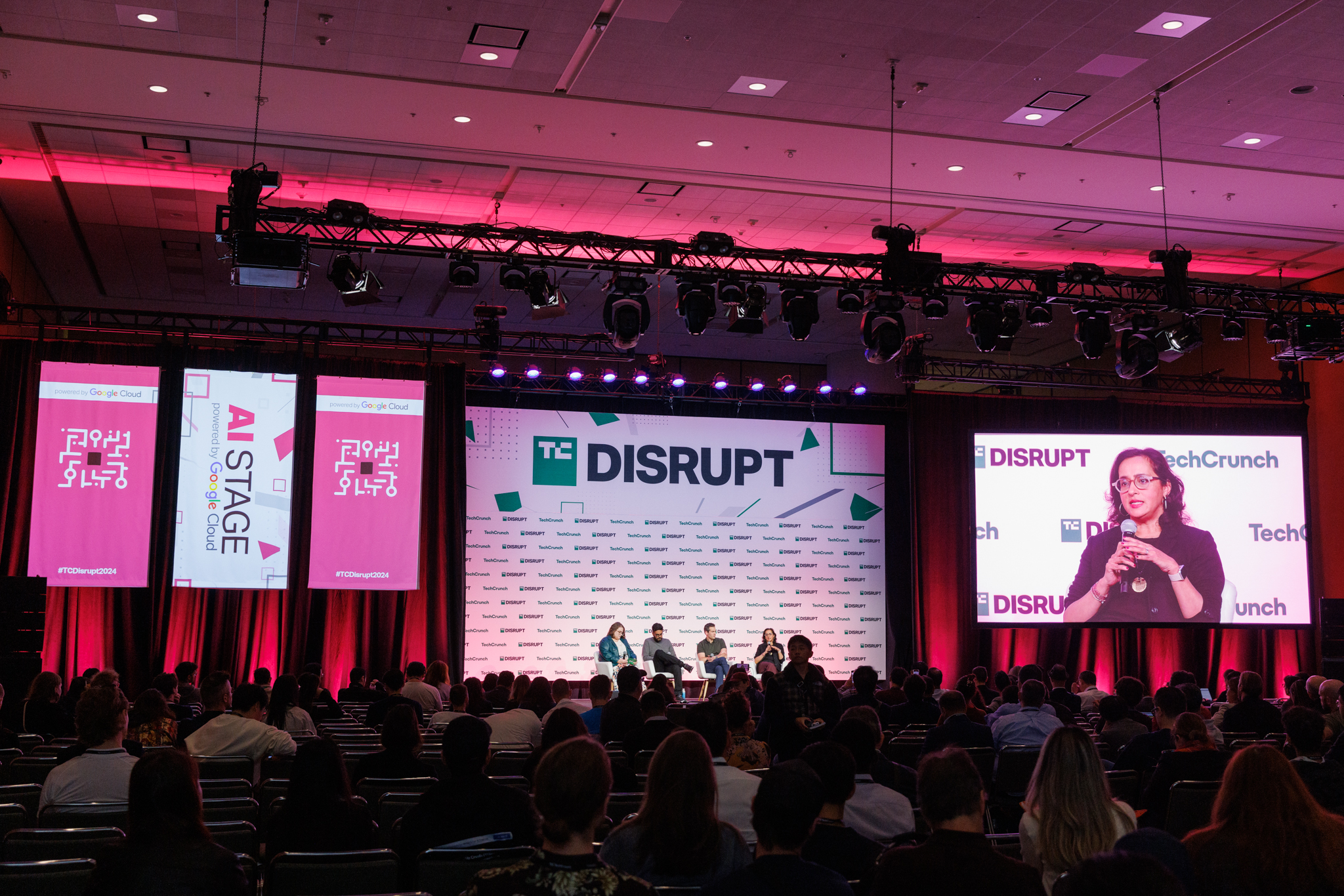
The AI Stage session “The Agent Security Problem Nobody Is Talking About” brings together Okta President of Products and Technology Ric Smith and NanoCo co-founder and CEO Gavriel Cohen to examine agent security at the infrastructure level. The conversation will address architectural decisions that determine what an agent can do, how to prevent unauthorized access to systems it should not touch, and what happens when permission models designed for conventional software prove inadequate for agentic systems.
Why Application-Level Security Falls Short
Application permissions assume human users who log in, take discrete actions, and log out. An autonomous agent might need continuous access to multiple systems, making tens of thousands of decisions per hour. The infrastructure question becomes: how do you control, audit, and constrain that access?
For founders adding agents to product roadmaps, the implication is clear: security cannot be bolted on later. It must be part of the initial architecture.
Enterprise Cloud Security Reimagined
Moving AI into critical enterprise systems means rethinking security, governance, and operational visibility from the ground up. AWS VP of Security Services Rudy Mitra, Luta Security CEO Katie Moussouris, and cybersecurity veteran Wendy Nather will explore this transformation in the session “Securing the AI Enterprise: Why the Cloud Just Got a Lot More Complicated.”
The panelists will examine the infrastructure layers that enterprises now require when AI takes on autonomous roles: the monitoring, access controls, audit trails, and governance frameworks that sit between innovation and deployable systems. For enterprise-focused AI startups, this session offers a direct view of what customers will ask for, and what requirements might stand between a strong product and an actual contract signature.
The Physical World Changes Everything
Safety takes on entirely different weight when AI operates in the physical world. A software bug might corrupt a dataset or break a feature. An autonomous system that makes a wrong decision might cause injury, damage expensive equipment, or fail a critical mission with real consequences.
Safety Culture in Autonomous Systems
Shield AI Chief Technology Officer Nathan Michael, General Motors Director of Robotics Strategy Mikell Taylor, and Waabi founder and CEO Raquel Urtasun will bring domain expertise from aerospace, military, and autonomous vehicles to the Real World AI Stage session “Building AI Systems When Failure Is Not an Option.” These speakers work in domains where safety is regulatory requirement, not suggestion.
The conversation will address how organizations build safety culture, validate and test autonomous systems rigorously, navigate regulatory requirements that accompany high-stakes deployments, and earn the trust necessary to move from testing to real-world operation. The underlying theme: founders in physical AI must approach safety as a core competency, not a compliance checkbox added at the end.
The Training Data Gap Blocking Robotics
Language models and self-driving vehicles accelerated partly because they could be trained on massive amounts of data: trillions of tokens for language, millions of miles of driving footage for autonomous cars. Robots face a different constraint. They lack access to equivalent training datasets, limiting how quickly robotic systems can advance and how much they can learn from each other’s experiences.
Nvidia Inception Global Head of Physical AI Les Karpas will address this fundamental bottleneck in the Real World AI session “Robots Are Waiting for Their ChatGPT Moment. Here Is What Is Standing in the Way.” The discussion will cover how data pipelines, simulation environments, and foundation models might help close the training data gap, and what architectural and organizational changes it will take to build robots reliable and capable enough for real-world deployment.
For the robotics industry, the question is fundamental: what would it take for robotics to experience its own transformative moment, the way language models did with systems like ChatGPT, and in doing so earn sufficient trust for widespread adoption in critical applications?
The Scale of Disrupt 2026
The conference expects more than 10,000 founders, investors, operators, and technology leaders. Disrupt will host 250 or more speakers and 300 or more exhibiting startups across six stages, with 200 or more sessions, roundtables, and breakouts spanning October 13-15 at Moscone West in San Francisco.
Ticket pricing runs through September 25 at 11:59 p.m. PT, with savings up to $200 available on individual passes. A second ticket can be purchased at 50% off the current price. For companies interested in exhibiting in the expo hall, the deadline for booking table space is September 18.
These five sessions represent part of a broader pattern at this year’s Disrupt: founders in AI are increasingly grappling with questions of safety, security, and trust not as separate concerns but as core features of the product itself. The technology might be advanced, the models might be capable, and the demos might impress. But getting enterprises and users to actually deploy AI systems with confidence and to trust them with access to critical systems, employees, and physical infrastructure may prove to be the harder challenge.
Frequently Asked Questions
When and where is TechCrunch Disrupt 2026?
The conference takes place October 13-15, 2026, at Moscone West in San Francisco, with more than 10,000 founders, investors, and tech leaders expected.
Who are the key speakers in the AI safety sessions?
Speakers include Cat de Jong from Anthropic, Ric Smith from Okta, Gavriel Cohen from NanoCo, Rudy Mitra from AWS, Katie Moussouris from Luta Security, Nathan Michael from Shield AI, Mikell Taylor from General Motors, Raquel Urtasun from Waabi, and Les Karpas from Nvidia.
What is the robotics data problem discussed at Disrupt?
Robots lack access to training datasets comparable to those used for language models and self-driving vehicles, limiting how quickly robotic systems can advance and be deployed in real-world applications.
