
Key takeaways
- Hank Green admitted his ChatGPT usage crossed from productivity tool into unhealthy dopamine-driven compulsion, prompting him to apologize and reduce output.
- The creator pinpointed the neurochemical aspect of AI reliance—the rush from rapid production—as disconnecting him from authentic creative work and his audience.
- Green plans to shift toward meditative, unscripted content formats that resist AI augmentation, representing a deliberate sacrifice of content velocity for creative integrity.
- His public reckoning highlights a broader tension: AI tools promise efficiency but risk seducing creators into outsourcing the parts audiences value most—genuine voice and original thought.
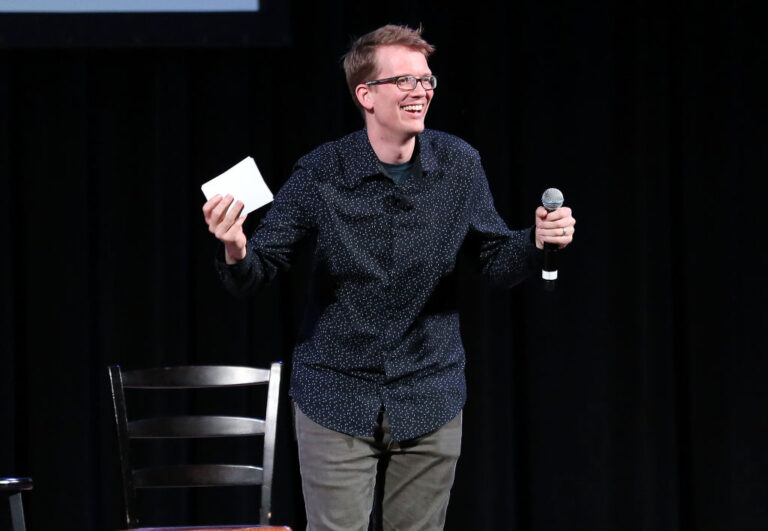
Hank Green, a novelist and comedian with 3.2 million YouTube subscribers, has become the latest creator to publicly confront his dependence on artificial intelligence tools. In an apology to his audience, Green admitted that his reliance on ChatGPT had crossed from productivity aid into something more troubling—a dopamine-driven compulsion that was compromising both his creative integrity and his connection to his viewers.
The Moment That Sparked Backlash
The reckoning began with a single phrase. In a recent video posted to Complexly, Green’s educational YouTube channel, viewers noticed something peculiar: the line “I appreciate the pushback.” The phrasing felt distinctly unlike Green’s usual voice, and the context suggested it might have been generated rather than written.
Speculation erupted that Green had used ChatGPT to draft the script and accidentally left in a chatbot’s response to one of his prompts. The incident, small as it might seem, struck a nerve with an audience increasingly sensitive to AI-assisted content passing itself off as authentically human-created.
Green’s Explanation and Apology
The Initial Response on X
Green initially addressed the controversy in a since-deleted post on X, clarifying that the disputed line had actually come from the episode’s guest, not from a chatbot response. He acknowledged, however, that he had indeed used ChatGPT while working on the script, specifically “for research on this script” at a time when he was operating “under a ton of pressure.”
But the explanation did not quiet the conversation. Instead, it prompted deeper questions about how much of Green’s creative process had been outsourced to AI tools, and whether transparency after the fact was enough to restore audience trust.
A Deeper Reckoning on Reddit
The brief explanation on X gave way to a more searching apology on Reddit. There, Green described himself as “mortified” that he had “let so many people down” and announced plans to significantly reduce his video production schedule. Rather than defending his AI usage outright, he interrogated it—and himself.
Green emphasized that his ChatGPT usage had been limited to “locate papers and other resources for learning about topics,” insisting that his actual words and creative takes remained his own. Yet he conceded the criticism was fair: he had diluted his work by outsourcing aspects of the creative process and allowing the speed of AI-assisted production to become its own reward.
A Complicated Relationship With AI
Crucially, Green refused the simplistic position of the AI-hater. “I’m not a pure AI-hater,” he said, even as he articulated substantive concerns about the technology. His worries extended beyond personal creative ethics to systemic issues. He cited AI’s environmental toll through energy consumption and what he saw as the technology industry’s aggressive push to “consolidate economic power” through these systems.
This positioning—critical but not dismissive—acknowledged that AI tools have genuine utility while also questioning the uncritical adoption narrative that dominates tech discourse.
The Addiction Component
What made Green’s apology distinct from typical creator mea culpas was his focus on behavioral pathology rather than just ethical misstep. He described the neurochemical dimension of his AI usage explicitly: “the level of dopamine I’ve been getting from interacting with LLMs…with doing more and more and more and more…is not healthy for me or good for the world.”
This framing shifted the conversation from “is it okay to use ChatGPT?” to “what does it feel like to become dependent on these tools, and what damage does that dependency inflict?” Green’s candor suggested he had been caught in a feedback loop common to many knowledge workers and creators who’ve integrated AI into their workflows—the rush of speed and output becoming an end in itself rather than a means to an end.
He described his own behavior as “careless” and acknowledged it had “disconnected me from where people are on this”—a reference both to his audience and perhaps to his own creative instincts and authentic voice. The gap between his intended self-image as a thoughtful creator and the reality of what he was producing had widened without him fully realizing it until confronted by his audience.
Concrete Changes Ahead
A Production Pause
Green announced concrete changes to his output schedule across his various YouTube channels. He will be pausing or posting less frequently. For a creator whose subscriber base and income depend on consistent uploads, this represents a material sacrifice—a choice to prioritize authenticity and sustainable creative practice over growth metrics and algorithmic favor.
A Return to Intentional Creation
He flagged two specific directions his work might take going forward. First, more videos structured around what he called “meditative” content “where the writing was the whole thing and I felt it all the way down.” Second, more unscripted, improvised videos shot “straight to camera”—formats that by their nature resist AI augmentation and demand live spontaneity and presence.
Both directions represent a deliberate move away from the high-polish, heavily researched format that had, paradoxically, made him most reliant on ChatGPT as a research and drafting shortcut. The shift signals that Green believes some types of creative work lose their essential character when optimized for speed.
The Larger Tension
Green’s struggle illuminates a tension many creators face as AI tools proliferate. The promise of these tools—faster research, quicker iteration, more content output—can seduce creators into outsourcing the parts of their work that audiences value most: originality, voice, and the stamp of genuine thought applied to a subject matter.
What Green seemed to recognize through his public reckoning is that the convenience and speed delivered by ChatGPT came at a cost he wasn’t initially willing to measure or fully acknowledge. By the time he noticed the cost, he had already internalized the workflow changes, adapted his schedule around them, and found himself chasing the dopamine hit of rapid production. Stepping back required confronting both external professional pressure and something like an addictive pull toward the neurochemical reward of efficient, high-volume output.
His apology offers a rare instance of a major creator explicitly naming these dynamics rather than silently abandoning the tools or defending them against criticism. Whether his announced changes persist, and whether they’ll influence how other creators think about their own AI integration, remains to be seen. But Green’s willingness to articulate the problem—that the tools feel good to use precisely because they bypass the friction that once forced genuine creative work—suggests at least one person in the creator economy is thinking clearly about what we stand to lose when efficiency becomes the highest value.
Frequently Asked Questions
What triggered the controversy about Hank Green's AI use?
Viewers of his Complexly channel noticed the phrase 'I appreciate the pushback' in a script, which appeared to be AI-generated. Green initially said it came from a guest, but acknowledged using ChatGPT for research on the script.
What are Green's broader concerns about AI technology?
Beyond personal creative ethics, Green cited AI's environmental impact through energy consumption and tech companies' efforts to consolidate economic power through these systems.
How is Green changing his content strategy moving forward?
He plans to post less frequently across his YouTube channels, create more meditative videos where writing is the primary focus, and shoot more unscripted straight-to-camera content that resists AI augmentation.
