
Key takeaways
- Khosla Ventures is opening its first office outside Silicon Valley on Manhattan's 14th Street, featuring an executive briefing center to facilitate portfolio company meetings with Fortune 500 executives.
- New York has narrowly surpassed the San Francisco Bay Area in total tech talent headcount for the first time in 13 years, driven by finance firms' aggressive AI hiring and tech layoffs in California.
- Senior executive recruitment remains difficult in New York due to geography and commute challenges, while junior talent is competitive; Ramp demonstrates building organizations from early-career hires.
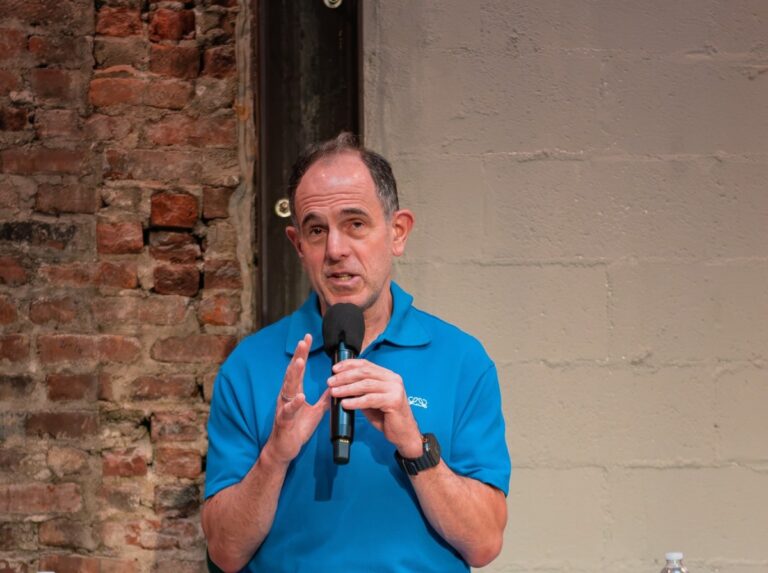
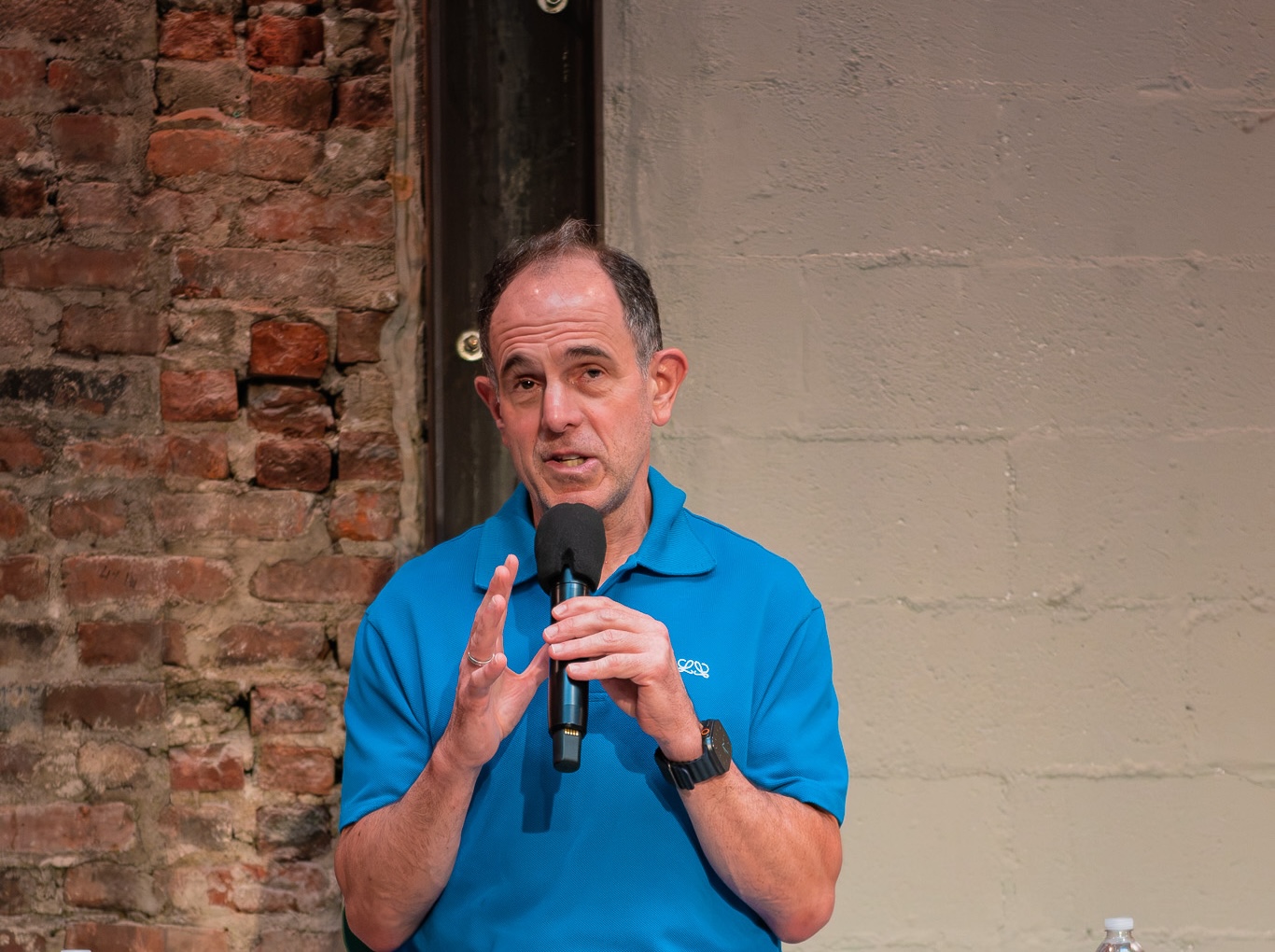
Khosla Ventures is making an unprecedented move by opening its first office outside California’s Sand Hill Road — the historic heart of Silicon Valley venture capitalism. The new space will occupy the 14th Street corridor in New York and is slated to launch this fall, marking a significant shift for a firm that has historically concentrated its operations in Menlo Park. Keith Rabois, a partner who has spent 13 years at Khosla, announced the expansion during Thursday evening’s StrictlyVC event in Manhattan’s West Village.
A departure for Silicon Valley’s most Californian firm
Khosla Ventures, unlike many of its major competitors, has operated exclusively from Sand Hill Road. The firm does not even maintain an office in San Francisco, making an East Coast expansion particularly notable. Rabois acknowledged uncertainty about execution timelines with a wry observation that the fall opening date remains “very vague” in his mind. Construction for the space is underway, but venture partners know that real estate projects often exceed their planned completion windows.
The office will accommodate a small group of Khosla investors, with Rabois among them. But its defining feature distinguishes it from a typical satellite office. The firm is building an “executive briefing center” — a dedicated space designed to host 10 or 12 portfolio companies at a time for meetings with Fortune 500 executives. This arrangement operates four days per week, creating what Rabois characterized as a “vibrant office” through constant activity. Portfolio companies benefit from access to pilot programs and customer relationships that emerge from these corporate introductions.
Rabois relocates, triggering strategic questions
Rabois’ own relocation to the East Coast preceded the office announcement by several months. He moved to be nearer to his husband, Jacob Helberg, who serves as Under Secretary of State for Economic Growth, Energy, and the Environment, and their children, who are based in Washington, D.C. His personal geographic shift naturally prompted questions about whether the East Coast can compete with California’s established talent networks.
His answer was nuanced and revealing about how venture capital evaluates different regions.
Entry-level talent: New York wins
At the individual contributor level, Rabois expressed clear confidence in New York’s capacity. He pointed to Ramp, a fintech company he has backed repeatedly, as concrete evidence. The company has successfully built a “critical density of talent from the intern class onward” by recruiting right-out-of-school graduates. This represents a category where New York competes effectively and perhaps surpasses the Bay Area due to its density of universities and finance industry infrastructure.
Senior engineers: California advantage remains
Senior technical roles — architects and senior engineers — present a different picture. Rabois was direct: “Senior engineers, architect-level — no, I think that’s a challenge.” He added a qualification: the modern industry may require fewer senior technical leads per company than historically necessary, which could mitigate this disadvantage. The implication is that while New York lacks depth in this tier, some companies can now structure around that limitation.
Senior executives: The geography problem
The most acute bottleneck involves experienced senior executives — CFOs, senior vice presidents of sales, individuals who bring significant institutional gravitas. The constraint is not primarily a shortage of qualified candidates but rather a geographic and lifestyle mismatch. Many senior professionals in the New York area reside outside the city proper. The daily commute for someone required to work in an office five days per week becomes prohibitive. Unless candidates are independently wealthy, Rabois explained, relocating their families to live within Manhattan proper becomes financially untenable. Those who grew up in commuter suburbs, as Rabois himself did, recognize the burden of a 32-minute express train ride — and many potential recruits face even longer journeys.
Ramp has adopted an explicit workaround: the company does not hire senior leaders. Instead, over three years, it has built its organization deliberately from the ground up, developing talent internally. Rabois acknowledged this strategy can work but carries limitations. “If you need a CFO, an SVP of sales, someone who’s got a lot of gravitas and experience, it’s really hard to have them in the office five days a week.”
The changing geography of tech talent
Khosla’s move arrives amid a documented shift in where technology talent concentrates. Sequoia Capital and Andreessen Horowitz both employ New York-based partners, though in substantially smaller numbers relative to their Bay Area operations. These firms have maintained this model for years but with measured commitment. Khosla’s announcement suggests growing conviction that coastal presence has become strategically necessary.
A report released last month by CBRE, a commercial real estate services firm, provided quantitative support for this geographic shift. New York has narrowly surpassed the San Francisco Bay Area in total technology industry headcount for the first time in the 13 years CBRE has tracked this metric. The change reflects divergent hiring patterns: finance firms, particularly those acquiring artificial intelligence talent, have been hiring aggressively in New York, while Bay Area technology employers have conducted significant workforce reductions. This combination has redistributed talent in ways that would have seemed improbable five years ago.
Skepticism persists within parts of the venture community. At Thursday’s event, at least one attendee expressed doubt about the CBRE headline, suggesting that despite the data, San Francisco Bay Area dominance remains the prevailing perception.
What this signals about venture strategy
The executive briefing center model represents a hypothesis about venture capital value: access and introductions matter as much as capital allocation, particularly for companies seeking customer traction or pilot partnerships with large enterprises. Rather than purely passive capital provision, Khosla is building infrastructure designed to facilitate corporate relationships for its portfolio.
For the broader venture industry, Rabois’ analysis highlights which friction points remain persistent across geographies. Remote work has normalized in many functions. Capital can be deployed from anywhere. But senior executive recruitment — the final stage of company building where institutional experience and networks matter most — continues to face significant geographic constraints on the East Coast. This suggests that the venture strategy shift away from pure Sand Hill Road concentration is real but incomplete. The industry will likely continue operating with asymmetric depth, California-strong in some functions and talent categories, New York-competitive in others.
Khosla’s commitment signals recognition that capital and opportunity increasingly exist outside Menlo Park. Whether other traditionally California-focused venture firms follow remains to be seen, though the underlying talent distribution data suggests conditions may continue pushing in that direction.
Frequently Asked Questions
Why is Khosla opening an office in New York if it has never expanded before?
Khosla has historically operated exclusively from Sand Hill Road and doesn't even have a San Francisco office, making the New York expansion unprecedented. The move is driven partly by Keith Rabois' personal relocation to the East Coast to be closer to his family in Washington, D.C., and reflects data showing New York now matches or exceeds the Bay Area in technology talent headcount.
What is the executive briefing center, and how does it differ from a typical satellite office?
The executive briefing center is a dedicated space where Khosla brings 10 or 12 portfolio companies at a time to meet with Fortune 500 executives, operating four days per week. Rather than simply serving as an investor workspace, it functions as infrastructure for portfolio company customer acquisition and pilot partnerships.
What talent challenges does Khosla see for recruiting senior roles in New York?
According to Keith Rabois, senior executives face geographic constraints: many live outside the city, and full-time office requirements make commutes prohibitive unless candidates are independently wealthy. Junior talent and early-career developers are competitive in New York, but senior technical and executive roles remain more difficult to recruit than in the Bay Area.
