
Key takeaways
- Historian Jill Lepore argues that Silicon Valley corporations are systematically replacing democratic government functions without public consent, marking a return to authoritarian rule by algorithm.
- Tech leaders misread science fiction narratives as inspiration rather than warning, adopting the language and structures of nation-states while wielding unprecedented corporate power.
- Twitter's transformation from social novelty to pseudo-democratic institution shows how tech platforms gradually capture political authority and rewrite their purpose as civilization-saving tools.
- Science fiction has long predicted this outcome, with E.M. Forster's 1909 story 'The Machine Stops' proving remarkably prescient about a future where people live entirely mediated by machines.
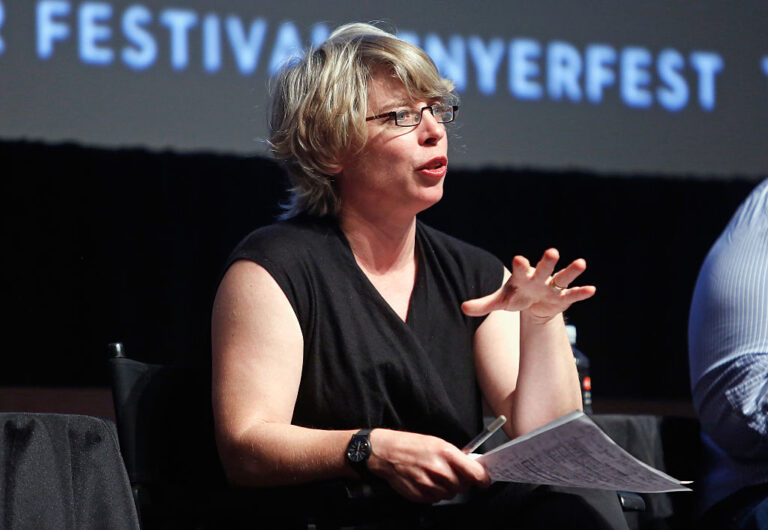
In “The Rise and Fall of the Artificial State,” forthcoming from Harvard historian Jill Lepore, the argument takes shape that corporations have incrementally replaced the institutions of democratic government. This replacement marks what Lepore describes as “a return to tyranny and mystification in the form of rule by algorithms, corporations, machines” — a phrase that carries weight coming from someone who won a Pulitzer Prize for her history of the U.S. Constitution and serves as a staff writer at The New Yorker.
The core claim is not that technology itself is malign. Lepore, speaking on TechCrunch’s Equity podcast, emphasized her position plainly: she is married to a computer scientist and sees potential in ongoing intellectual revolutions. Her objection runs elsewhere. “My beef is the ways in which private corporations have increasingly taken on the functions of the state,” she said.
What Is This Artificial State?
By artificial state, Lepore refers to a governance model that is superseding the liberal democratic nation-state both domestically and globally, with effects already visible in the United States first. It operates as both a tangible system and a conceptual framework — a set of ideas about how humans should live under governance by machines and algorithms.
The transformation has been neither accidental nor uniform in its evolution. Lepore traces through decades of technological development and ideological commitment the rise of what she calls “an idea that we should live under an artificial state or government by machines,” and alongside it, the notion that such a system is inevitably doomed. This paradox — the belief that an artificial state both represents the future and cannot possibly endure — threads through science fiction narratives going back over a century.
One core distinction shapes her analysis: private corporations taking on state functions occurred without public consent. Citizens did not vote to privatize government services and decision-making; rather, the shift accumulated through a combination of efficiency-focused innovation and, over the last 20 to 25 years, deliberate corporate strategy.
The Gradual Corporate Takeover of Government
The mechanisms of this displacement started with good intentions. Lepore points to a pattern: innovations in government technology typically began with desires for efficiency, speed, and cost reduction. Early adopters saw algorithmic and digital approaches as neutral improvements. Yet somewhere along the timeline, those pragmatic pursuits hardened into ideological positions — a purposeful effort to displace the nation-state itself.
From Innovation to Usurpation
This intentionality is not Lepore’s speculation. She cites statements from prominent tech entrepreneurs publicly discussing their desire to move beyond the nation-state era. Many of the internet’s architects and champions from the 1990s held libertarian convictions and viewed technological advancement as a tool for eradicating state power altogether.
The historical fork where alternatives were possible deserves attention. When the internet began opening to public use, serious debates circled around what its structure and governance should look like. The 1996 Telecommunications Act emerged from that moment — a product, Lepore notes, of a particular political climate shaped heavily by Newt Gingrich’s Contract with America. While not an act of intentional malice, it reflected choices that hardened into difficult-to-reverse policy. Other paths existed at that juncture; the technology itself did not demand the outcome we have.
Apple’s False Promise: The 1984 Mythology
The visual and emotional center of tech’s self-mythology traces to January 1984, when Apple aired its now-iconic Super Bowl advertisement for the Macintosh. Apple positioned itself as a liberator: mainframe computers embodied totalitarianism (represented as IBM’s gray monoliths), while the personal computer would serve as humanity’s ax against that machine. The Macintosh would usher in an era where “1984 would not be ‘1984.’”
It was effective advertising. Lepore remains skeptical that anyone at Apple genuinely believed the personal computer would liberate citizens or improve their capacity for democratic participation. Computers were tools — cool tools, genuinely fun and functional tools that enabled remarkable work. But conflating a useful device with a liberation technology proved to be the first of many conceptual slippages.
Silicon Valley’s Cartoonish Nation-State
Fast-forward to the present. Tech companies and their leaders have taken to wearing the visible trappings of nation-states while wielding functions of democratic institutions. The examples cluster decidedly:
- Facebook News established a Supreme Court in response to criticism around 2016
- Anthropic hired a moral philosopher to draft a constitution for its AI systems
- Sam Altman stated to Joe Rogan that having an AI serve as president would be an excellent development
These moments read as silly in isolation. Aggregated, they sketch a pattern of corporations applying the theater of governmental legitimacy to their operations. Yet Lepore distinguishes between this impulse and genuine political philosophy. The leaders driving this are “not people with a sophisticated political philosophy,” she observed, “but it’s like a cartoon version of that 1984 Macintosh ad, except that it takes itself so seriously.”
The danger multiplies with the concentration of power. These companies command resources and influence that dwarf most nation-states. Unlike the playful early internet or the innocent promise of personal computing, contemporary tech leadership operates from a position of immense institutional strength.
The Twitter Case Study: From Goof to Faux-Democratic Institution
Twitter serves as the clearest case of how a technology platform mutates from novelty into pseudo-governmental apparatus. When Jack Dorsey launched it, Twitter made no grandiose claims. It was genuinely a goof — a lightweight platform where people shared mundane observations about their day. Early users embraced it with that spirit of play.
The Gradual Capture of Political Authority
What shifted was adoption by politicians and elected officials. They discovered that Twitter amplified their messages, reached younger audiences, and maintained constant connection with constituents. Rather than Twitter strategically positioning itself as political infrastructure, politicians essentially captured the platform and reshaped it around their needs.
By 2012, years into the platform’s short history, Twitter published the Politics and Elections Handbook — a guide coaching political candidates and officials on maximizing their use of the service. From that point forward, the narrative hardened: Twitter was a town hall in your pocket, a restoration of the New England town meeting, a tool improving democracy itself.
The reality bore no resemblance to this mythology. At that moment, only one in five Americans held a Twitter account. Of those with accounts, most never actively used them. A staggering 90 percent of all political tweets came from fewer than 10 percent of regular users. Twitter represented the most extreme, politically engaged, hyperpartisan fraction of the American public — a distortion machine that served up a radically skewed representation of public opinion.
If politicians consulted Twitter to gauge the electorate, they were reading fundamentally false signals. This was not democratic technology; it was a tool that amplified minority voices while appearing to represent the whole.
Science Fiction as Prophecy
Lepore’s approach to this crisis draws on her training as a literary historian. Science fiction, she argues, has long predicted the arrival of what we now call the artificial state. A consistent literary tradition runs from the 1850s through today — a parable in which machines grow incrementally more sophisticated, assume increasing shares of human and governmental functions, and eventually either rule their creators or destroy them entirely.
The particulars vary. We might be living in “The Terminator” or “Battlestar Galactica,” with different catastrophic outcomes. But the trajectory repeats across a century of stories.
E.M. Forster’s Prescient Warning
E.M. Forster’s “The Machine Stops,” published in 1909 around the same period he was writing “A Room with a View,” offers perhaps the most prescient version. Forster imagined a near future where everyone inhabits small rooms or cells, never encountering others in person because machines deliver everything they need — food appears like DoorDash, screens allow remote communication, all wants are satisfied remotely. The single thing inhabitants fear most is the natural world. No one wishes to venture outside.
The Nineteenth-Century Roots of Technological Inevitability
The intellectual foundations for this worldview crystallized in the nineteenth century. An unusual marriage occurred between Charles Darwin’s theory of evolution and the emerging doctrine that technological change itself constitutes progress. This fusion became so complete that many people today — Lepore notes this is especially true among her undergraduate students — believe technological change automatically equals progress, and moreover, that technological change is the only form of progress worth considering.
This is a historical novelty. Earlier societies understood progress through moral advancement: people becoming better, more just, more free. The equivalence of technological change with human progress is an invention of the Industrial Age.
That nineteenth-century convergence created a particular anxiety: if machines kept improving in speed, capability, and range — not just laboring faster but potentially thinking, speaking, and moving autonomously — what if they evolved to outpace humanity at everything? What if machines became better than humans not merely at operating looms or traversing railroad routes, but at the full spectrum of human capability? Science fiction emerged as the cultural vessel for this fear, replayed across generations. The artificial state, in Lepore’s framing, represents not a new idea but the literalization of a story science fiction told and retold — a warning that Silicon Valley seems determined to ignore.
Frequently Asked Questions
What does Jill Lepore mean by the 'artificial state'?
The artificial state refers to a governance model where private corporations have taken on the functions of democratic governments, replacing the liberal democratic nation-state with rule by algorithms, corporations, and machines — typically without public consent.
How did Twitter transform from a social platform into what Lepore calls a pseudo-democratic institution?
Twitter began as a novelty platform in the late 2000s. Politicians gradually adopted it to amplify their messages and connect with voters. By 2012, Twitter published a Politics and Elections Handbook positioning itself as a 'town hall,' though at that time 90 percent of all political tweets came from fewer than 10 percent of regular users.
What historical moment does Lepore identify as foundational to tech's false promises?
Apple's January 1984 Macintosh advertisement, which positioned personal computers as liberators against mainframe totalitarianism and promised to prevent '1984' from being '1984.' Lepore argues this mythology — conflating a useful tool with liberation technology — established a pattern of false technological promises in Silicon Valley.
