
Key takeaways
- Lucid Motors produced 2,954 vehicles in Q3 2026, down 54% year-over-year, marking a decline for the third straight quarter and the lowest output in nearly two years.
- CEO Silvio Napoli is restructuring the company with 1,500 job cuts, a second-shift elimination, and a $1.4 billion cost-reduction target while delaying the affordable Cosmos model.
- Rivian shipped 20,000 vehicles in Q3 2026 driven by the lower-priced R2 SUV, contrasting sharply with Lucid's inability to scale production despite higher prices and lower demand.
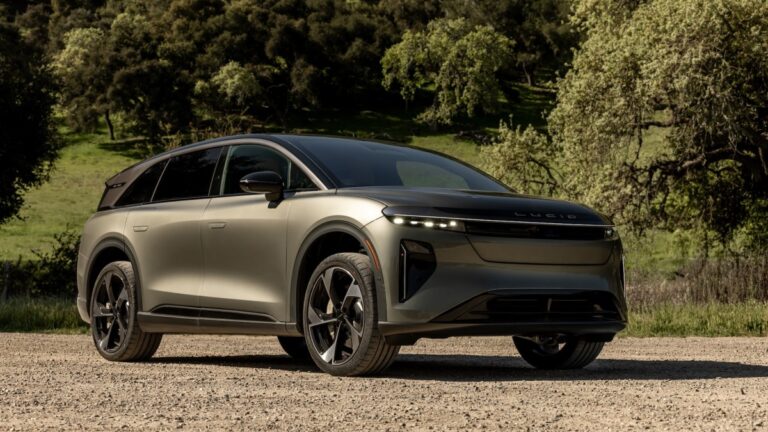
Lucid Motors’ third-quarter vehicle production fell to 2,954 units, its lowest point in nearly two years and a 54% decline from the same quarter in 2025. The decline marks the third consecutive quarter of falling output, a sharp contrast to the company’s manufacturing trajectory from its public market entry just five years earlier.
The company delivered 3,806 vehicles in Q3, remaining roughly flat with the second quarter but trailing Q3 2025 by approximately 200 units. More concerning than the sequential decline is an underlying pattern: Lucid has manufactured more vehicles than it sold in five of the last six quarters, indicating that intentional production constraints stem partly from weak customer demand rather than strategic supply management alone.
The Restructuring Effort
CEO Silvio Napoli, installed in recent months to lead the company through its transition, has initiated a comprehensive restructuring aimed at what the company describes as simplifying operations. The program has included workforce reductions of approximately 1,500 employees, streamlined management structures, and the elimination of a second shift at the company’s Arizona factory.
These operational changes carry a financial target: $1.4 billion in cost reductions. The scale of that savings target signals management’s view that the company’s cost structure has become unsustainable relative to its current and near-term revenue generation.
The elimination of one shift at the Arizona facility stands out against industry conditions. Rather than expanding production capacity as would be typical during growth phases, Lucid is deliberately scaling back manufacturing infrastructure at a time when the broader EV sector remains in expansion mode.
The 2021 Promise and Current Reality
The gap between Lucid’s original public market aspirations and its Q3 2026 reality has grown stark. When the company merged with a special-purpose acquisition company in 2021, it projected delivering as many as 90,000 vehicles in 2024 alone. The transaction raised $4 billion, reflecting investor confidence in those projections.
Nearly six years later, the company is producing fewer than 3,000 vehicles per quarter. Reaching the 2024 target would have required quarterly output in the range of 22,500 units; instead, Lucid has operated far below those figures across every period since going public.
The shortfall cannot be attributed solely to market conditions or broader EV sector dynamics. Companies like Rivian and Tesla have scaled production far more aggressively, suggesting that manufacturing capability and market positioning, rather than customer interest in electric vehicles generally, form the core constraint.
Execution Failures, Acknowledged
Napoli addressed the organization’s failures directly during the company’s second-quarter earnings call in August. His assessment went beyond typical corporate hedging, detailing a pattern of operational lapses: the company missed commitments consistently, launched products before they achieved market readiness, underinvested in service and support operations, responded slowly to quality issues, and allowed organizational complexity to impede timely decision-making.
Product Timing and Quality
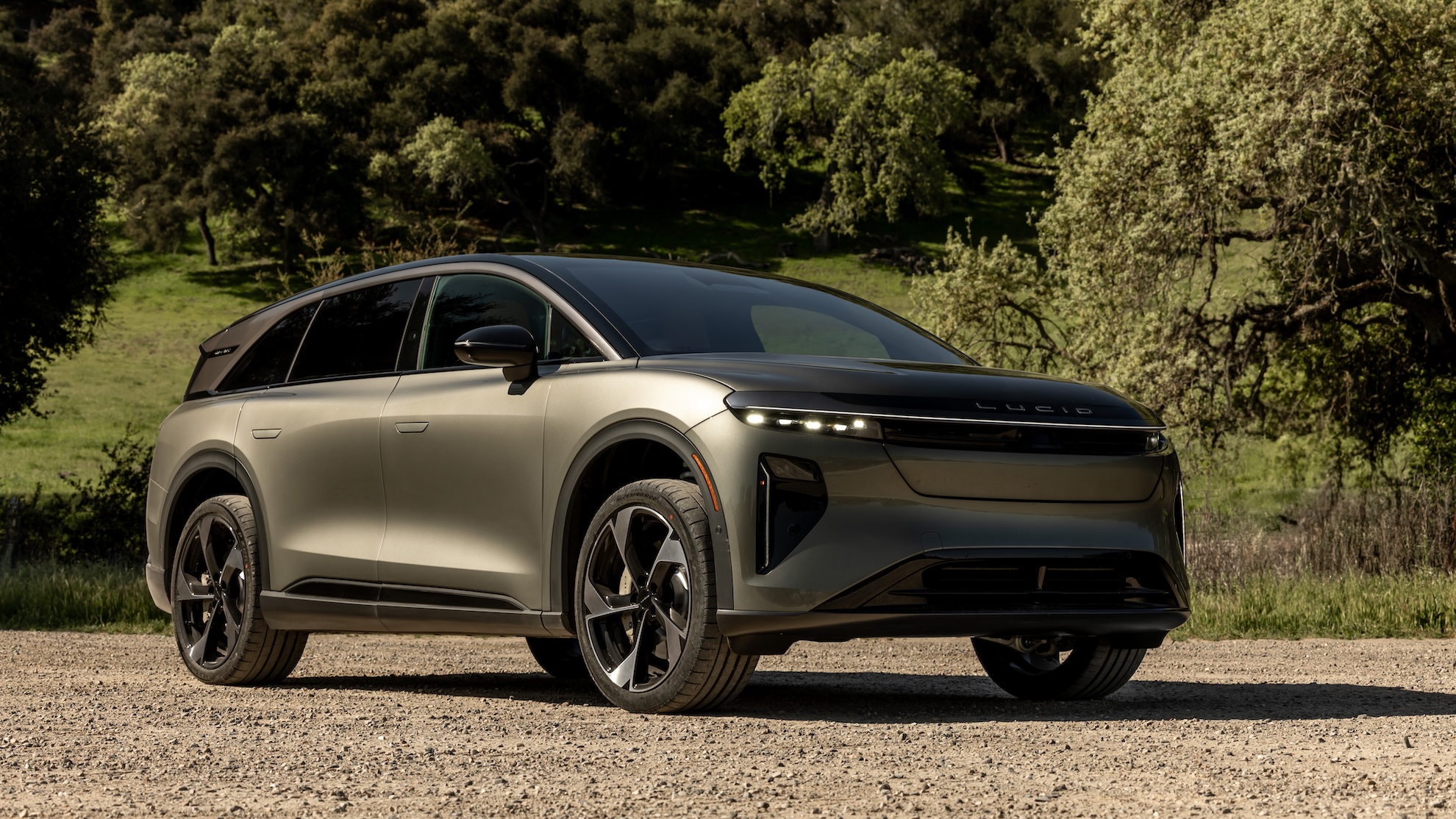
The significance of Napoli’s assessment lies in its directness. Lucid brought both the Air sedan and Gravity SUV to market within recent years, yet neither has achieved the sales velocity the company anticipated. The quality and readiness issues Napoli cited suggest that these launches contributed to, rather than resolved, the company’s broader market challenges.
Organizational Structure
Napoli’s reference to organizational complexity reflects a company that grew its overhead and decision-making layers faster than its production and sales warranted. Streamlining leadership is not merely a cost-cutting measure but also an attempt to improve organizational responsiveness and reduce the friction that has hindered execution.
Service Infrastructure Gap
The CEO’s admission that the company underinvested in service infrastructure points to a critical weakness in luxury vehicle markets, where customer support and service availability are often as important as the vehicle itself. Tesla and other luxury EV makers have invested heavily in both service networks and digital support tools; Lucid’s lag in this area likely contributed to customer satisfaction and retention challenges.
The Cosmos Strategy and Restraint
Lucid has delayed the launch of the Cosmos, its third vehicle model, which was intended to enter the market at a substantially lower price point, starting below $50,000. This model represents the company’s attempt to access a broader market segment than its existing luxury-focused Air and Gravity lineup.
Yet Napoli has explicitly cautioned against rushing the Cosmos to market. In his second-quarter earnings call remarks, he said the company will not repeat the mistakes of the past by bringing a product to market before it is ready. The statement reflects a strategic choice to prioritize product maturity over accelerating the timeline to a lower-priced, higher-volume segment.
This restraint carries risk. The longer Lucid delays broader market access through an affordable model, the more its production challenges will persist and the greater the pressure on its financial runway will become.
Rivian’s Contrasting Trajectory
Rivian, another EV startup competing for consumer attention, reported its strongest quarter on record in Q3 2026, shipping nearly 20,000 vehicles. This represented a significant increase from 12,194 units in Q2, with the growth driven largely by the R2, a newly launched, more affordable SUV.
Although Rivian did not separately disclose R2 delivery figures, the overall quarterly result demonstrated that market demand exists for EVs at lower price points than Lucid’s current lineup addresses. Rivian’s success with the R2 in its first full quarter of production stands in sharp contrast to Lucid’s declining output trend.
The Path Ahead
Lucid’s Q3 performance reflects a company attempting to reset operations and strategy under new leadership while managing the consequences of earlier strategic missteps. The $1.4 billion cost reduction target is aggressive, and whether the company can achieve it while maintaining the engineering and manufacturing capability necessary to launch the Cosmos remains unclear.
The company’s ability to reach profitability has become dependent on the Cosmos achieving meaningful market adoption, a product that Napoli has signaled will not be rushed to market. That tension between the need for revenue growth and the commitment to product readiness will likely define Lucid’s trajectory through 2027.
Source: TechCrunch
Frequently Asked Questions
How much did Lucid's production decline in Q3 2026?
Lucid produced 2,954 vehicles in Q3 2026, a 54% decline from Q3 2025. This was the company's lowest quarterly output since Q1 2025, when it began production of the Gravity SUV.
What is Silvio Napoli doing to restructure Lucid?
Napoli has laid off approximately 1,500 employees, streamlined management, eliminated a second production shift at the Arizona factory, and set a target for $1.4 billion in cost reductions. He has also delayed the launch of the Cosmos, the company's planned lower-priced EV.
How does Lucid's performance compare to Rivian's?
Rivian shipped nearly 20,000 vehicles in Q3 2026, up from 12,194 in Q2, with growth driven by its new R2 SUV. This contrasts with Lucid's declining production and weak demand for its premium Air and Gravity models, which have failed to attract the volume initially projected.
