
Key takeaways
- Vessev raised $19 million in Series A funding to commercialize the VS-9, an electric ferry that uses hydrofoil technology to lift its hull clear of the water, reducing drag and improving efficiency.
- Hydrofoils work best in calmer waters with wave heights up to 2.5 feet, making them ideal for lakes, rivers, and bays rather than open ocean routes.
- The company plans to eventually produce hydrofoil kits for other boatbuilders, rather than manufacturing ferries exclusively, to accelerate industry adoption of the technology.
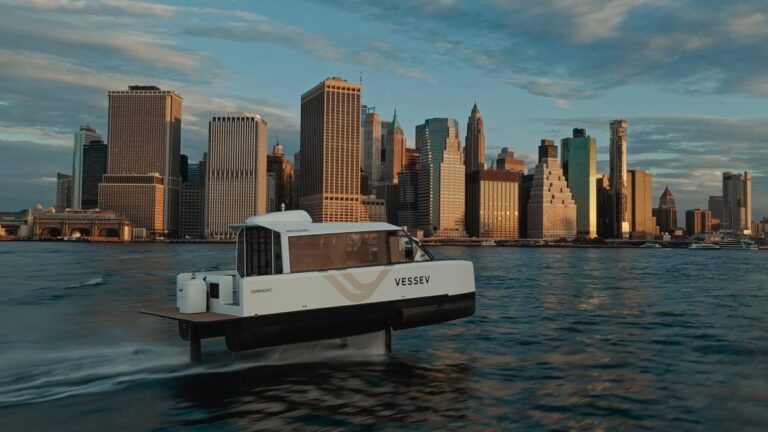
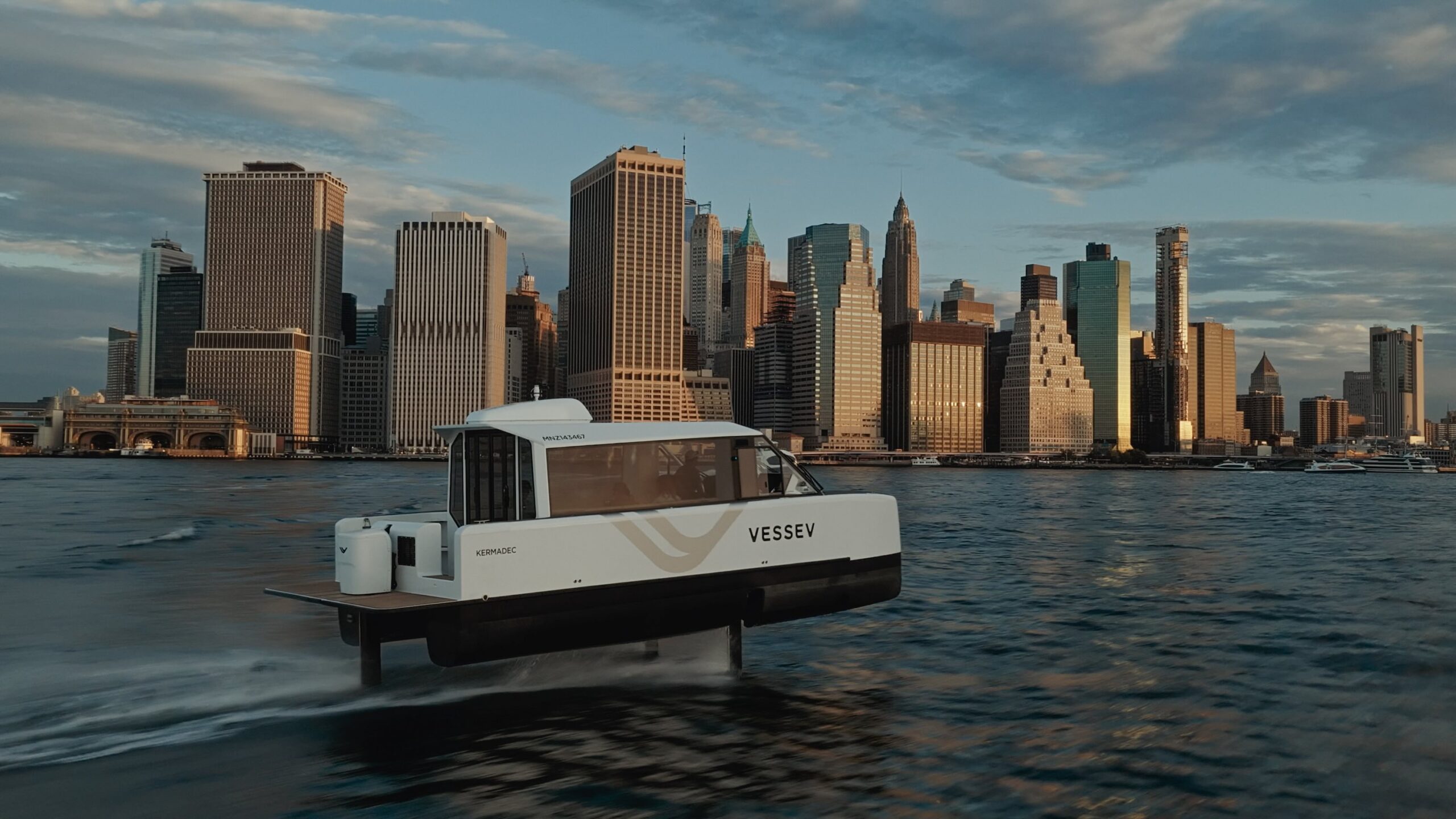
When Eric Laakmann, co-founder and CEO of Vessev, pulled away from the Brooklyn Marina in the company’s VS-9 electric ferry, he offered a simple answer to the question of when the vessel transitions to flying: it already is. The startup, which raised $19 million in Series A funding in August, has engineered a vessel that operates as a hydrofoil—lifting its hull clear of the water to reduce drag and deliver a smoother ride than traditional boats of comparable size.
The transition from conventional sailing to hydrofoil operation proves far more subtle than one might expect. A boat around 30 feet long built with traditional designs starts bouncing and slapping the water as speed increases. On the VS-9, a catamaran-style vessel, the effect is almost imperceptible. According to TechCrunch, which observed a demonstration ride from Brooklyn to Governors Island, the experience resembled riding in a sports car more than it resembled flying, despite the vessel operating on its underwater foils. Hydrofoils have existed for well over a century, yet their application to electric ferries represents a deliberate engineering choice for efficiency and passenger experience in urban waterways.
The Hydrofoil Advantage
How Hydrofoils Work
The mechanics of hydrofoil operation differ fundamentally from conventional boat hulls. Instead of the entire vessel sitting on the water, wing-like structures mounted beneath the hull slice through the water and generate lift. This lift grows with speed until it elevates the boat clear of the surface, so the hull no longer contacts the water except through the foils themselves.
On the VS-9, computer-controlled underwater flaps maintain stability and smoothness as the vessel operates on its foils. The design distributes most of the lifting work to the front foil, with the rear foil contributing about 20 percent of the total lift. This configuration allows the rear foil to also mount the electric motor, which Vessev manufactures in-house rather than sourcing from external suppliers.
Efficiency for Electric Vessels
The efficiency advantage of a hydrofoil extends beyond the passenger experience. By eliminating hull-to-water contact at speed, the boat experiences dramatically lower drag compared to displacement or planing hulls. For electric vessels, where every kilowatt-hour of battery capacity must work harder per mile traveled, this efficiency gain translates directly to extended range and lower operational costs. As Laakmann explained, this efficiency consideration proves especially important for electric vessels operating in urban waterways.
VS-9 Design and Engineering
Design Philosophy
Externally, the VS-9 resembles many other catamarans, with twin hulls providing stability. The distinguishing feature lies beneath the waterline: the carefully engineered foil system that Vessev has developed as a core competency rather than delegating to suppliers.
Vessev’s decision to build its electric motor in-house reflects a specific philosophy about development strategy. Rather than outsource the motor to an existing supplier, Laakmann reasoned that manufacturing this component internally allows the company to optimize costs early in the development cycle. The logic follows a longer trajectory: as production scales, bringing manufacturing in-house becomes inevitable for any hardware company seeking cost control. The only major component Vessev sources externally is the battery pack, which Laakmann noted has become commoditized enough that external sourcing makes practical sense.
Production and Future Models
The current VS-9 remains a prototype, unique in existence. Vessev plans to build additional units, though the company has not announced a production timeline or target volume. Down the road, the startup is considering a strategic shift toward manufacturing electric hydrofoil kits. This approach would allow other boatbuilders to design their own vessels around Vessev’s proven foil and motor technology, creating a licensing path that could accelerate broader industry adoption.
Market Opportunities
Vessev is targeting transit operations as its primary market opportunity. The combination of electric propulsion and hydrofoil efficiency could substantially lower the cost of operating smaller vessels while maintaining passenger comfort at a level that exceeds traditional ferry designs. Cities like New York could theoretically deploy these ferries to connect boroughs—shuttling people to Brooklyn or Queens—without requiring major new infrastructure investments beyond dock facilities.
Hotels and tour operators represent a secondary early market. These businesses see value in electric hydrofoils as an amenity that combines environmental responsibility with the sensation of high-speed water travel. Public demonstrations have attracted wealthy individuals interested in acquiring the technology as a high-end recreational vessel, Laakmann said.
Operational Constraints
Hydrofoils excel in specific environments and face clear limitations in others. They work best in waters where the vessel can operate fully on its foils, which for the VS-9 means wave heights up to approximately 2.5 feet, or about 0.75 meters. Waves taller than this height strike the hull directly, destroying the smooth ride and reducing efficiency by forcing the boat back into contact with the water.
This constraint eliminates hydrofoils from open ocean service, where wave heights regularly exceed their design envelope. Instead, the technology suits lakes, rivers, and bays—inland and protected waterways where vessels spend all or most of their time in calmer conditions. For regions with significant river traffic or protected waterways, this represents a major advantage. The design works best for ferry routes that operate within these calmer zones rather than in exposed offshore environments.
Historical Context and Technical Advantages
The history of hydrofoil development extends across more than a century, with innovations dating back well before modern maritime engineering. Yet widespread adoption remains limited outside military and commercial applications in specific regions. The technology offers clear benefits: lower drag translates to faster speeds at equivalent power, and the smooth ride comes from lifting the hull entirely clear of the water except for the foils themselves.
For electric vessels, these advantages compound substantially. Battery energy density limits how much power any vessel can store, making efficiency the primary engineering lever for extending range. A hydrofoil accomplishes this goal without requiring batteries twice the weight or physical size of traditional designs. The smoother ride also addresses a practical barrier to ferry adoption: many potential passengers avoid ferries due to motion sickness caused by the rhythmic bouncing of traditional hulls in choppy water. Hydrofoils, by design, eliminate most of this vertical motion.
Path Forward
Vessev’s $19 million Series A validates market belief that electric hydrofoils represent a viable category for water transport. The company’s immediate milestones include scaling production beyond the current single prototype and establishing pilot routes with transit operators willing to test this technology on real service runs.
The potential pivot to manufacturing hydrofoil kits would open a substantially broader market, allowing established shipbuilders to integrate Vessev’s technology into their own designs. This path mirrors successful strategies in other transportation sectors, where critical technologies get licensed to multiple manufacturers rather than kept exclusive to a single company. For urban transit planners evaluating future ferry networks, the VS-9 represents a proven alternative to larger, traditional ferries that consume substantial fuel and generate emissions. Electric hydrofoils, operating in protected waterways at profitable routes, could reshape how cities think about water-based transportation in dense urban areas.
Source: TechCrunch
Frequently Asked Questions
How does the VS-9 hydrofoil ferry work?
The VS-9 is a catamaran with wing-like foil structures mounted beneath the hull that generate lift as they slice through the water. Computer-controlled flaps keep the ride smooth and stable. The front foil does most of the lifting work, while the rear foil handles about 20 percent and houses the electric motor. At speed, this design lifts the hull clear of the water surface, eliminating drag and creating an efficient, smooth ride.
What environments are suitable for the VS-9?
The VS-9 operates best in protected waterways where wave heights stay below 2.5 feet. This makes it ideal for lakes, rivers, bays, and urban waterways like those between New York City boroughs. Waves taller than 2.5 feet cause the hull to contact the water again, reducing efficiency and smoothness. The technology is not suitable for open ocean routes where larger waves are common.
What is Vessev's long-term business strategy?
Vessev is targeting transit operators as its primary market, aiming to reduce costs and improve comfort for urban ferry services. The company currently has one VS-9 prototype and plans to build more. Eventually, Vessev is considering manufacturing electric hydrofoil kits that other boatbuilders could use to design their own vessels, creating a licensing model for broader industry adoption.
