
Key takeaways
- California's Senate Bill 1246 requires autonomous vehicle companies to maintain local support teams and imposes penalties if robotaxis block first responders for more than 30 minutes, with the law taking effect in July 2028.
- Autonomous trucking is advancing with companies like Kodiak and Aurora securing major commercial contracts and planning significant deployments over the next several years.
- Northeastern University research found that connected vehicles collect personal data and share it widely with technology companies including Google, Meta, and others, exposing privacy gaps as automation increases.
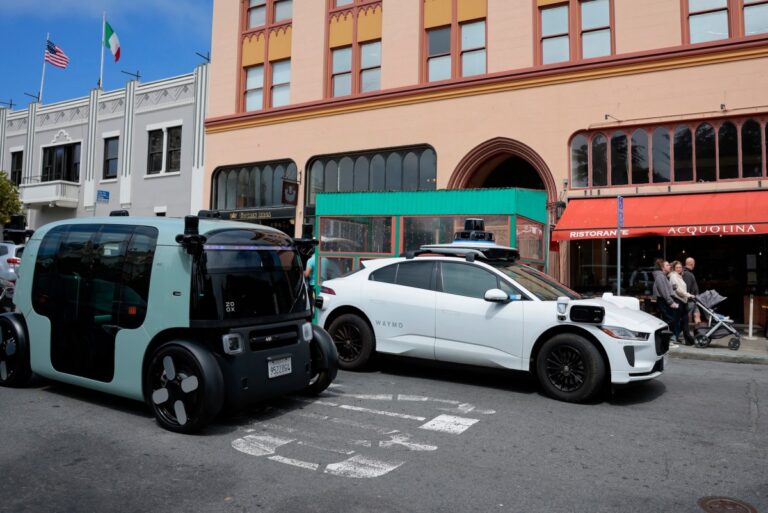
Robotaxis have become visible enough on California streets that residents in major cities encounter them regularly. San Francisco residents on an average day might see dozens or more autonomous vehicles navigating city streets. Yet as TechCrunch has reported, this expansion has brought repeated disruptions. Robotaxis have impeded traffic flow, entered active crime scenes, and blocked first responders attempting to assist in emergencies. In several documented cases, emergency services personnel have been forced to physically move disabled robotaxis out of the way to continue their work. Recognizing the need to manage this emerging challenge before autonomous vehicle deployments expand further, Governor Gavin Newsom signed Senate Bill 1246 into law this week.
California’s New Regulatory Framework for Autonomous Vehicles
Senate Bill 1246 represents the first comprehensive state-level regulation addressing operational safety and emergency response coordination for autonomous vehicles. Taking effect in July 2028, the law establishes specific obligations for companies operating robotaxis and other autonomous vehicles at significant scale. Major players including Waymo, Tesla, and Zoox must now provide local, on-the-ground support capability when their vehicles encounter problems or directly interfere with emergency operations. The law creates financial consequences for non-compliance: if a disabled or malfunctioning robotaxi blocks police officers or firefighters for more than 30 minutes, the company faces penalties.
Detailed operational constraints
The law imposes specific operational requirements designed to reduce response times and chaos when autonomous vehicles malfunction. Any remote drivers employed to control vehicles must be based in the United States and hold a valid U.S. driver’s license. Autonomous vehicle operators must maintain capability to notify cities and local jurisdictions about vehicle locations and system-wide failures in real time. Each company deploying vehicles must employ local incident technicians capable of responding on-site to accidents and obstructions created by their vehicles. These requirements aim to ensure that future autonomous vehicle deployments do not become dependent on emergency responders physically moving vehicles or creating workarounds.
Regulatory development and uncertainty
The California Department of Motor Vehicles will develop the specific enforcement rules and guidelines needed to implement the statute. With three years before July 2028, the DMV must define how companies report incidents, what constitutes adequate local support, and how penalties will be calculated. Even with regulatory structure in place, uncertainty persists about whether compliance alone will prevent all operational disruptions. The law represents a step toward accountability, but whether it will eliminate the incidents that prompted its creation remains an open question that will likely become clearer as the first years of implementation proceed.
Autonomous Trucking Deployments Advance
Real-world routes and commercial contracts
While regulatory attention focuses on robotaxis in urban areas, autonomous trucking is progressing with concrete commercial commitments. Kodiak, a company focused on autonomous logistics, has secured a contract with Ikea to perform fully autonomous freight deliveries. Beginning later this year, Kodiak trucks will haul Ikea products over a 219-mile segment of Interstate 45 connecting Houston and Dallas, with no human operator present in the cab. The deployment represents a significant milestone in demonstrating that fully autonomous trucking can operate on public highways for extended distances. Aurora, another major player in the autonomous trucking space, announced a more ambitious target: deployment of 30,000 autonomous trucks on public roads by the end of 2030.
Capital flowing toward autonomous transport
Venture and corporate investment continues flowing into autonomous and electric trucking. Harbinger, focused on electric truck manufacturing, secured a major supply agreement with FedEx valued at $300 million for 2,000 electric trucks. Quartermaster, a maritime intelligence software startup, raised $140 million in a Series B funding round. The round included approximately $100 million from venture firms Insight Partners, defense-focused investor Overmatch Ventures, and First Round Capital, with an additional $40 million structured as debt financing arranged through investment bank Stifel. These commitments indicate sustained investor confidence that autonomous logistics represents a viable commercial opportunity.
Traditional Automakers Navigate Electric Transition
As autonomous capabilities develop, traditional automakers continue adjusting their product lineups to compete in the electric vehicle market. BMW unveiled its redesigned 2027 3 Series with a strategic choice: offering consumers the option of gasoline or electric powertrains sharing the same platform. The electric version is priced lower than the gas equivalent, signaling the company’s preference for electric adoption. Rivian achieved record quarterly sales driven largely by the new R2 SUV, with the company maintaining a full-year production forecast of between 65,000 and 70,000 vehicles. The company did initiate a recall for the R2 SUV addressing fasteners on the high-voltage battery pack that might not be properly tightened, a quality issue that could potentially cause loss of power while driving.
Tesla’s Expansion Beyond Traditional Automotive
Tesla sold more than 480,000 vehicles in the third quarter, representing the company’s second consecutive strong quarter following a softer start to the year. The company recently secured $30 billion in fresh credit lines available to fund development of new products. Musk has indicated these funds could support deployment of the Optimus humanoid robot and the Cybercab robotaxi. Beyond traditional vehicle sales, Musk has positioned Tesla as fundamentally an artificial intelligence and robotics company. His fourth Master Plan, announced over a year ago, promised to deliver abundance through autonomous vehicles, robots, and AI systems. Translating that vision into concrete commercial products on defined timelines has proven more challenging than initially suggested.
Emerging Autonomous Services and Regulatory Challenges
Beyond robotaxis and trucking, companies are exploring autonomous logistics in new domains. DoorDash shared additional details about its DoorDash Air autonomous drone delivery service, disclosing information about aircraft design and ground-based operational systems. On ride-hailing regulation, Lyft agreed to pay $272.5 million to settle a lawsuit alleging the company violated California labor law by misclassifying drivers as independent contractors rather than employees. The settlement resolved violations that occurred before California voters approved Proposition 22, which allowed ride-hailing companies to maintain the contractor classification for their drivers.
Connected Vehicle Data Collection Raises Privacy Concerns
As vehicles become increasingly autonomous and connected, researchers have identified significant gaps in data privacy regulation. Northeastern University conducted testing on 21 late-model vehicles from 17 different automakers and examined 30 companion mobile applications associated with these vehicles. The study found that automobiles routinely collect personal data and share that information with numerous third-party technology companies, including Adobe, Contentsquare, Google, Microsoft, Meta, Snap, and Yahoo. The research demonstrates that data collection and sharing practices in connected vehicles remain largely opaque to drivers and unevenly regulated across manufacturers, gaps that become more significant as vehicles gain autonomous capabilities and the volume of data collection increases.
Source: TechCrunch
Frequently Asked Questions
What are the main requirements of California's Senate Bill 1246?
The law requires autonomous vehicle companies to maintain local support teams, notify cities about vehicle locations and system failures, and employ local incident technicians. Remote drivers must be US-based with valid driver's licenses. Companies face penalties if their vehicles block first responders for more than 30 minutes.
When does California's robotaxi regulation law take effect?
Senate Bill 1246 takes effect in July 2028, giving the California Department of Motor Vehicles three years to develop specific enforcement rules and guidelines for implementation.
What autonomous trucking deployments are planned?
Kodiak has contracted with Ikea to perform fully autonomous deliveries over 219 miles of Interstate 45 between Houston and Dallas, beginning later this year. Aurora has announced plans to deploy 30,000 autonomous trucks by the end of 2030.
