
Key takeaways
- Maven Robotics raises $100 million and plans to manufacture 250 robots for warehouse palletization, with eight units currently operating at 99% uptime.
- The company's founder spent nine years at Apple on autonomous vehicle projects before founding Maven, bringing self-driving car training techniques to warehouse robotics.
- Maven competes by focusing on end-to-end system integration and ROI rather than bipedal designs or pursuit of general-purpose robots, targeting billion-dollar markets one workflow at a time.
- The startup plans to expand into materials handling and fabrication using human-in-the-loop training with pincer-like gloves before advancing to the next market.
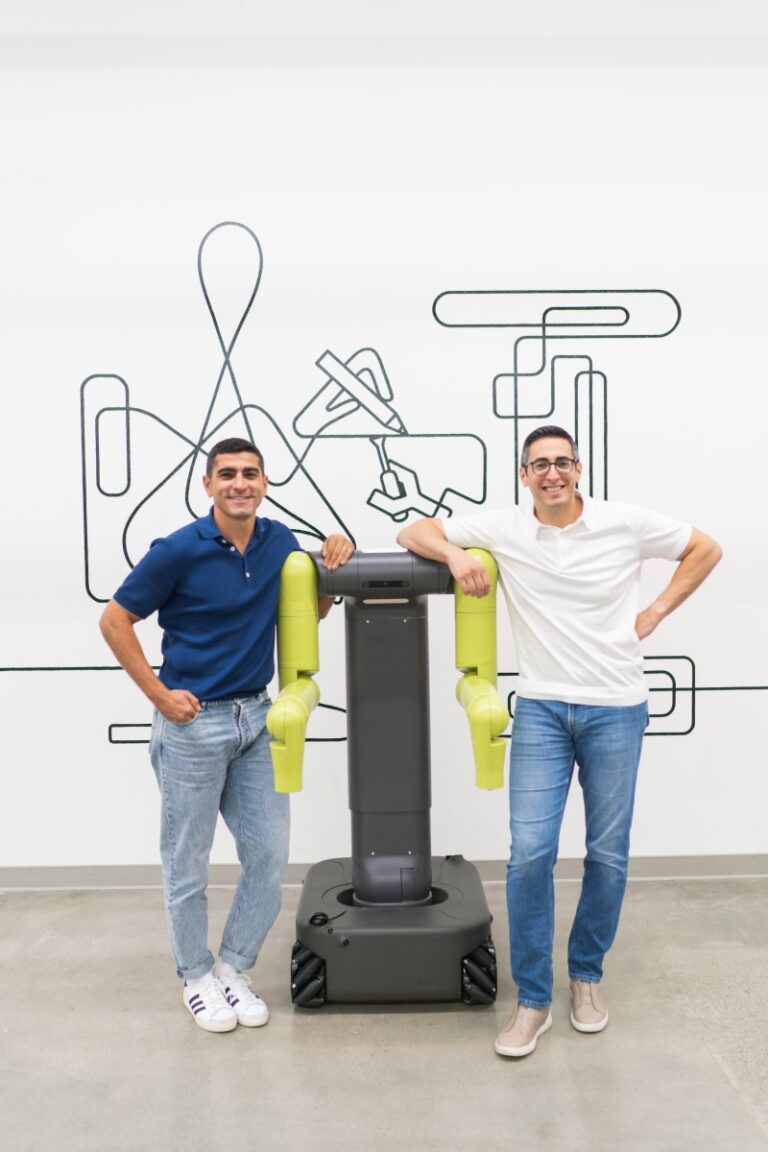
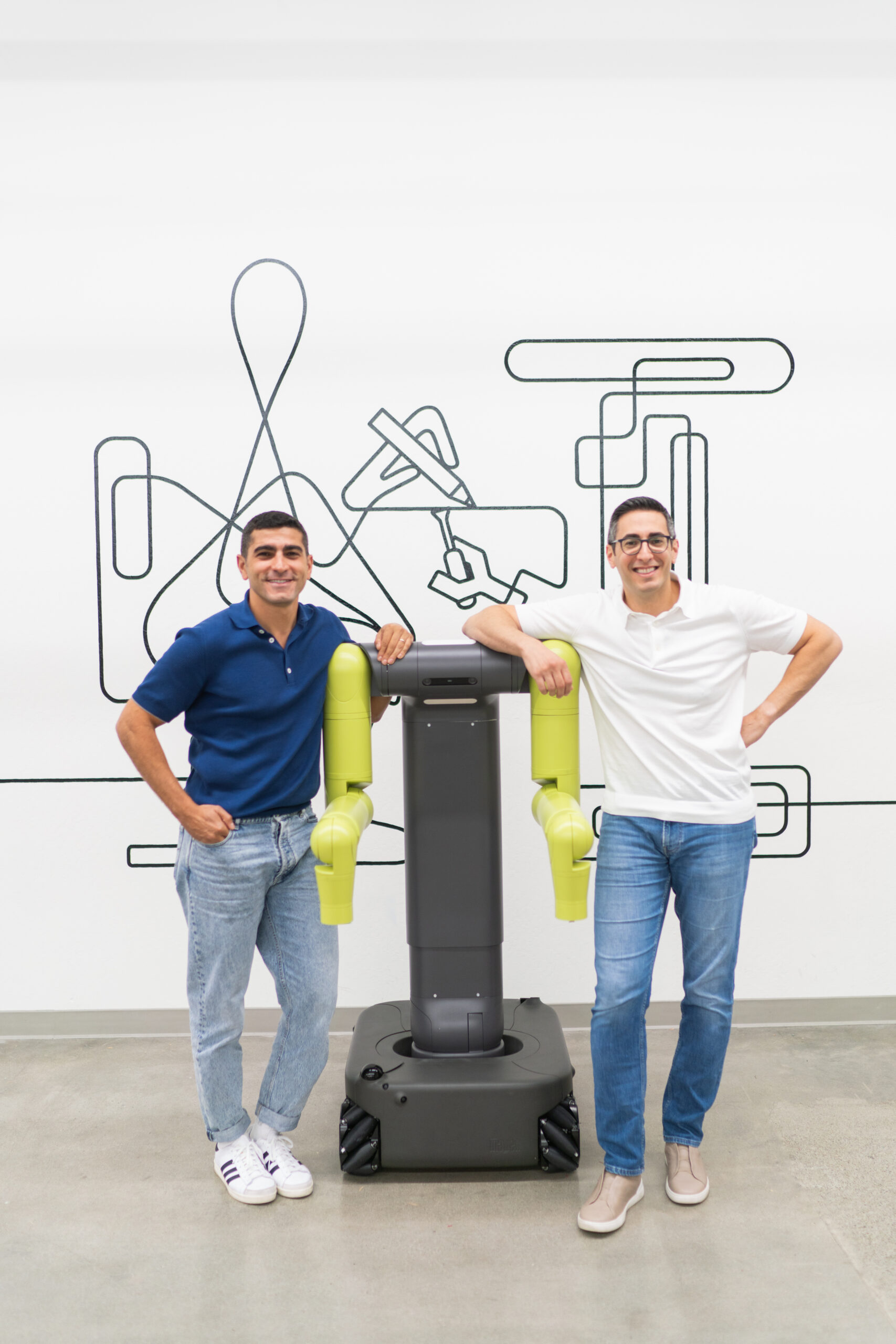
Maven Robotics has emerged from stealth with $100 million in funding to deploy autonomous robots for warehouse logistics operations. The round came from RoboStrategy, LocalGlobe, Vine Ventures, and XTX Markets Ventures. The company plans to manufacture 250 of its third-generation robots while beginning design work on a fourth-generation platform.
The robots operate on wheeled bases at 10 miles per hour, with two arms capable of lifting 30 kilograms each. Maven currently has eight robots deployed across customer facilities, running 16 hours daily with reported uptime of 99% or higher.
How Maven Won Its First Deal
Hamza Derbas, the company’s CEO and co-founder, describes Maven’s 2024 origins bluntly: “a cartoon of a robot and a team of people.” Despite that bare-bones state, the company secured its first major customer by outcompeting established robotics firms.
Factory Visits Over Pitch Decks
A large consumer goods company with logistics operations was meeting with multiple robotics vendors to explore automation. Rather than present slides and business plans, Derbas requested factory and warehouse visits. Walking through actual operations, Maven identified specific workflows where it could deliver immediate value.
“We saw how people were working; we zeroed in on flows we could immediately bring value to,” Derbas told TechCrunch. That customer-centric site visit approach succeeded where pitch decks failed. Maven won the contract.
From First Customer to Proven Reliability
After two years working with that customer and a few additional partners, the startup operates eight robots with 99% or higher uptime—a reliability metric that separates Maven from competitors still in laboratory phases.
Systems Integration Over Single-Robot Solutions
Maven positions itself differently from robotics companies focused on perfecting individual machines. The company frames each deployment as an end-to-end autonomous system integrating upstream and downstream logistics infrastructure.
The Mixed Palletizing Workflow
Maven’s current application is mixed palletizing, an operation that builds new pallets containing assorted products for retail stores based on real-time demand. When a retail location needs a shipment with a specific product mix, Maven’s robots autonomously arrange boxed goods onto pallets for dispatch—work currently performed by warehouse employees walking the facility by hand.
The robots operate at the Santa Clara facility and in live customer warehouses, using vacuum suckers to grip and position boxes. The company emphasizes that robots work within existing human workflows rather than requiring facility redesign.
Why End-to-End Integration Matters
“We’re not trying to solve a single robot problem. We’re trying to autonomously take on the task end to end: It hooks in from one side to a warehouse management system; product goes on trucks on the other side,” Derbas explained. This systems-level approach reflects Maven’s focus on operational reality rather than engineering elegance in isolation.
Leadership and Autonomous Vehicle Heritage
Derbas brings deep experience in autonomous systems to Maven. He spent nine years at Apple working on the company’s special projects group, widely understood to have been developing a self-driving car before the project was discontinued in 2024. Before that role, his background centered on automotive engineering with a focus on electric vehicles.
Derbas founded Maven with his brother Khalid, who serves as CFO after a career in private equity. The team has recruited other veterans from autonomous vehicle development programs, leveraging techniques those organizations perfected for training self-driving hardware. Maven’s training approach involves rapid feedback cycles: “retrain, evaluate, run ablation studies, figure out what’s the right set of weights, redeploy, and then turn that loop again.”
The Task-by-Task Market Strategy
Maven’s stated approach is focused growth across specific billion-dollar markets rather than rapid expansion into all robotic tasks. The mixed palletization market alone represents an $80 billion opportunity, according to Derbas.
Solving One Problem at a Time
“We’re grounded in solving one customer problem at a time,” Derbas said. “If you focus on solving problems and you pick sizeable problems, each problem is a multi-billion-dollar market. If you do that, there’s plenty of data to master these skills.” At that scale, a single workflow generates sufficient customer data and operational feedback to drive continuous improvement without inventing capabilities that may not yet exist in practice.
Expanding Beyond Palletization
Maven’s next phase targets materials handling and manipulation. The company has developed a pair of pincer-like gloves allowing human operators to demonstrate grasping techniques they want robots to adopt. This human-in-the-loop approach lets Maven explore new strategies before encoding them into hardware.
From manipulation, the company plans to move toward fabrication and assembly tasks. Each step follows the same pattern: master the workflow with real customer data, then advance to the next market.
Positioning Against Competitors
Maven enters a market with multiple competitors pursuing autonomous warehouse solutions. Agility Robotics, similarly focused on industrial workflows, is preparing to go public through a $2.4 billion SPAC deal this fall. Agility’s robots move on two legs rather than wheels.
Derbas respects Agility’s focus but disputes their technical choices. “They make zero sense for anything they’re doing,” he said of bipedal robots. “They are very complex, unreliable, and add unnecessary cost. ROI is the name of the game here.”
Jack Pearson, an investor at RoboStrategy, sees Maven’s advantage in institutional background. “What sets the company apart is its background in industrial systems, rather than a research culture that is optimized for learning or focused on a specific architecture,” he told TechCrunch. This emphasis on solved problems over theoretical research distinguishes Maven from academic-rooted robotics teams.
Research Demands and the Model Question
As Maven scales beyond palletization, the company will confront the need to develop manipulation capabilities that do not currently exist in commercial deployment. This evolution may require Maven to build research infrastructure, something the current task-focused strategy has deemphasized.
Derbas does not frame Maven’s challenge as competing in the race for frontier AI models. “We’re not in the race for models—we’re in the race to solve industrial labor and make this work possible at the scale the world needs,” he told TechCrunch. This framing suggests Maven views commercial robotics deployment as distinct from machine learning research—a bet that operational problem-solving trumps theoretical capability advances.
Frequently Asked Questions
How much did Maven Robotics raise and who funded it?
Maven raised $100 million from RoboStrategy, LocalGlobe, Vine Ventures, and XTX Markets Ventures. The company plans to build 250 third-generation robots and begin designing a fourth-generation platform.
What task do Maven's robots currently perform?
Maven's robots perform mixed palletizing in warehouses and distribution centers, autonomously creating new pallets containing assorted products for retail stores based on real-time demand. The robots operate 16 hours daily with reported uptime of 99% or higher.
What is Hamza Derbas's background before founding Maven?
Derbas spent nine years at Apple working on the company's special projects group, which was developing a self-driving car before the project was discontinued in 2024. He previously worked in automotive engineering with a focus on electric vehicles.
