
Key takeaways
- Tesla published a form inviting third-party businesses to purchase Cybercab fleets and operate them, marking a significant departure from its original plan to manage all robotaxis in-house.
- Elon Musk's 2016 vision of Tesla owners earning money by renting out autonomous vehicles never materialized, leading the company to shift focus toward operating its own fleet.
- Fleet management specialists like Moove are already proving the autonomous vehicle operator business model works, with Moove valued at $2.1 billion after raising $250 million to manage Waymo vehicles across multiple cities.
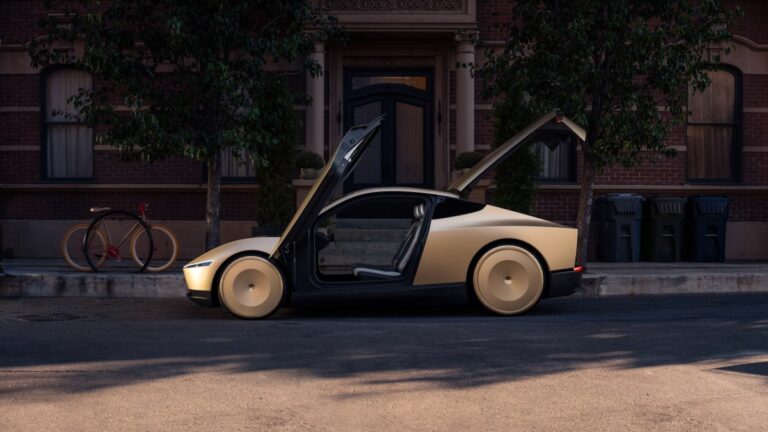
Tesla published a form on Thursday inviting businesses to participate in building its robotaxi network. This move suggests the company is reconsidering its original plan to operate all robotaxis in-house, signaling that scaling its autonomous vehicle business may require partnerships with third-party operators.
Tesla’s Shift in Strategy
Tesla released the interest form ahead of its Cybercab event in Austin. The form asks potential partners to select from several models of involvement: purchasing Cybercab fleets, providing mobility hubs and infrastructure, collaboration on events, or other arrangements not yet specified.
The form’s appearance marks a notable departure from Tesla’s previous approach. Until now, the company appeared committed to maintaining tight control over its robotaxi operations, managing every vehicle and customer interaction directly. The form represents a fundamental reconsideration of how Tesla intends to achieve the massive scale it has long promised.
This is not definitive proof that Tesla will immediately begin selling autonomous vehicles to third-party operators. The company has been vague about what partnership models would entail, how much control partners would retain, or which markets might open first to external operators. But the form signals where Tesla’s longer-term thinking is heading: the company wants to scale, and it may not believe it can do so alone.

A Decade of Broken Promises
Elon Musk has promoted the idea of Tesla robotaxis for years, but the original concept bore little resemblance to what the company is now pursuing.
The owner-operator vision
In 2016, Musk publicly discussed a future where Tesla owners equipped with self-driving software could earn money by renting out their vehicles. He invested significant messaging capital in this model over the following years. At the company’s Autonomy Day in 2019, Musk reaffirmed the vision: Tesla would allow owners to add their autonomous vehicles to a ride-sharing app managed by the company, mirroring Uber’s business model. The implication was straightforward—Tesla vehicle owners could generate passive income while Tesla captured value through network effects and commission on rides.
The promise that didn’t arrive
In 2020, Musk doubled down on the timeline: “I feel very confident predicting that there will be autonomous robotaxis from Tesla next year — not in all jurisdictions because we won’t have regulatory approval everywhere.” That prediction never materialized. Instead of rolling out owner-operated networks in 2021, Tesla shifted its focus entirely. The company moved from describing owner-operated models to testing, and now operating, its own fleet of robotaxis. It began with Tesla Model Y vehicles adapted for autonomous operation and has since deployed the purpose-built Cybercab.
Why the strategy shifted
The company’s early focus on owner-operated networks likely proved impractical given the regulatory complexity of managing vehicles operated by individual drivers, liability and insurance concerns, and the challenge of maintaining consistent service quality across markets and operators. Operating its own fleet allowed Tesla to retain control over vehicle maintenance, incident response, and network consistency in a way that individual owners could never provide. But this approach also meant Tesla had to finance, deploy, and manage every single vehicle itself—a capital-intensive model that does not scale easily into hundreds of thousands of vehicles across dozens of cities.
The Fleet Management Industry Is Already Proving the Model
Tesla is not entering this space as a pioneer. Multiple companies have already established themselves as specialists in autonomous vehicle fleet management, proving that the business model works.
Moove is perhaps the most revealing case study. The African fintech startup initially focused on providing vehicle financing to ride-hailing drivers—a crowded market. It has since pivoted into autonomous fleet management and is now operating Waymo vehicles in major markets. Last month, Moove raised $250 million at a $2.1 billion valuation, roughly quadrupling its previous funding. The startup currently serves as the fleet operator for Waymo in Phoenix, Miami, and Las Vegas, with London expanding to its portfolio in the future. Crucially, Moove does not presently own the Waymo vehicles it manages, but the company’s CEO has indicated plans to acquire them eventually. This suggests a natural evolution: fleet operators can begin by managing vehicles on behalf of the autonomous vehicle manufacturer, then gradually acquire equity in the fleet as the business matures and scales.
Other players in the autonomous fleet management space include Avomo and New Horizon, both of which operate independently. Traditional rental car companies such as Avis and Hertz, with decades of experience managing large vehicle fleets and customer relationships, have also moved into the autonomous vehicle space. Uber has partnered with several autonomous fleet management specialists in its bid to acquire a stake in the robotaxi market, rather than attempting to operate the entire fleet itself.
What Third-Party Operators Mean for Tesla’s Growth
Opening the door to fleet partners could accelerate Tesla’s market expansion without requiring the company to finance and manage every vehicle itself.
Allowing external operators to purchase and manage Cybercabs could create a two-tier market: Tesla-operated vehicles in core markets and cities where the company wants direct control and maximum brand presence, and partner-operated fleets in secondary markets, underserved geographies, or under different business models. This approach would distribute the capital burden across multiple companies while keeping Tesla’s technology and brand at the center of the ecosystem.
Partners might be incentivized to operate in markets where regulatory approval is still pending, where demand is less certain, or in regions where capital investment is challenging for Tesla. Such an arrangement would reduce Tesla’s financial risk in unproven markets while still capturing value from each vehicle sold. The company could generate revenue from vehicle sales, and potentially from ongoing licensing fees, data-sharing arrangements, or commission on rides.
The Obstacles Ahead
Scaling through third-party operators introduces challenges Tesla has never faced. Service consistency becomes difficult when multiple operators use different maintenance practices, customer service standards, or operational procedures. A poor experience with a partner-operated Cybercab directly damages Tesla’s brand and customer perception.
Partners with deep access to Tesla’s vehicles, autonomous driving software, and operational data could eventually become competitors or share proprietary information with rivals. The company would need contractual safeguards and operational oversight mechanisms to protect its intellectual property while still allowing partners the autonomy they need to grow their businesses.
Different operators in different jurisdictions will face varying regulatory requirements, insurance frameworks, and liability structures. This could create a patchwork of service models that complicates Tesla’s unified network vision and makes it harder to maintain consistent brand positioning across geographies.
What Remains Unclear
Tesla has not announced details about partnerships, vehicle pricing, revenue sharing, or geographic rollout of any fleet operator model. The form is a signal of intent and direction, not a binding commitment. The company’s Cybercab event in Austin may provide additional clarity, though Tesla’s historical pattern suggests it often announces long-term aspirations without near-term execution timelines.
For now, the form represents Tesla’s acknowledgment that its original bet on individual Tesla owners renting out their autonomous vehicles to strangers did not work out. After years of promising such a network, the company appears ready to adopt the same fleet management model that has already proven successful for Waymo and other autonomous vehicle companies.
Frequently Asked Questions
What options is Tesla presenting in the Cybercab interest form?
Tesla asks businesses to select from options including purchasing Cybercab fleets, providing mobility hubs and infrastructure, collaborating on events, or other unspecified arrangements.
Why did Tesla abandon its original owner-operated robotaxi vision?
Tesla's 2016-2019 plan for owners to rent out autonomous vehicles proved impractical due to regulatory complexity, liability concerns, and difficulty maintaining consistent service quality across independent operators. The company instead shifted to operating its own fleet.
Who else operates autonomous vehicle fleets today?
Moove operates Waymo vehicles in Phoenix, Miami, Las Vegas, and London; other operators include Avomo and New Horizon. Traditional rental car companies like Avis and Hertz have also entered the space, and Uber has partnered with multiple autonomous fleet management specialists.
