
Key takeaways
- Meta purchased its first environmental attribute credits from a recycled materials company, committing to buy carbon credits from MacroCycle to fund the startup's first manufacturing facility.
- MacroCycle's solvent-based recycling process creates plastic with properties matching virgin material while reducing carbon emissions by 80 percent, targeting textile waste which currently has only a 0.5 percent recycling rate.
- The deal demonstrates a new financing model for climate startups, where companies sell both physical materials and environmental credits to fund capital-intensive manufacturing capacity and attract additional corporate buyers.
Meta announced this week that it will purchase carbon credits generated by MacroCycle, a Cambridge, Massachusetts-based startup that has developed a novel approach to recycling plastic waste. The arrangement marks Meta’s first purchase of environmental attribute credits (EACs) from a recycled materials company and will provide MacroCycle with capital to construct its first commercial manufacturing facility in the United States. MacroCycle, founded three years ago, was selected as a Top 20 finalist in the 2025 Startup Battlefield competition at TechCrunch Disrupt in San Francisco earlier this year. The partnership demonstrates how corporate climate commitments are creating new business models for materials science startups.
The Solvent Chemistry Behind the Technology
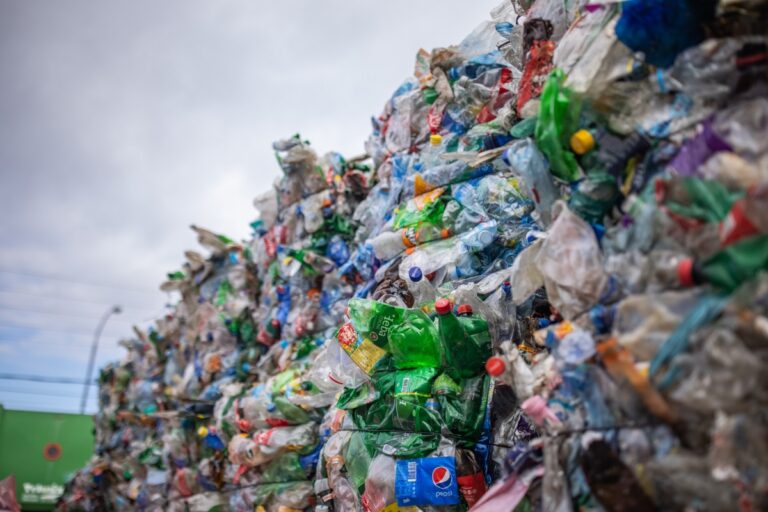
MacroCycle’s approach replaces the thermal methods used in conventional plastic recycling with a solvent-based process. Conventional plastic recycling relies on heat to break down polymer chains. This thermal approach consumes substantial energy and degrades the quality of recovered material, limiting its use to lower-value applications. MacroCycle instead dissolves polyethylene terephthalate (PET) from various waste sources and uses solvents to wash away contaminants, purifying the polymers through chemistry rather than heat.
Creating Polymers That Rival Virgin Plastic
The solvent process enables polymer chains to self-assemble into ring-shaped structures called macrocycles, the concept behind the company’s name. These rings can be opened and recombined into new plastic material. Critically, the resulting recycled plastic has properties matching virgin polymer, eliminating the performance gaps that restrict most recycled plastics to lower-value applications. Most recycled plastics display inferior strength, clarity, or durability compared to freshly produced material, limiting their use in demanding manufacturing applications. MacroCycle’s solvent chemistry overcomes this barrier, delivering recycled material suitable for any application using virgin plastic.
The technology generates 80 percent fewer carbon emissions than producing new, non-recycled virgin PET plastic. The solvent-based approach also reduces energy consumption compared to heat-dependent recycling, lowering both operational costs and carbon output. These combined advantages—superior material quality alongside lower production costs and emissions—create competitive advantages in supply chains where recycled content is valued but performance cannot be compromised.
Targeting the Global Textile Waste Crisis
MacroCycle’s process can handle multiple waste streams, but textile waste represents the most significant commercial opportunity. Textiles rank among the most resistant materials to recycle globally. Currently only 0.5 percent of textile waste enters recycling systems despite the volume of textiles disposed annually. Technical complexity hampers recycling efforts. Textile fibers are often blended with incompatible materials and dyes that complicate recovery. Economic factors compound these technical challenges. Overseas manufacturing with low labor costs has made it cheaper to produce new textiles than to recycle used ones, disincentivizing development of recycling infrastructure.
Low Recycling Rates and U.S. Manufacturing Decline
The United States textile manufacturing sector has contracted dramatically. Employment in the domestic textile industry has declined 85 percent over the past 25 years as production shifted to countries with substantially lower labor costs. This decline hollowed out entire regional manufacturing economies that once centered on textile production. Revitalizing domestic textile manufacturing requires access to raw materials priced competitively with overseas alternatives. If MacroCycle can produce recycled textile fibers at costs matching imported material, it creates the economic conditions necessary for manufacturing to return domestically. Success would provide both environmental benefits and restore domestic supply of a strategic industrial material.
How Environmental Credits Fund the Factory
Under the agreement, Meta will purchase environmental attribute credits representing avoided carbon emissions generated by MacroCycle’s recycling operations. EACs are certificates that represent verified, quantifiable reductions in greenhouse gas emissions. They allow companies to claim progress toward climate targets by funding emission reductions elsewhere. This allows Meta to count MacroCycle’s emission reductions toward its own carbon reduction targets. Meta’s climate targets have come under increasing pressure as artificial intelligence operations consume growing amounts of electricity. Running large language models and AI systems generates substantial computational demand and corresponding energy consumption.
Meta’s First Materials Company Carbon Purchase
Meta confirmed this is the company’s first purchase of such credits from a recycled materials supplier, distinguishing this arrangement from Meta’s other environmental initiatives. The arrangement reflects Meta’s carbon strategy. Rather than reducing emissions from its own operations, the company purchases credits representing reductions achieved by other entities. Meta uses plastics extensively throughout its supply chain for hardware packaging and components. By supporting development of lower-carbon plastic alternatives, Meta aims to shift its supply chain toward more sustainable materials as recycled plastic becomes available and price-competitive. The carbon credit revenue provides MacroCycle with capital for constructing its initial facility while the startup pursues additional buyer agreements for the material its production will generate.
Scaling from Thousands to Tens of Thousands
MacroCycle’s demonstration plant will process 5,000 metric tons of recycled plastic annually once it comes online. The company has designed future plants capable of producing 50,000 metric tons per year, representing a tenfold increase in production capacity. Co-founder and Chief Executive Stewart Peña Feliz indicated that Meta’s partnership should strengthen negotiations with other potential customers seeking to purchase recycled material. The startup is actively recruiting additional corporate buyers for material that its first plant will produce. Meta’s commitment functions as market validation, demonstrating that major corporations recognize commercial value in the recycled material and are willing to make long-term commitments. Peña Feliz stated that subsequent agreements with other companies should follow more readily once the Meta arrangement is public.
This breaks the chicken-and-egg problem that plagues many circular economy startups. Manufacturers hesitate to order recycled materials without guaranteed demand from end users. Potential corporate buyers simultaneously won’t commit to purchase agreements without supply assurances from manufacturers. Meta’s willingness to commit capital breaks this deadlock and creates momentum for additional agreements with other corporations.
A New Financing Model for Climate Startups
MacroCycle’s model of simultaneously selling recycled plastic and environmental credits diversifies revenue while enabling the company to fund capital-intensive manufacturing capacity. Traditional recycling startups have struggled to finance factory construction through venture capital alone. Building physical manufacturing facilities requires substantial upfront capital investment, high debt service, and extended payback periods. By selling environmental credits alongside physical material, MacroCycle creates multiple revenue streams that together support capital expansion while the physical recycling business matures. If this model succeeds at scale, it could reshape how circular economy companies finance growth, replacing or supplementing traditional venture funding with corporate sustainability partnerships.
The Meta deal also reflects a broader shift in corporate climate strategy. As large companies pursue climate targets through purchasing certified low-carbon materials and environmental credits, startups delivering measurable emission reductions gain access to willing buyers prepared to pay premiums for certified low-carbon inputs. This creates new business opportunities for materials science and recycling companies that can demonstrate both quality equivalent to virgin material and verifiable environmental benefits.
Frequently Asked Questions
What technology does MacroCycle use to recycle plastic?
MacroCycle uses solvents to dissolve and purify plastic waste, allowing polymers to self-assemble into ring-shaped structures called macrocycles. Once opened, these polymers can be recombined into new plastic that is chemically identical to virgin material while generating 80 percent lower emissions than producing new PET.
Why does Meta's deal with MacroCycle matter for the company?
This is Meta's first purchase of environmental attribute credits from a recycled materials supplier. The carbon credit payments provide MacroCycle with funding to build its first commercial plant while allowing Meta to count emission reductions toward its own climate targets as artificial intelligence operations consume growing energy.
How could MacroCycle's technology impact textile manufacturing?
Textiles currently have only a 0.5 percent recycling rate. If MacroCycle can produce recycled textile fibers at costs competitive with overseas suppliers, it could revive domestic U.S. textile manufacturing, which has declined 85 percent in employment over the past 25 years.
