
Key takeaways
- AI agents are moving from theoretical research to operational deployment challenges, with security emerging as a central concern for startups building agent-based products.
- Enterprise software business models are facing disruption as AI adoption forces startups to rethink SaaS economics and customer value propositions.
- AI infrastructure scaling, particularly data storage, computation efficiency, and secure agent deployment, is becoming a primary cost driver and limiting factor for startup growth.
- The startup ecosystem has shifted from debating whether AI will matter to focused discussion on how to deploy it responsibly, scale it economically, and capture value within existing business structures.
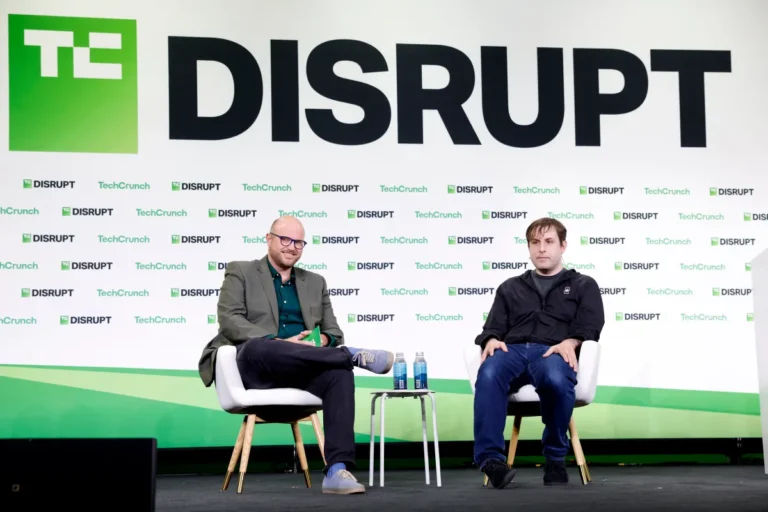
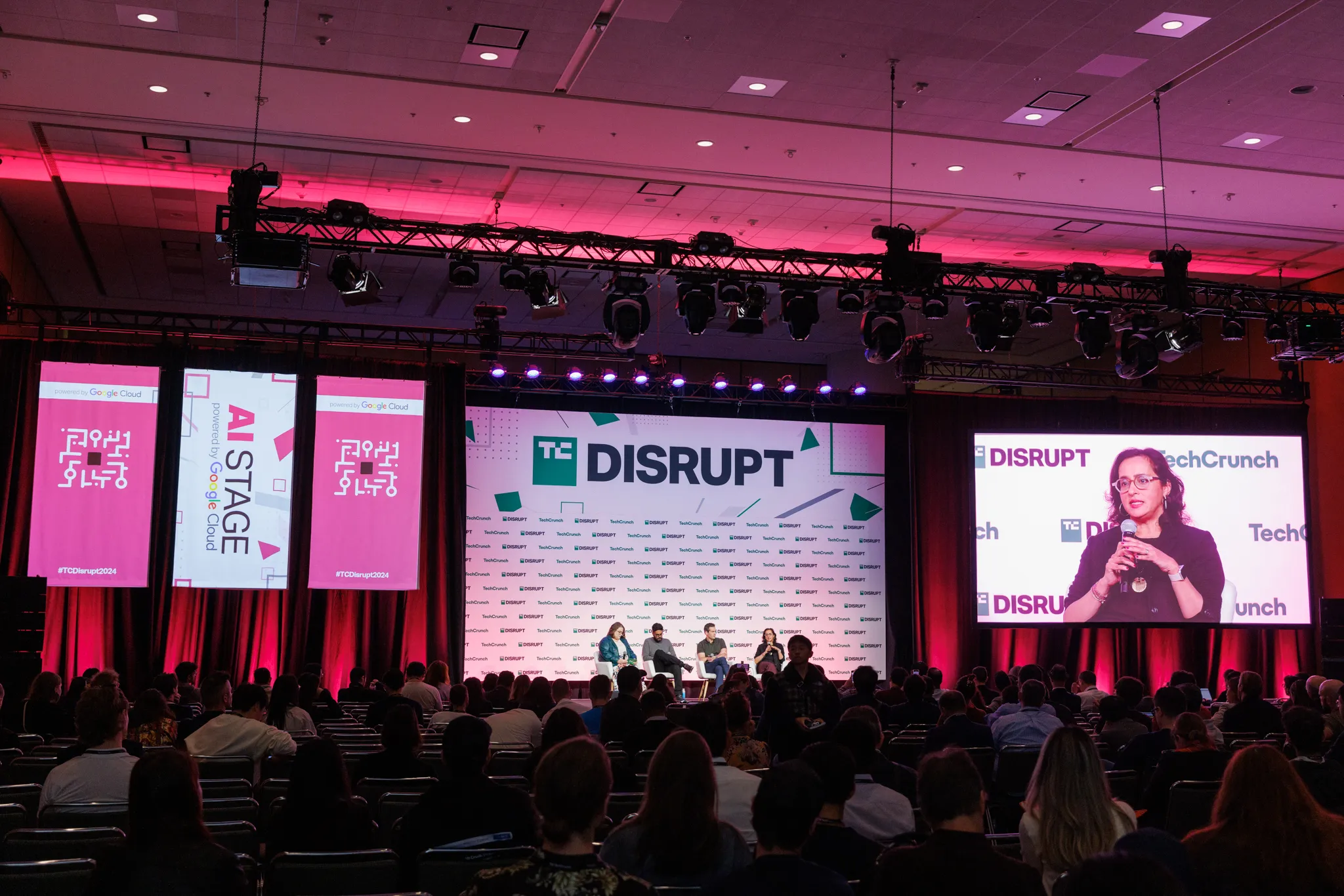
AI agents and practical deployment challenges dominated the final day of TechCrunch Disrupt 2026, as the three-day conference in San Francisco wrapped with 10,000+ founders, investors, and technology leaders discussing how the startup ecosystem is moving beyond AI hype into real-world execution problems.
The event, held at Moscone West, highlighted a clear shift in startup priorities: rather than debating whether AI will change business, founders are now grappling with how to deploy agents safely, scale infrastructure reliably, and actually make AI work within existing enterprise systems.
AI Agents Move From Theory to Operations
The most prevalent theme across sessions on the final day was the challenge of getting AI agents to work reliably in production environments. Multiple sessions tackled specific operational hurdles that founders face when moving from prototype to deployment.
Security Emerges as Central Concern
A session titled “The Agent Security Problem Nobody Is Talking About” featured speakers including Gavriel Cohen from NanoCo and Ric Smith from Okta, suggesting that while agent technology has progressed rapidly, the security implications remain underexamined. Related sessions explored technical aspects of agent vulnerability, including “Proxy, Host, Operator: Who Can Read Your Agent’s Prompts?”, which examined whether agent instructions can be exposed or manipulated during execution.
Execution Challenges in Physical AI
Beyond software agents, sessions addressed execution challenges in physical AI systems. “Physical AI Isn’t a Model Problem. It’s an Execution Problem,” featuring speakers from Venrock, Archetype AI, and Cantos, suggested that building AI systems that function in real-world environments requires solving problems well beyond improving machine learning models. This indicated that the bottleneck in physical AI is now operational deployment rather than algorithm development.
Building Practical AI Products
“Build an AI Product in the Age of Agents (Certification Included)” offered practical guidance for builders, signaling that attendees are now focused on concrete product development frameworks rather than theoretical applications of AI technology.
Enterprise Adoption Is Rewriting Business Models
A significant portion of Day 3 sessions addressed how AI adoption is fundamentally changing existing business models, particularly in software-as-a-service companies.
SaaS Economics Under Pressure
The session “Rewriting SaaS: Why AI Breaks the Old Business Model” featured investors Cathy Gao from Sapphire Ventures and Aaron Jacobson from NEA, alongside Barr Moses, suggesting that venture capitalists are actively rethinking how to value and structure software companies in an AI-driven market. The implication is that subscription-based SaaS models may not survive unchanged as AI automation reduces customer friction and changes pricing dynamics.
Enterprise Resistance to AI-Native Architecture
A counterpoint session, “AI-Native Won’t Work for the Enterprise,” featured Naren Krishna from Balerion and Travis Skelly from Pruven Capital, indicating that while some startups are betting on AI-first architecture, investors are cautious about approaches that completely abandon enterprise software conventions. This suggests a bifurcated market where AI startups targeting enterprises must respect legacy constraints even as AI-native startups target new use cases.
Real Value From AI Adoption
“Model Behavior: How Top Startups Get Real Value From AI Adoption” featured speakers from Clay, Anthropic, and Gamma, indicating focus on what measurable outcomes AI implementation actually delivers rather than just technology novelty.
Infrastructure Scaling Becomes Critical
Multiple sessions addressed the challenge of scaling AI infrastructure economically and reliably, a theme that has grown more urgent as AI workloads expand. “The $63 Billion Case for Storagemaxxing Your AI Stack” brought together speakers from storage and infrastructure companies including Vultr, L2 Point Management, Wasabi Technologies, and HyperFRAME Research, indicating that data storage and retrieval is becoming a primary cost driver in AI systems. “From Silicon to Software: Building Efficient AI Inference at Scale,” featuring AMD and Tensormesh, addressed optimization of computation itself, while “Sandboxes are Dead, Give Your Agent a Private Cloud,” presented by Insight Partners and E2B, suggested that isolated testing environments are giving way to private cloud deployments for agent workloads.
Startup Growth Priorities in the AI Era
Sessions on startup growth and fundraising reflected how founders are adapting their strategies to an AI-saturated market. “The First 90 Days: How Startups Build Toward $10M ARR” featured founders and investors discussing how quickly AI startups can reach meaningful revenue, while “Winning Pre-Seed Without a Product” suggested that some founders are still raising capital on team and market thesis alone, particularly in AI.
“M&A Is Now an Early-Stage Strategy” indicated that acquisition has become a legitimate exit path even for pre-revenue startups, possibly as larger companies consolidate AI talent and capabilities. “How Not to Ruin Your Co-Founder Relationship” addressed interpersonal challenges in founding teams, acknowledging that startup success depends not just on technology but on founder stability.
Broader Ecosystem Conversations
Beyond the technical and business-focused sessions, final-day programming included conversations on autonomous systems, talent acquisition in the AI era, and how traditional software companies are adapting. “Autonomous Intelligence: Investing in the Companies Redefining Work” and “The Next Logistics Stack: Autonomy, Infrastructure and National Resilience” suggested investor interest in autonomous systems beyond large-scale robotics. “Talent as the Operating System: How High-Performance Teams Scale in the AI Era,” featuring Nomi Khedawala from Reddit, indicated that attracting and retaining AI talent remains a central challenge for growth-stage startups.
Sessions like “Everyone Can Build Software Now. What Happens Next?” featuring Amjad Masad from Replit, and “The GTM Engineer: How AI Created Tech’s Next Big Job Category” (with speakers from Clay) suggested that AI is creating new job categories and that no-code/low-code tools are becoming mainstream, requiring startups to think about how they compete when the barrier to building software is collapsing.
Event Scale and Participation
Disrupt 2026 brought together 10,000+ participants across 6 industry stages, with 320+ exhibiting startups showcasing technologies and securing investor meetings. The event featured a Pitch Showcase Stage with rapid-fire, one-minute presentations from emerging startups, structured networking using badge-based contact exchange technology, and an AI-powered matchmaking system connecting founders and investors.
Participants included speakers from major platforms and infrastructure companies (NVIDIA, AWS, Anthropic, Replit, Hostinger, and Bluesky) alongside venture capital firms focused on startups at various stages, from pre-seed through late-stage growth.
The final day of Disrupt 2026 made clear that the startup ecosystem has moved decisively past the question of whether AI will matter and is now locked in debate over how to deploy it responsibly, scale it economically, and capture value from it within existing business models.
Source: TechCrunch
Frequently Asked Questions
What was the main topic discussed at TechCrunch Disrupt 2026's final day?
AI agents and their practical deployment challenges dominated final-day sessions. Startups were grappling with how to deploy agents safely, scale infrastructure reliably, and make AI work within existing enterprise systems, according to TechCrunch's event programming.
How is AI adoption affecting traditional SaaS business models?
Sessions like 'Rewriting SaaS: Why AI Breaks the Old Business Model' featured investors discussing how subscription-based SaaS models may not survive unchanged as AI automation reduces customer friction and alters pricing dynamics.
What practical challenges emerged around infrastructure and scaling?
Multiple sessions highlighted that data storage and retrieval is becoming a primary cost driver, with talks addressing optimization of computation, private cloud deployments for agents, and efficient AI inference at scale. Storage was described as a $63 billion opportunity for AI infrastructure.
