
Key takeaways
- Etched completed its $500 million Series B funding round in December 2024, achieving a $5 billion post-money valuation and bringing total capital raised to nearly $1 billion.
- Selby’s two venture funds represent a deliberate pivot away from Silicon Valley’s traditional dominance in startup investing.
- Etched’s latest funding round attracted an exceptional roster of AI researchers and industry pioneers, signaling strong technical validation for the company’s specialized transformer ASIC approach.
- Selby’s success in backing Etched and raising $300 million for his second fund reflects broader industry trends toward geographic diversification in venture capital allocation.
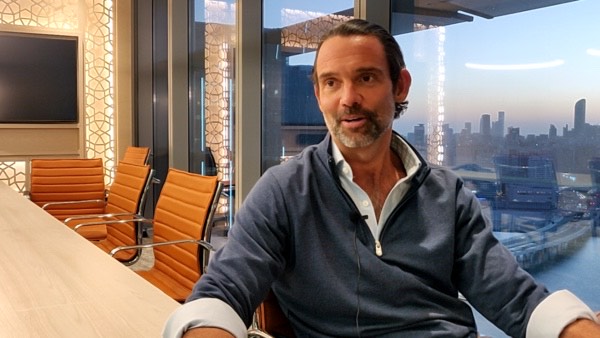
Jack Selby, a former PayPal executive and Managing Director at Thiel Capital, has positioned himself at the center of a major shift in Venture Capital allocation, securing stakes in AI chip Startup Etched as it reaches a $5 billion valuation following a $500 million funding round in December 2024. Selby’s strategy leverages his two Arizona-focused venture funds—the $110 million AZ-VC and the $300 million Copper Sky (AZ-VC II)—to identify and back breakthrough startups outside traditional coastal tech hubs. The moves underscore growing investor confidence in non-Silicon Valley innovation centers and signal a potential recalibration of venture capital away from concentrated geographic markets.
Etched Emerges as Nvidia Challenger With Heavyweight Backing
Etched completed its $500 million Series B funding round in December 2024, achieving a $5 billion post-money valuation and bringing total capital raised to nearly $1 billion. The round was led by Stripes and included participation from Peter Thiel, Positive Sum, and Ribbit Capital, positioning the AI chip startup as a formidable competitor to Nvidia in the specialized semiconductor market. Founded in 2022 by Harvard dropouts Gavin Uberti and Chris Zhu alongside Robert Wachen, Etched has developed its Sohu chips—purpose-built ASICs optimized specifically for transformer-based AI models.
The company has already secured $1 billion in contract orders for full systems powered by these chips, with manufacturing support from TSMC. Etched successfully manufactured its chip earlier in 2026 and is currently testing its first product with customers, validating market demand for alternatives to Nvidia’s dominant GPU architecture. This sales milestone, combined with the company’s total funding of $800 million, demonstrates investor conviction in Etched’s technical approach and market opportunity.
Selby’s Arizona-First Thesis Challenges Coastal Venture Capital Concentration
Selby’s two venture funds represent a deliberate pivot away from Silicon Valley’s traditional dominance in startup investing. The $110 million AZ-VC, launched in 2022, was backed by Arizona real-estate firms and a major local utility company—notably excluding Peter Thiel and Thiel Capital’s institutional backers. This separation underscores Selby’s independent thesis that significant innovation opportunities exist outside California and New York, a conviction he has doubled down on with his $300 million Copper Sky fund focused on non-coastal startups.
Selby’s geographic arbitrage strategy addresses what he identifies as systematic mispricing of risk in emerging tech hubs. In April 2026, Selby warned that markets are underpricing the risk of sovereign wealth fund withdrawals from the AI sector, stating: “A possible withdrawal by sovereign wealth funds from the Middle East could result in the loss of hundreds of billions of dollars from the artificial intelligence (AI) sector and jeopardize significant data center initiatives.” This analysis informed Copper Sky’s focus on diversified tech regions less dependent on Middle Eastern capital flows, positioning the fund to benefit from potential market dislocations.
Angel Investors Validate Etched’s Technical Leadership
Etched’s latest funding round attracted an exceptional roster of AI researchers and industry pioneers, signaling strong technical validation for the company’s specialized transformer ASIC approach. Angel investors included Andrej Karpathy, Geoffrey Hinton, Fei-Fei Li, Arthur Mensch, and Scott Wu—collectively representing decades of AI research leadership and credibility. Their participation alongside institutional investors VentureTech Alliance, Jane Street, Hudson River Trading, and Two Sigma reinforced market confidence in Etched’s ability to execute on its ambitious roadmap.
Peter Thiel’s personal investment in Etched carries particular significance given his broader portfolio repositioning. In late 2025, Thiel sold his entire Nvidia position—worth approximately $100 million—and reduced his Tesla stake amid concerns of an “AI bubble.” Simultaneously, he increased investments in Apple and Microsoft for 2026. His decision to personally back Etched despite divesting from Nvidia suggests Thiel views specialized AI chips as a superior long-term bet compared to broad-based semiconductor exposure, validating Selby’s thesis that focused innovation can outperform commoditized alternatives.
Venture Capital’s Geographic Diversification Accelerates
Selby’s success in backing Etched and raising $300 million for his second fund reflects broader industry trends toward geographic diversification in venture capital allocation. The concentration of startup funding in San Francisco and New York has created valuation arbitrage opportunities and allowed talented entrepreneurs in secondary markets to access capital more efficiently. Selby’s Arizona-based network and decade-plus residency in the state provided him with deal flow and local relationships that coastal venture firms overlooked.
This shift carries implications for how venture capital deploys capital across U.S. regions. Funds explicitly targeting non-coastal innovation hubs can build competitive advantages through deeper regional networks, lower operational costs, and earlier entry into emerging clusters. Selby’s ability to identify and back Etched—a company that could reshape the AI chip market—demonstrates that breakthrough startups no longer require coastal geography to attract top talent and achieve global scale.
What to Watch: Etched’s Manufacturing Scale and Fund Performance
Investors should monitor Etched’s ability to scale production beyond its initial customer validation phase, with particular focus on TSMC partnership execution and customer adoption timelines. The company’s success in converting its $1 billion in contract orders into actual revenue will determine whether its specialized chip approach gains sustainable market share against Nvidia’s entrenched position. Additionally, Copper Sky’s deployment of its $300 million will test whether Selby’s geographic thesis generates returns competitive with coastal venture funds.
Selby’s investments and fund strategy represent a meaningful test case for whether venture capital’s geographic concentration represents a market inefficiency or a rational response to startup ecosystem clustering. Success by Etched and other AZ-VC portfolio companies would validate that breakthrough technology companies can emerge from non-coastal regions, potentially triggering broader capital reallocation toward secondary tech hubs across the United States.
