
Key takeaways
- Vijay Pande left a16z to start VZVC with Zach Werner, shifting from roughly 30 annual investments to 5 highly concentrated bets per year.
- AI can improve drug discovery and precision medicine but cannot overcome biological data's fundamental constraint—it can't be scraped from the internet like text.
- Pande learned that go-to-market is as hard as or harder than technology itself, a lesson he now emphasizes to founders from science backgrounds.
- Open-source foundation models in biology may outperform proprietary versions, following the pattern of open-source large language models.
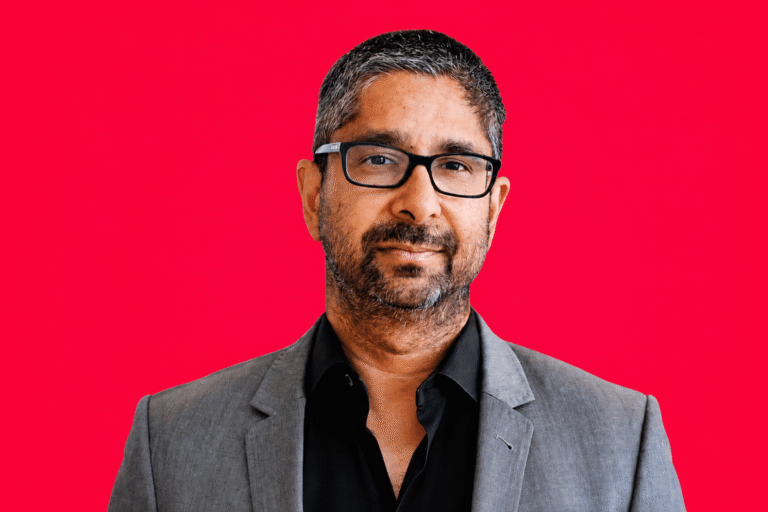
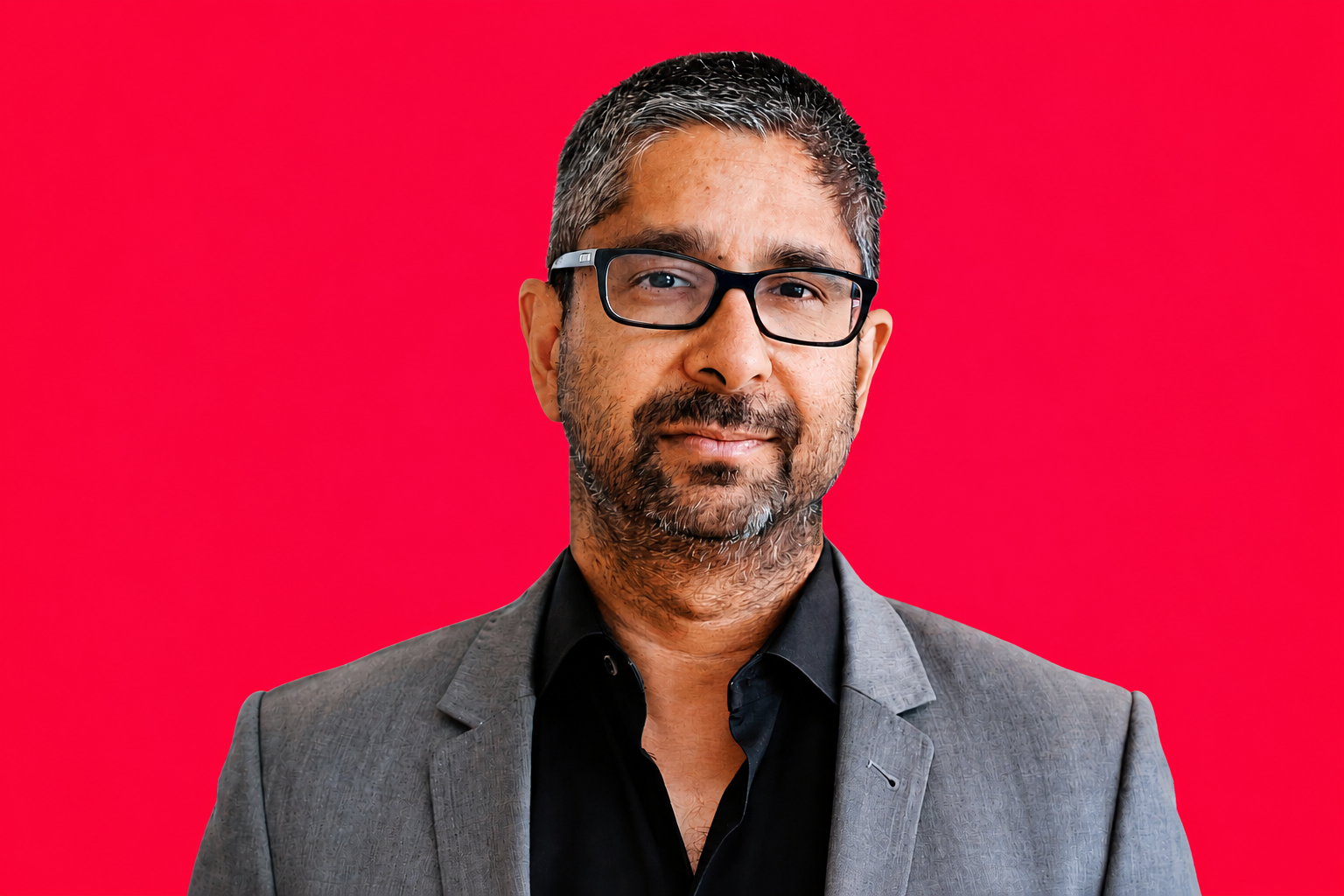
Vijay Pande walked away from a16z in June 2025, where he had built a healthcare and life sciences practice managing close to $4 billion. His new venture, VZVC, is structured entirely differently: instead of dozens of annual investments, the firm makes about five highly concentrated bets per year.
The architect of a16z’s biotech bet
Pande wasn’t initially known in venture circles. Before his pivot to investing, he was a Stanford chemistry professor best known for building Folding@home, a distributed-computing project that repurposed millions of home PCs into a supercomputer for disease research. Marc Andreessen and Ben Horowitz, who had spent a16z’s first five years deliberately avoiding healthcare and life sciences, recruited Pande after deciding the category warranted serious attention. He led that practice for more than a decade, transforming a16z’s early skepticism into one of the firm’s largest concentrated bets.
VZVC’s radically different model
The numbers
At VZVC, Pande operates with far fewer moving parts. He and co-founder Zach Werner—whose initials form the firm’s name—manage the investment side alone. They originally planned to hire associates but found they didn’t need to, relying instead on AI agents to handle day-to-day operations. The most striking difference from his a16z days: roughly five investments per year versus the thirty annual bets he used to make.
Why fewer is better
Pande describes the shift in blunt terms. Adding a company to a typical venture fund is “like adding a Facebook friend—something you do pretty quickly.” At VZVC, accepting a new investment feels “more like wanting to have another child.” The compressed portfolio allows for deeper engagement with founders, with Pande explicitly expecting relationships that span five, ten, or more years and ideally continue into the founder’s next company.
Deal competition
The model doesn’t put Pande at a disadvantage when competing for founders. He and Werner don’t chase hot rounds in the traditional sense. Instead, founders make room for them because of the hands-on involvement both can offer. His inspirations include Antonio Gracias, who built Valor over twenty years (now known partly through the SpaceX investment) and Thrive, which operates with a more concentrated portfolio than typical venture firms.
The promise and limits of AI in drug discovery
What changed in drug development
Pande sees AI and machine learning as fundamentally reshaping how drugs get discovered and developed. The technology now helps identify drug targets for specific diseases, enables the actual manufacturing of those drugs, and can even assist in clinical trials—the most expensive stage of the entire process. The shift, he argues, represents biology moving from a “science of discovery” to something engineerable.
Why clinical trials still cost hundreds of millions
Despite AI’s advances, the economic reality of drug development hasn’t shifted as dramatically as the technology has. Costs to reach the clinical trial stage have shrunk with AI’s help, but running a trial still costs hundreds of millions of dollars. The reason drugs remain expensive is partly rooted in failure rates: only 20 percent of drugs successfully progress from the first trial through the third. When eight out of ten fail, each costing hundreds of millions, the amortized cost per successful drug climbs sharply. Most failures don’t result from bad biology; rather, the experiments drugs were designed on relied on animal models like mice, which poorly predict human outcomes. AI models can’t be perfect, but they outperform animal models significantly—and crossing that threshold is where the real opportunity emerges.
Precision medicine as the next frontier
Beyond better drug discovery sits a second wave: identifying which drug is right for which patient. The current medical practice relies on educated guesses. Doctors test a drug; if it fails, they try another, then another. Blood test results get compared to population averages rather than to what’s normal for the individual. Pande sees AI enabling “precision medicine” that understands what would be right for each person specifically.
Biological data as the real constraint
Unlike text, biological data can’t be harvested from the internet. Nearly every biotech company ends up building its own walled-off dataset, creating a fundamental difference from AI domains that benefit from massive open datasets. Pande acknowledges this is “a really interesting play from just the pure AI sense” but also flags the real challenge: when data simply isn’t available, AI cannot magically solve the problem, regardless of how sophisticated the model.
He draws a parallel to a persistent problem in medicine itself—doctors operating in territorial silos without coordinating across specialties. A patient with cancer affecting both oncology and endocrinology might see two specialists who don’t sync well. AI, in theory, could serve as a specialist in everything, synthesizing insights no single human could reach. But realizing that vision requires data sharing, which remains constrained by competitive and protective instincts across researchers and founders.
One potential path forward: the industry is beginning to build “atlases of biological information,” typically structured as foundation models. As these become more common, Pande expects the same pattern that emerged with open-source large language models—open-source foundation models in biology may outcompete proprietary versions, similar to how open-source LLMs have performed strongly against corporate alternatives.
Where Pande is placing his bets
His two primary focus areas are AI for healthcare delivery—work he spent significant time on at a16z—and AI for clinical trials. Among his visible investments are Genesis Therapeutics, which emerged from his Stanford lab, and Insitro, the drug-discovery company founded by Daphne Koller, a former Stanford colleague. He’s also incubating a company with a founder he’s known for twenty years.
When evaluating founders, Pande emphasizes integrity and long-term thinking. He’s searching for founders who “do what they say they’re gonna do” and who approach collaboration as “how do we win together?” rather than viewing business as zero-sum competition.
Lessons from a decade-plus in biotech venture
Early in his career, when Pande began discussing AI, machine learning, and their application to medicine and biology more than ten years ago, significant skepticism met his claims—many said such work “would never happen” or prove useful. That resistance has largely dissolved, and he finds that arc fulfilling.
One hard-won realization: regardless of how seductive the underlying technology, success hinges on go-to-market. Founders coming from science or product backgrounds often underestimate this dimension, treating it as secondary to technical innovation. Pande emphasizes to his founders that go-to-market is “at least as hard or harder than the technology side” and deserves equally rigorous attention and creativity.
Frequently Asked Questions
Why did Vijay Pande leave a16z?
Pande wanted to operate a smaller, more focused fund. After managing close to $4 billion at a16z, he co-founded VZVC with Zach Werner to make roughly 5 concentrated investments yearly rather than dozens, allowing for deeper engagement with founders.
What is the main challenge AI faces in biotech?
Unlike text data, biological data cannot be scraped from the internet, so nearly every biotech company builds its own walled-off dataset. This means AI cannot benefit from the massive shared datasets that enable large language models to work effectively.
What are Vijay Pande's two primary investment focus areas?
Pande focuses on AI for healthcare delivery and AI for clinical trials. Among his visible investments are Genesis Therapeutics, which emerged from his Stanford lab, and Insitro, founded by former Stanford colleague Daphne Koller.
