
Key takeaways
- SpaceX confirmed it is building a turbine foundry in Bastrop, Texas, to cast blades and vanes, claiming the move could accelerate natural gas deployment to power AI data centers by up to 18 months.
- Only four companies worldwide can manufacture turbine blades at industrial scale, and GE Vernova is sold out through 2030, making turbine casting a critical bottleneck for AI infrastructure expansion.
- A Virginia study found that eight gas turbines at a single facility could cause 3.4 to 6.5 additional premature deaths per year and $53 to $99 million in annual health costs, impacting over 2.5 million people.
- If SpaceX succeeds, it would control manufacturing capabilities that every other AI infrastructure builder currently depends on a tiny oligopoly for, while accelerating pollution impacts on marginalized communities.
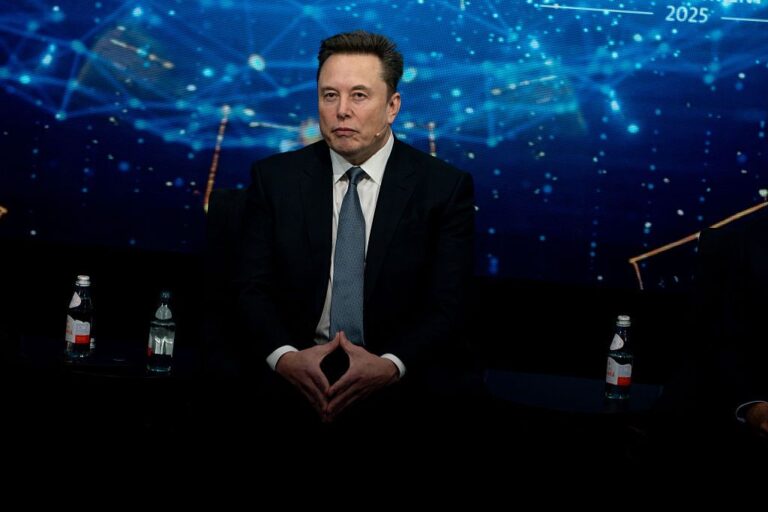
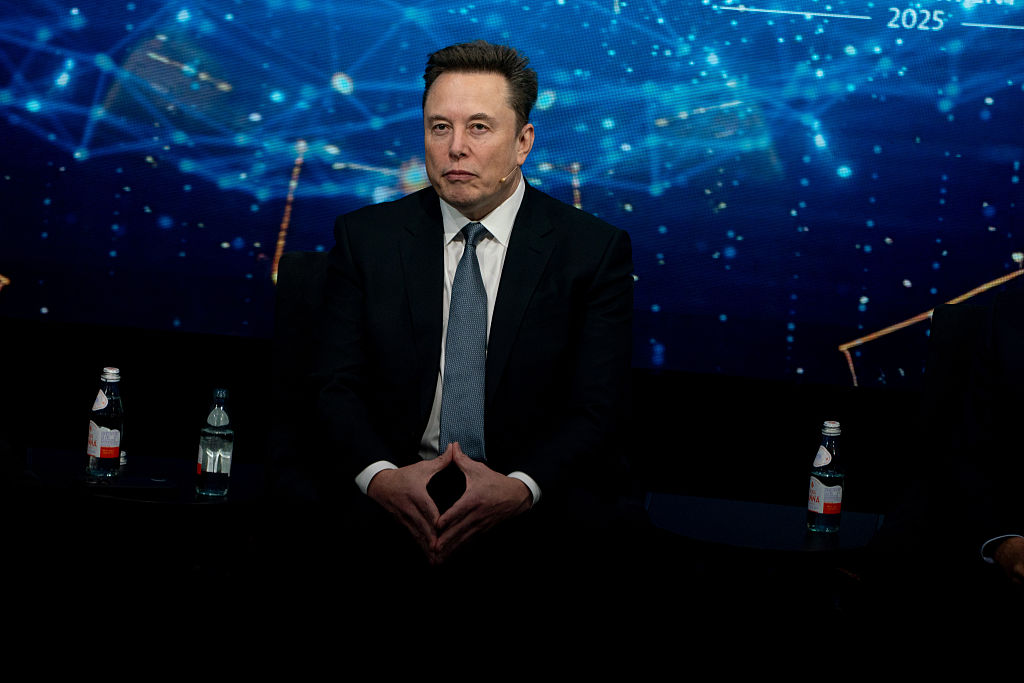
On Saturday, Elon Musk confirmed what investigative reporting had already begun to reveal: SpaceX is building a facility in Bastrop, Texas specifically to cast turbine blades and vanes. The Information had published details earlier that day citing job postings mentioning the “blades and vanes foundry,” along with findings from due diligence specialist Corey Trinetti, who reported that SpaceX purchased roughly 830 acres near its existing Starlink factory between March and June. Musk’s confirmation came via a post on X, where he framed the move as a solution to one of the AI industry’s most pressing infrastructure problems.
The Turbine Casting Bottleneck
SpaceX’s In-House Solution
Musk wrote that SpaceX and Tesla are each building 100 gigawatts per year of solar production capacity, “but natural gas will still be needed to supplement and bootstrap solar for several years.” The constraint, he explained, is manufacturing the turbine components themselves. “By doing in-house casting at SpaceX, we can accelerate nat gas turbines coming online by up to 18 months, which is a profound game-changer,” he posted. That claimed acceleration hinges on SpaceX solving a manufacturing puzzle that only four companies worldwide have mastered at industrial scale.
The Technical Challenge
Gas turbine blades are manufactured under conditions so extreme that they require material properties that seem physically impossible. The blades in a turbine’s hottest section operate at temperatures between 3,000 and 3,600 degrees Fahrenheit—roughly 800 degrees hotter than the melting point of the nickel-based superalloy they are made from. This is possible only because each blade contains internal cooling channels and thermal-barrier coatings that protect the metal from its own heat. More crucially, each blade must be cast as a single, unbroken crystal, grown slowly inside a vacuum furnace without any microscopic seams that would cause the metal to crack under stress. Even the smaller blades used in jet engines present challenges; the considerably larger blades required for power-plant turbines compound the difficulty significantly.
AI’s Sudden Dependence on Natural Gas
From Semiconductor Shortage to Power Crisis
The AI industry’s sudden dependence on natural gas reflects a shift in infrastructure priorities. For years, the bottleneck appeared to be semiconductor supply—Nvidia’s newest Blackwell chips still run lead times of several months—but the physical power grid has emerged as an equally critical constraint. The International Energy Agency projects that global data center electricity consumption will roughly double by 2030. Gas turbine manufacturer GE Vernova has announced it is essentially sold out of production capacity through 2030, a shortage driven largely by demand from AI infrastructure builders.
A Four-Company Oligopoly
This power shortage has transformed how the largest tech companies build infrastructure. Amazon, Google, Meta, OpenAI, and Microsoft have all shifted strategy: rather than waiting for grid capacity or relying on renewable energy that takes years to deploy, they are now building private gas-fired plants next to their data centers. This represents a reversal of years spent prioritizing wind and solar projects in response to climate commitments. The reason natural gas deployment has become a bottleneck is not the turbines themselves but their manufacture. Only four companies worldwide have developed the expertise to cast turbine blades at industrial scale, and all are operating at maximum capacity. The process requires precision manufacturing capabilities that take years to develop and cannot be quickly replicated.
SpaceX’s Manufacturing Gambit
If SpaceX successfully brings the foundry into production, it would hold a manufacturing capability that currently depends on a tiny oligopoly of suppliers. Every hyperscaler building private data centers would potentially depend on SpaceX for access to turbine components or the technical capability to produce them at scale. That represents a form of industrial leverage that is difficult for even well-funded but non-manufacturing competitors to replicate. The foundry would not just solve SpaceX’s own power constraints; it could reshape the competitive dynamics of AI infrastructure deployment itself.
The difficulty of the undertaking cannot be overstated. The four companies that currently dominate turbine blade casting have spent decades perfecting the process. Only the most advanced foundries can handle the precision required to grow single crystals without defects. But if Musk succeeds, the payoff is substantial: control over a critical chokepoint in the deployment of the infrastructure the AI industry is betting its growth on.
Pollution and Health Concerns Rise With Faster Deployment
Memphis: Turbines Operating Without Permits
In Memphis, where SpaceX has run gas turbines to power its Colossus data centers since 2024, the NAACP has repeatedly accused the company of operating turbines without the federal permits or pollution controls required by law. The turbines emit smog-forming compounds and hazardous chemicals such as formaldehyde, pollutants that are linked to asthma, respiratory disease, and certain cancers. The data center is located near neighborhoods already burdened by heavy industrial pollution. A limited analysis by University of Memphis researchers found that air pollution grew “slightly worse” because of the data center, suggesting that the operational impact is measurable even in early assessment.
Virginia Study: Measuring the Health Cost
The Memphis situation is not isolated. A study commissioned by the Piedmont Environmental Council in Virginia’s “Data Center Alley” examined the health impact of just one facility’s eight full-time gas turbines. Using the EPA’s own COBRA health-impact model, researchers found that the emissions could reach more than 2.5 million people across multiple counties. The study estimated that these turbines alone could cause between 3.4 and 6.5 additional premature deaths per year, translating to between $53 million and $99 million in annual health-related damages.
Marginalized Communities Face the Greatest Burden
The heaviest pollution impacts fall on already-marginalized communities. Communities near industrial zones often lack the political power to resist additional polluting facilities, and their residents already face elevated exposure to environmental hazards. The epidemiological consequence—additional premature deaths measured in the low single digits for one facility—would compound across multiple data centers and multiple communities if turbine deployment accelerates at the pace Musk suggests. If SpaceX’s foundry succeeds in dramatically increasing the availability of turbine components, the scale of pollution exposure in areas already bearing disproportionate industrial burdens could grow substantially.
Frequently Asked Questions
What is SpaceX building in Bastrop, Texas?
SpaceX is building a foundry specifically designed to cast turbine blades and vanes—components used in natural gas power plants. Musk claims the in-house casting capability can accelerate turbine production by up to 18 months.
Why does turbine blade manufacturing matter for AI data centers?
Gas turbines are becoming the primary power source for AI data centers as semiconductor supply loosens but electrical grid capacity remains constrained. Only four companies worldwide can cast turbine blades at scale, and all are sold out through 2030 due to AI infrastructure demand.
What health risks come with accelerating turbine deployment?
A Piedmont Environmental Council study found that eight gas turbines at one facility could cause 3.4 to 6.5 additional premature deaths annually, impacting over 2.5 million people across multiple counties. The turbines emit formaldehyde and other pollutants linked to asthma, respiratory disease, and cancers.
