
Key takeaways
- Atomic raised $12.5M in Series A funding, bringing total capital to just over $15M, founded by ex-Tesla engineers who built the initial system during Tesla's 2018 Model 3 production crisis.
- The platform evolved from providing recommendations to executing autonomous purchasing decisions, with DoorDash now running 90% of its purchasing across hundreds of locations through the system.
- Atomic's AI adapts across industries including food delivery, consumer packaged goods, and manufacturing by inferring decision rules from historical behavior without explicit documentation.
- The company addresses a structural gap where finance data gets priority investment while supply chain and operations data remain fragmented across disconnected tools.
Atomic, a Boston-based supply chain automation startup, announced a $12.5 million Series A funding round led by growth equity firm Klass Capital and Seattle venture capital firm Madrona Venture Group. The capital brings the company’s total funding to just over $15 million since launch. The startup builds AI systems that make autonomous purchasing and inventory decisions, simulating scenarios to determine where products should be stocked and how much inventory a company should hold.
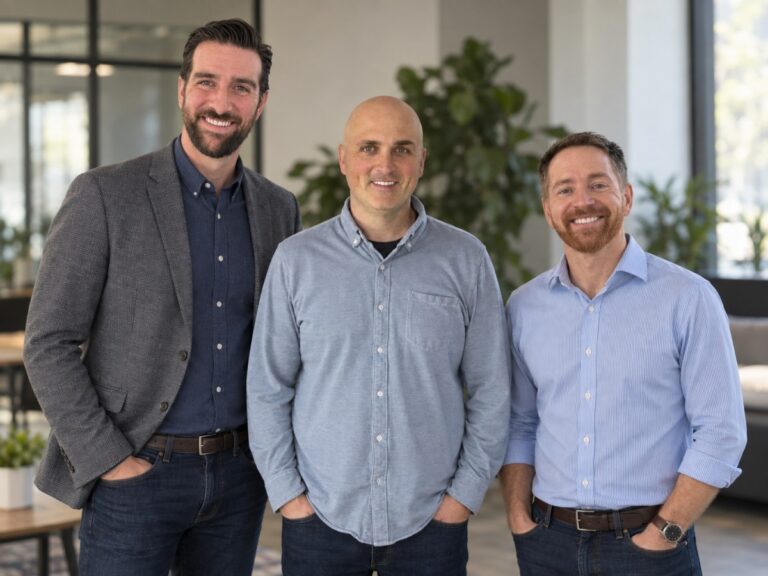
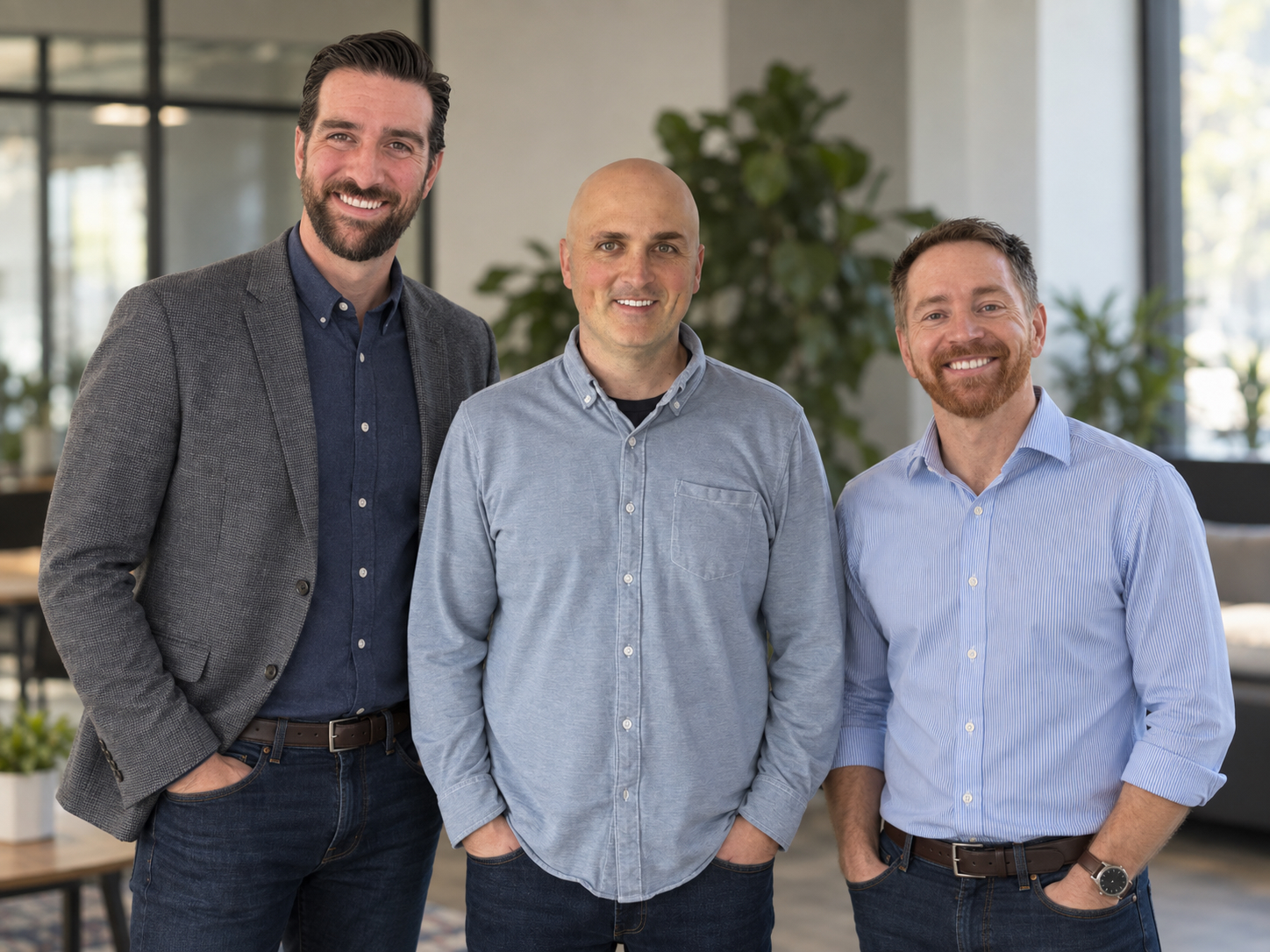
Two former Tesla engineers founded Atomic. Michael Rossiter serves as CEO, and Neal Suidan is chief product officer. The company recently brought on Jeff Goodrich, a longtime planning director at Tesla, as CTO and third co-founder. Jon McNeill, the former president of Tesla and founder of DVx Ventures where Atomic was incubated, sits on Atomic’s board.
Origins in Tesla’s Production Crisis
The 2018 Bottleneck
The earliest version of Atomic’s technology emerged during Tesla’s 2018 Model 3 production ramp, when the automaker’s inventory planning suddenly exceeded the speed at which spreadsheets could operate. Rossiter and Suidan built the system in response to that crisis. They recognized that supply chain optimization was fundamentally a search problem across infinite possible solutions, compounded by the fact that conditions like demand, lead times, and costs were constantly shifting.
Spreadsheets couldn’t handle the variables or the decision frequency. Rossiter said in an interview that running a supply chain is “like an infinite search space for optimization that you’re trying to figure out all of the decisions you could make at any given time — and then it changes all the time too.” That crisis at Tesla showed them that AI could play the role of finding optimal paths through that forest of possibilities.
From Internal Tool to Commercial Product
After Tesla, Rossiter and Suidan turned that internal tool into a commercial platform. Atomic came out of stealth last year. The pitch was straightforward: the operational logic that worked for Tesla’s manufacturing could streamline inventory and reduce costs for any company with complex supply chains.
The company’s annual recurring revenue quintupled between the start of 2026 and the present, according to McNeill. Early customers included major tech companies and food delivery platforms. That growth trajectory convinced Klass Capital and Madrona Venture Group to lead the Series A.
The Evolution from Recommendation to Autonomy
How the Product Changed
In its earliest stage, Atomic functioned as an advisory system. It analyzed scenarios, evaluated options, and recommended a course of action. Humans still made the final decision. That changed as the platform matured and as customers themselves began pushing back against the extra step.
DoorDash, one of Atomic’s major clients, now runs 90 percent of its purchasing decisions across hundreds of sites through Atomic’s system with minimal human oversight. HelloFresh, the meal delivery startup, uses Atomic similarly to manage food inventory across its fulfillment network. For these customers, Atomic doesn’t just suggest what to buy; it buys.
The Inference Problem That Solved It
What enabled this shift was Atomic’s ability to infer decision rules from observed behavior, even when those rules were never formally documented. Many supply chain operators have unwritten logic: if inventory at location X dips below Y percent, order Z units from supplier A. But that knowledge lives in spreadsheets, email chains, and people’s heads. Suidan focused engineering efforts on building AI that could reverse-engineer that logic from historical data.
Once Atomic understood a customer’s purchasing patterns, the case for human approval largely disappeared. McNeill described the insight in a recent interview: “Then customers were saying, ‘Okay, then you might as well make the decision and free my time up.’” The system had learned; the humans could stop approving.
The Competitive Advantage: Decision Speed
Why Speed Matters
What drew Series A investors was Atomic’s ability to compress the time between problem identification and response. Supply chain decisions compound. A choice made today influences tomorrow’s options; delays cascade through the system. McNeill, who spent time at Tesla, said that Elon Musk made decision speed a first principle: the thing that separates Tesla from traditional automakers like Ford or Toyota is the speed of decision-making, because decision speed compounds.
Traditional automotive suppliers might take 30 days to make the first decision in a supply chain scenario. Tesla’s internal operating model prioritized decisions in hours or days. Atomic brings that same principle to other industries.
Deployment Speed as a Selling Point
But technical speed alone wasn’t enough. Atomic also had to be fast to deploy. Most supply chain software requires weeks of data ingestion, custom integrations, and rule configuration before it’s operational. Suidan, as CPO, made compressing onboarding time a central product challenge. The goal was to make it a non-event for customers to activate Atomic, not a months-long implementation project.
The company achieved this by building AI that could infer the customer’s decision rules automatically. Instead of asking customers to enumerate every decision criterion in a contract or requirements document, Atomic’s system figured out what those criteria were by examining historical behavior.
Adaptation Across Industries
General Models, Specific Applications
Rossiter emphasized that Atomic’s approach is built on general principles of supply chain modeling. The same core logic that optimizes inventory for DoorDash can adapt to optimize raw material procurement for a CPG manufacturer or parts ordering for a mobility company.
What changes is the mechanics: how inventory turns, what the decision criteria are, regulatory constraints, and the cost of errors. Food supply chains prioritize spoilage reduction and freshness windows. Manufacturing supply chains optimize for uptime and working capital. Consumer packaged goods supply chains balance shelf life, promotional cycles, and distributor requirements. Atomic’s AI adjusts the model for each context.
Expansion Plans
The startup is currently working with consumer packaged goods companies and deepening engagements with mobility and manufacturing clients, in Rossiter’s words, “going back to our Tesla roots.” Series A funding will support expansion into additional verticals.
Goodrich’s addition as CTO signals the next phase: deepening the sophistication of the AI layer and extending it to more complex supply chain architectures.
The Broader Opportunity: Moving Beyond Spreadsheets
Rossiter noted in an interview that most companies still run supply chain operations through spreadsheets and disconnected tools. Finance data gets centralized, treated as critical infrastructure, and invested in heavily. Operating and supply chain data often languishes in sideline systems, fragmented across multiple platforms.
Getting companies to migrate that work into modern, AI-driven software remains an open frontier. The $15 million in total funding positions Atomic to compete for that market, but the opportunity is far larger than one startup’s TAM. Rossiter sees a structural shift similar to what happened in finance: once you instrument and automate operational decisions the way finance has instrumented financial decisions, you unlock margin and speed gains that spreadsheet-dependent competitors simply cannot match.
Source: TechCrunch
Frequently Asked Questions
What does Atomic's software do?
Atomic uses AI to simulate supply chain scenarios and make autonomous purchasing and inventory decisions, determining where products should be stocked and in what quantities to optimize for waste reduction, cost, and decision speed.
Who uses Atomic?
Major customers include DoorDash, which runs 90% of its purchasing decisions across hundreds of sites through the platform, and HelloFresh, the meal kit delivery company. The company also works with consumer packaged goods and manufacturing clients.
Where did Atomic's technology originate?
Co-founders Michael Rossiter and Neal Suidan built an early version during Tesla's 2018 Model 3 production ramp, when the automaker's spreadsheets couldn't keep pace with the speed supply chain planning decisions needed to change.
