
Key takeaways
- NHTSA proposed cyan-colored lights to signal autonomous vehicle operation, aiming to update Federal Motor Vehicle Safety Standards that predate designs like Tesla's Cybercab lacking traditional controls.
- General Motors will debut its electrical and computational overhaul in 2028 with the Cadillac Escalade IQ, cutting its development timeline from four to five years to roughly half that duration.
- Tesla began Optimus humanoid robot production and plans to sell Cybercab robotaxis by year-end despite reporting a 43 percent decline in year-over-year profits.
- Multiple companies including Waymo, inDrive, and Google are expanding robotaxi and autonomous services globally, with service launches planned for 2027 in Kazakhstan, Spain, and Las Vegas.
Federal regulators and major automakers are establishing the technical and regulatory foundations for widespread autonomous vehicle deployment, even as capital continues flowing toward aviation autonomy and robotaxi services expand internationally.
Regulatory Framework for Autonomous Vehicles
The National Highway Traffic Safety Administration has proposed new lighting requirements allowing autonomous vehicles to signal their operational mode to surrounding traffic and pedestrians. Under the proposal, cyan-colored lights would indicate when a vehicle is operating in autonomous mode without a human occupant monitoring the road. The NHTSA suggests these lights remain steadily illuminated rather than flashing and be visible from the front, rear, and both sides of the vehicle.
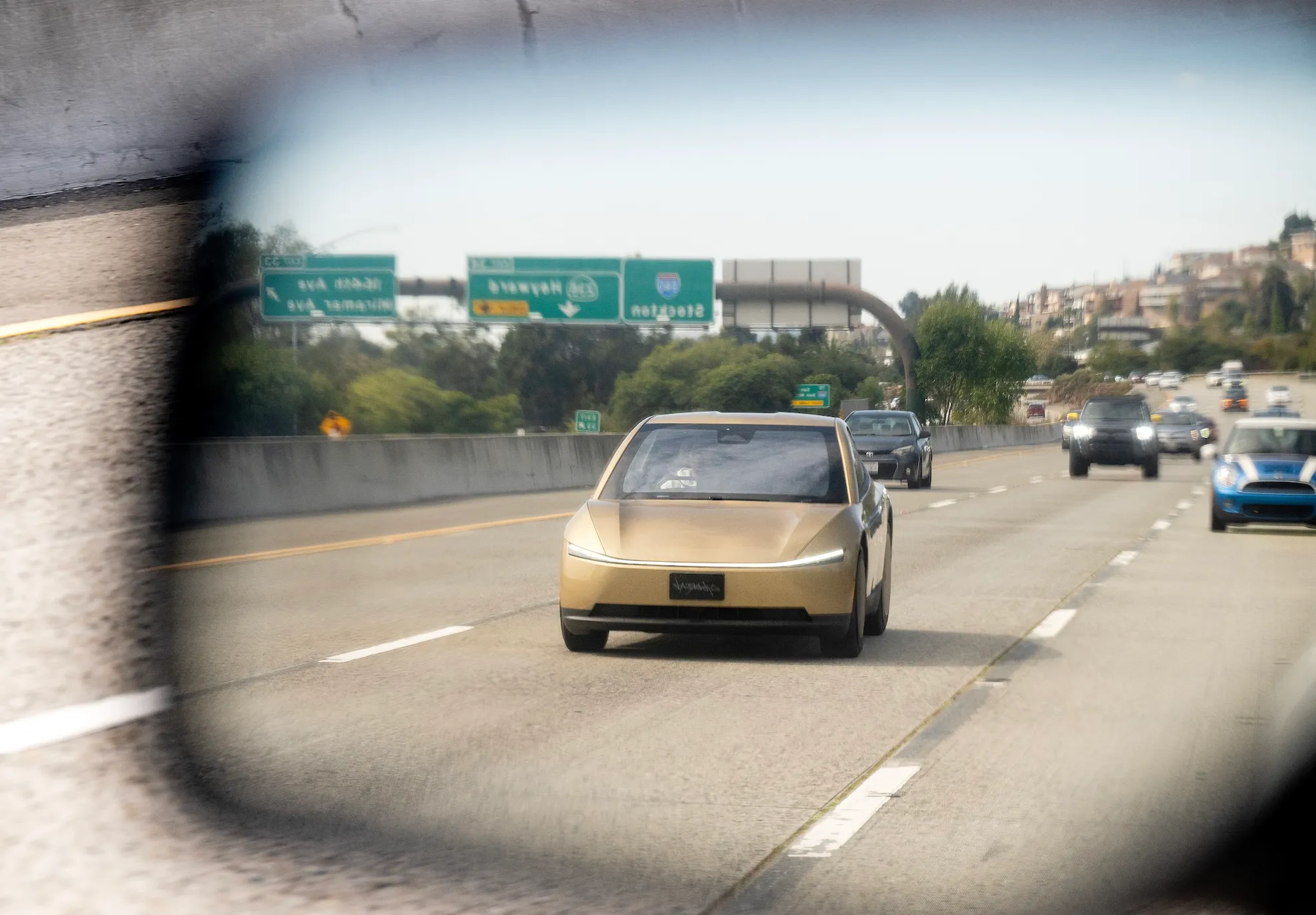
The agency is proposing this as an option rather than a mandate, according to NHTSA administrator Jonathan Morrison, characterizing it as part of a broader effort to update regulations and speed autonomous vehicle adoption while maintaining safety standards. This regulatory work addresses a critical gap that has emerged as autonomous vehicle designs diverge from conventional automobiles. The Federal Motor Vehicle Safety Standards were developed to govern traditionally controlled vehicles and do not account for designs like the Tesla Cybercab and Zoox robotaxi, which eliminate steering wheels, pedals, side mirrors, and rearview mirrors that regulations currently require.
Automakers Undertake Platform Transformation
Architectural Platform Redesign
General Motors is executing a fundamental redesign of its electrical and computational architecture to compete in the autonomous and AI-driven transportation market. At its annual GM Forward event, the automaker outlined plans to overhaul its vehicle platforms with three core objectives:
- Faster software deployment
- More advanced automated driving capabilities
- Replacement of its OnStar connected vehicle service with a new AI-powered assistant
Accelerated Development Timeline
The company has adopted enterprise artificial intelligence across its organization, which has reduced its traditional development cycle. GM previously required four to five years to bring new vehicle designs to market; the company now operates on a compressed timeline of roughly half that duration.
2028 Launch Strategy
These changes will debut in 2028 with the Cadillac Escalade IQ, which will include an autonomous highway driving feature that enables hands-free and eyes-free operation without requiring drivers to remain ready to assume manual control. The automaker is positioning this timeline as evidence of its ability to compete with Tesla, though the scale of this technological overhaul suggests GM is preparing for broader competition across the autonomous vehicle and AI sectors.
Simulation Technology and Strategic Acquisitions
Rivian has acquired Third Dimension, a UK-based startup founded by veterans from the gaming and autonomous vehicle industries, to gain access to advanced simulation technology. Third Dimension developed artificial intelligence systems that convert images and video into photorealistic 3D environments, addressing one of the most persistent challenges in autonomous vehicle development: the sim-to-real gap, or the difference between autonomous driving performance in simulation versus real-world operation.
Rivian’s head of autonomy, James Philbin, explained that the company identified a strategic need to close this gap as it scales its autonomous capabilities. While simulation has been a standard tool in autonomous vehicle development for years, advances in technology continue to create acquisition opportunities for startups like Third Dimension. The acquisition terms were not disclosed, and Rivian did not file the deal with the Securities and Exchange Commission, indicating the transaction fell below materiality thresholds. Third Dimension had previously raised $7 million in seed funding and operates with approximately 15 engineers.
Rivian CEO RJ Scaringe has articulated a vision in which autonomy will enable the company to design vehicle types fundamentally different from its current lineup of the R1S pickup and SUV variants and the R2 SUV. Market focus has centered on the anticipated R4, a product the company has not yet detailed publicly.
Global Robotaxi Expansion
Multiple companies are advancing robotaxi deployments across different geographies through various partnership structures. InDrive, the ride-hailing platform known for allowing passengers and drivers to negotiate fares directly, signed a memorandum of understanding with Chinese autonomous driving firm Pony.ai and semiconductor company Nvidia to test robotaxis in Kazakhstan beginning in 2027.
Waymo is expanding its robotaxi operations both within established markets and into new territories. The company announced plans to launch robotaxi service in Spain, starting with Madrid and opening the service to riders in 2027. In the United States, Waymo has begun transporting customers between Harry Reid International Airport in Las Vegas and other destinations, expanding its service footprint beyond purely urban deployment.
Google has enhanced its mobility ambitions through software updates to its AI assistant. The company is upgrading Gemini in vehicles with a personal intelligence feature that accesses information from Gmail, Google Calendar, YouTube, Maps, and Google Search history to understand user preferences, activities, and past experiences.
Capital Deployment in Aviation Autonomy
Investment capital is flowing toward autonomous systems in aviation as venture funding for autonomous ground transportation matures. Reliable Robotics, a startup focused on commercializing autonomous flight technology that can be installed on existing aircraft, announced a Series D extension round totaling $115 million. The funding comprised:
- $90 million in equity investment led by Nimble Partners
- $25 million in debt financing from Silicon Valley Bank
The extended Series D round brings total capital raised in that series to $275 million and values Reliable Robotics above $1 billion, marking its entry into the unicorn club of private companies valued at that threshold or higher.
Tesla Accelerates Robotics Amid Profit Decline
Financial Performance vs. Robotics Investment
Tesla reported third-quarter earnings that revealed a divergence between financial performance and strategic investment direction. The company’s revenue remained flat across all business segments while operating expenses increased, resulting in a 43 percent decline in year-over-year profitability.
Optimus and Cybercab Initiatives
Despite this financial pressure, Tesla commenced production of its Optimus humanoid robot and announced plans to begin selling its Cybercab robotaxi to consumers by year-end. The company reported continued growth in Full Self-Driving subscription adoption, though it postponed the rollout of the unsupervised version of its autonomous driving system until the second quarter of 2027.
SpaceX Merger and AI Business
Elon Musk, who serves as CEO of both Tesla and SpaceX, disclosed that special committees of both companies’ boards are reviewing a potential merger between the two organizations. SpaceX’s artificial intelligence business unit generated $7.5 billion in revenue during the same quarter, representing 52 percent of SpaceX’s total income and suggesting Musk’s strategic prioritization of AI and robotics development across both companies.
Opposition and Plant Closure
An organized opposition to robotaxi deployment is gaining momentum, though sources and funding behind these efforts remain opaque. The Washington Post reported that a group mobilizing against robotaxis operates with unclear origins, mirroring patterns observed in other anti-robotaxi organizations. Previous investigation identified the Coalition for Accountability and Road Safety as an entity registered to an employee of a New York-based lobbying firm that has represented labor unions and the New York Black Car Operators’ Injury Compensation Fund. This pattern suggests opposition to robotaxi services may originate from established labor and transportation industry groups rather than grassroots consumer movements.
General Motors announced it would close a manufacturing facility south of Detroit that assembled battery packs for the Cadillac Celestiq and produced electric drive units and battery packs for the plug-in hybrid Chevrolet Corvette E-Ray. The company stated the closure was unrelated to its EV strategy but rather due to the expiration of the facility lease.
Source: TechCrunch
Frequently Asked Questions
What is the purpose of the NHTSA's proposed cyan light requirement for autonomous vehicles?
The lights would signal to surrounding traffic and pedestrians when a vehicle is operating in autonomous mode without a human occupant monitoring the road. The NHTSA proposed cyan lights that remain steadily illuminated and are visible from the front, rear, and both sides, though this is an option rather than a mandate.
When will GM's new autonomous driving features debut and what vehicle will feature them?
General Motors plans to debut its electrical and computational overhaul in 2028 with the Cadillac Escalade IQ, which will include an autonomous highway driving feature allowing hands-free and eyes-free operation without drivers needing to remain ready to take manual control.
How did Rivian's acquisition of Third Dimension address autonomous vehicle development challenges?
Third Dimension developed AI systems that convert images and video into photorealistic 3D environments to address the sim-to-real gap, the difference between autonomous driving performance in simulation versus real-world operation. Rivian's head of autonomy, James Philbin, identified this technology as critical to scaling the company's autonomous capabilities.
